

VIDEO TRANSCRIPT: Uticuse Women’s Rugby Club fights for trans inclusion amid changing national eligibility rules
Marissa Cogan, anchor: Welcome back to NCC News at 5. National sports organizations are continuing to revise their eligibility rules for transgender and non-binary athletes, creating new barriers to entry across every level of play. But for one local rugby team in Upstate New York, the fight to keep the sport open to everyone is happening right here on the pitch.
Cogan: Founded on a promise to welcome everyone, Uticuse is navigating a turbulent time for sports by creating a safe haven for its players on and off the field. For fullback Wesley Burkit, who uses they/them pronouns, joining the team after moving to Syracuse was about finding community and belonging.
Uticuse Player, Wesley Burkit: I was really looking for community when I moved to Syracuse. Immediately I showed up to practice and it was like a family.
Cogan: But recent national policy changes removed the non-binary category from USA Rugby registration, forcing players to make difficult personal choices just to compete. Burkit says navigating those requirements to stay on the field with their teammates was a challenge.
Burkit: There was a lot of discussion at the beginning of the season whether some of us, myself included, were even going to like play. Whether or not like I have to invalidate my identity to be able to play with my friends on a Saturday morning. But I also want to keep showing up for my team and myself, and I do that by playing rugby.
Cogan: That resilience is reflected across the entire roster. Team Vice President Kasey Kiggins says the club promptly stood in solidarity with impacted players.
Uticuse Vice President, Kasey Kiggins: Yeah, I think a lot of the team was upset about it, and all we wanted to do was really like continue to fight for the right of all women, trans women, all people, to really get the opportunity to play rugby at whatever level or place that they feel more comfortable with.
Cogan: Head Coach Bethany Schull has been with Uticuse for four years and drives an hour and a half to coach the team. She says national eligibility changes challenge the core values of women’s rugby.
Uticuse Coach, Bethany Schull: This trans exclusion from USA Rugby is a test of our values, and we need to put our actions where our values are. And we need to prove to our trans teammates that we have their back all the way.
Cogan: For Burkit, that unwavering support off the field translates directly into power on the pitch.
Burkit: Keep showing up for yourself. It’s really important that you’re showing up for yourself and your friends, whatever that looks like for you. No matter like where the pressure’s coming from, I think it’s just really important to continue to show up for yourself and your team.
Cogan: Uticuse team leaders say their next steps include working closely with the neighboring regional clubs they compete with to establish long-term inclusivity bylaws and advocate for policy changes at the regional and national levels. For now, the team continues its fall season with all players back on the pitch.
© 2026 Marissa Cogan
SYRACUSE, N.Y. (NCC News) — When USA Rugby removed the non-binary gender category from its national registration system this season, rugby teams across the country were forced to navigate new eligibility requirements.
The national governing body updated its guidelines following federal pressure, restricting the women’s competition category strictly to individuals assigned female at birth. USA Rugby faced threats of decertification from national sports bodies if it failed to comply.
For non-binary and transgender athletes nationwide, the change meant facing a difficult decision just to stay on the pitch. Players had to register under a binary gender identity or give up playing the sport.
Across the country, club teams began pushing back. At Uticuse Rugby Club in Upstate New York, players and leadership chose a similar path, opting to stand together and reject player exclusions.
For Uticuse fullback Wesley Burkit, who uses they/them pronouns, joining the club after moving to Syracuse in May 2025 was about finding a home.
“I was really looking for community when I moved to Syracuse,” Burkit said. “Immediately, I showed up to practice, and it was like a family.”
That sense of community was tested at the start of the fall season when administrative registration forms no longer accommodated non-binary players. Burkit and several teammates questioned whether they could continue participating without compromising their identities.
“There was a lot of discussion at the beginning of the season whether some of us, myself included, were even going to play,” Burkit said. “Whether or not I have to invalidate my identity to be able to play with my friends on a Saturday morning … I want to keep showing up for my team and myself, and I do that by playing rugby.”
Rather than letting individual players carry the burden of national policy changes, the Uticuse executive board took immediate action.
“A lot of the team was upset about it, and all we wanted to do was really continue to fight for the right of all women, trans women, all people, to really get the opportunity to play rugby at whatever level or place that they feel more comfortable with,” Kasey Kiggins, Uticuse Vice President, said.
Uticuse President Turner Shrout organized multi-city conference calls with neighboring regional clubs in Buffalo and Rochester to coordinate a joint response. Together, the clubs began navigating how they wanted to conduct the Fall 2025 season. Internally, Uticuse began drafting new bylaws and establishing inclusivity committees aimed at prioritizing athlete safety and advocacy over exclusionary policies.
Because enforcement of the national policy relies largely on opposing clubs filing formal complaints, regional teams across New York are utilizing collective non-compliance to keep all players on the field.
“We were able to connect with all of our local teams … to get the state of the union, get all of our concerns out, and figure out a path,” Shrout said. “Our number one priority is their support and safety on the field.”
For Head Coach Bethany Schull, who commutes an hour and a half from Binghamton to coach Uticuse, the struggle over eligibility went straight to the heart of rugby’s core culture.
“This trans exclusion from USA Rugby is a test of our values, and we need to put our actions where our values are,” Schull said. “We need to prove to our trans teammates that we have their back all the way.”
Schull noted that women’s rugby historically provided a welcoming space for gender diversity, making recent restrictions feel like a step backward for the sport.
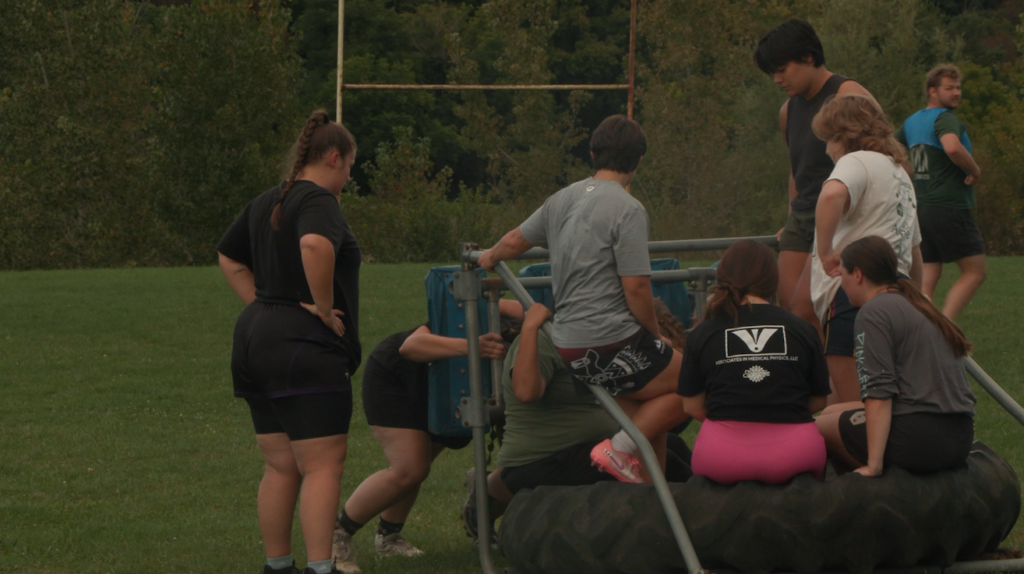
Off the pitch, the bonds within Uticuse remained tight, with players organizing weekly Sunday run clubs and helping teammates move into new apartments.
“Keep showing up for yourself,” Burkit said. “It’s really important that you’re showing up for yourself and your friends, whatever that looks like for you. No matter where the pressure’s coming from, I think it’s just really important to continue to show up for yourself and your team.”
Uticuse continued its fall season with its full roster intact, while executive board leaders worked alongside regional partners to push for long-term policy reform at both the regional and national levels.