

Lila Paton and Mira Busch were among more than 61,000 runners who finished the record-breaking race.
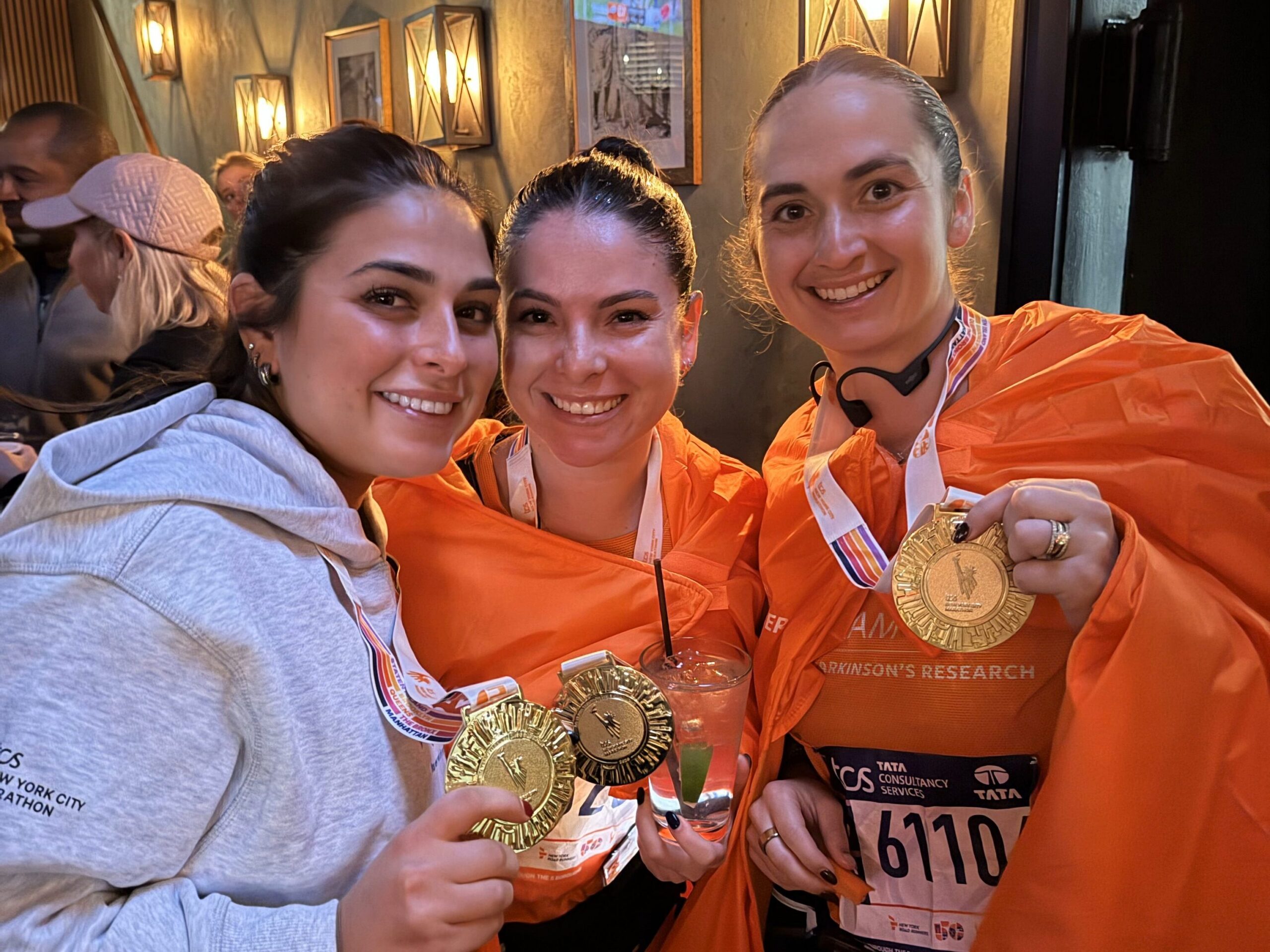
SYRACUSE, N.Y. (NCC News) — Syracuse University students Lila Paton and Mira Busch completed the New York City Marathon on Nov. 1 after spending months balancing their training with classes, campus jobs and other responsibilities.
Paton and Busch were among 61,146 people who completed the 2026 TCS New York City Marathon. According to New York Road Runners, it was the first marathon ever to record more than 60,000 finishers, according to New York Road Runners.
Both students said completing the 26.2-mile race required them to organize their academic and social lives around a consistent training schedule.
Paton often woke up around 5 a.m. to run before attending class. Wednesdays were generally reserved for her longest runs, while the rest of her week included shorter workouts, schoolwork and attention to her diet.
“No hour was wasted,” Paton said. “It was waking up before class, sometimes at 5 a.m., running when it was freezing in the morning and then going to class and doing all the work.”
Paton said marathon preparation sometimes required her to skip social events or leave them early.
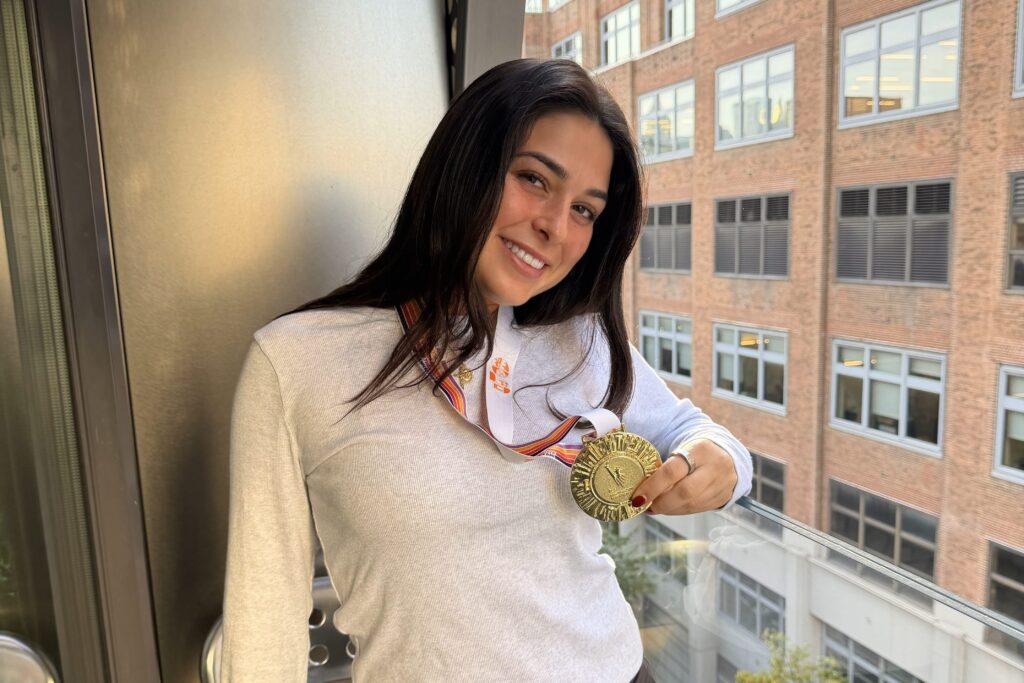
“There were definitely times where I had to give up going out or staying out late because I had to prioritize my running schedule,” Paton said. “It’s deciding what’s more important to you in the moment and what’s ultimately going to get you to your goal.”
In addition to being a student, she works as a cycling instructor at the Barnes Center at The Arch.
“I honestly had zero rest days,” Busch said.
Busch taught cycling four times a week, lifted weights twice a week and ran three times a week. She completed easier runs on Mondays, speed or tempo workouts on Wednesdays and long runs on Saturdays.
Because she received her marathon entry shortly after the 2025 race, Busch was able to arrange her classes around her training schedule.
“I built my class schedule around early morning running,” Busch said. “I made sure that I had time.”
Running for personal and charitable causes
Neither Paton nor Busch expected to become a marathon runner when they first arrived at Syracuse. Paton began running half-marathons in college but initially did not believe she would attempt a longer race.
“I remember one of the halves I did, I crossed the finish line and remember telling myself, ‘There’s no way I would ever do more than this. Absolutely no way,’” Paton said.
Paton reconsidered after Busch signed up for the marathon in November 2025. Paton then contacted her cousin, and the three decided to run the marathon.
Paton and her cousin raised money for the Michael J. Fox Foundation, which funds Parkinson’s disease research. Paton said their grandfather died from Parkinson’s disease roughly a decade ago.
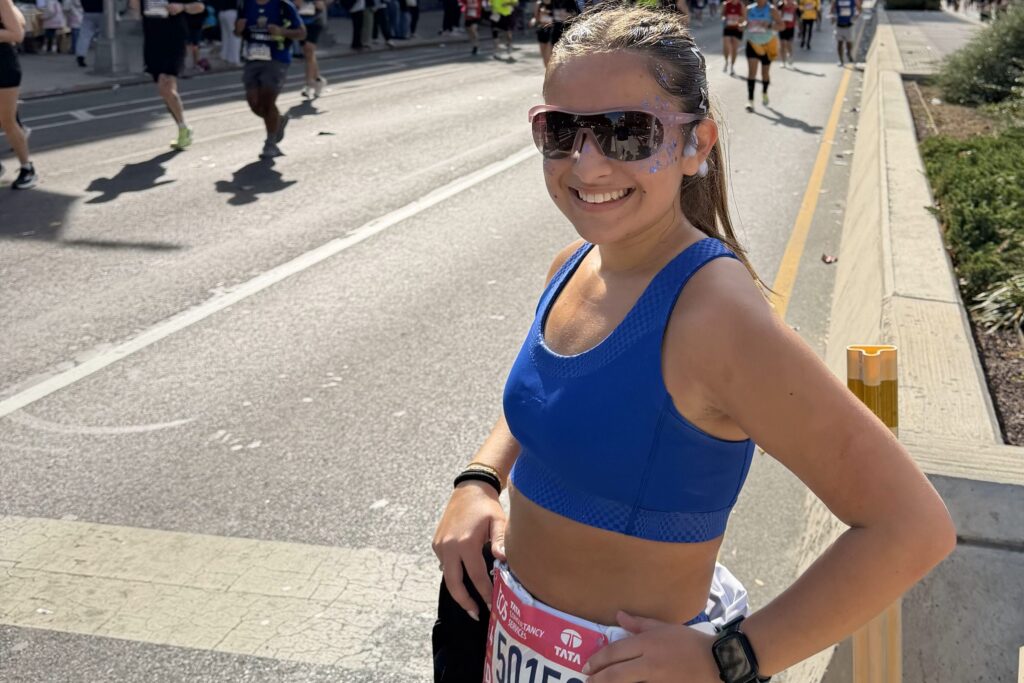
“I kind of wanted to challenge myself and jump in and see if I could do it,” Paton said.
Busch began running after organized sports, which had been an important part of her life, did not continue into college as she had expected. She completed the Syracuse Half Marathon twice before applying for a New York City Marathon charity entry.
Busch ran for Team for Kids, a New York Road Runners program that raises money for youth and community fitness programs.
“I had never done something like that,” Busch said. “I hated running whenever I was doing sports, but I felt like I didn’t really have anything that was taking up my time in a way that I needed.”
Students face challenges during the race
Paton and Busch said the final portion of the marathon was the most difficult part of the race.
Paton experienced gastrointestinal pain during the final 10 kilometers. She said the pain became more intense than the discomfort in her legs.
Crossing the finish line brought an initial sense of relief, while receiving her medal made the accomplishment feel real.
“It was a moment of, ‘Wow, I actually finally did it. It’s over,’” Paton said. “It was bittersweet.”
Busch said she began to doubt whether she could finish around mile 23. Spectators called her name and reminded her that she only had a few miles remaining. Runners around her also encouraged her to continue.
“There were so many people cheering my name, and they had no idea who I was,” Busch said. “I feel like the crowd support, just in general, really stuck with me.”
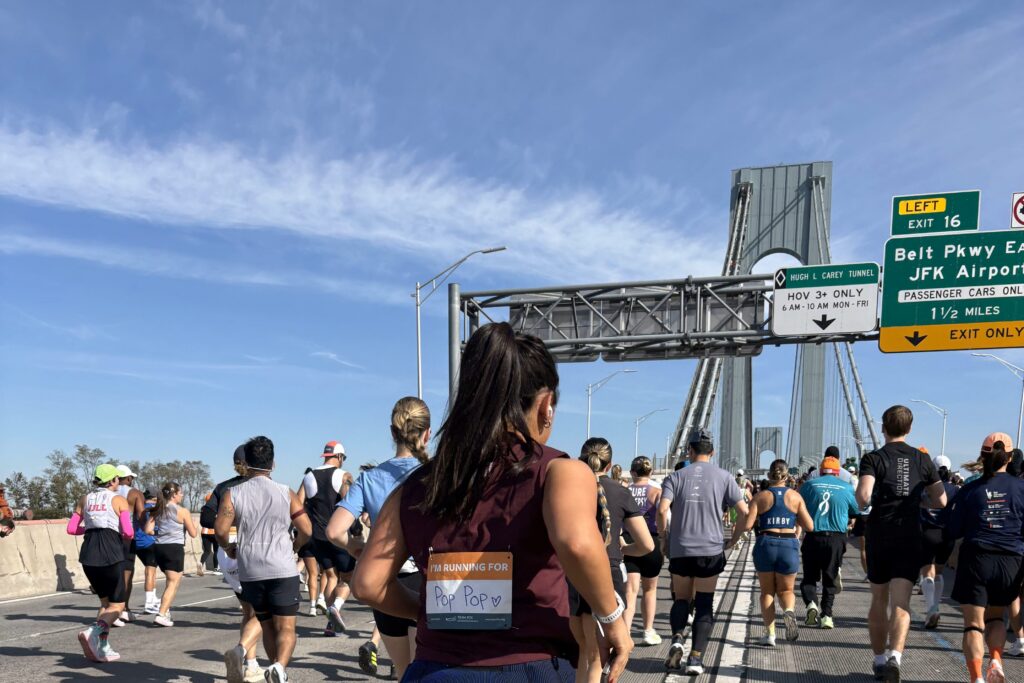
After returning to Syracuse, both students said completing the marathon changed how they approach other difficult goals.
Paton said the experience showed her that a goal that initially appears unrealistic can become achievable through preparation.
“You can set hard goals for yourself, and if you work hard enough, you can achieve them,” Paton said.
Busch said she now wants to encourage other students to challenge themselves.
“If I can do a marathon, there are so many other things I feel like I could do,” Busch said. “It’s crazy what our bodies are capable of.”