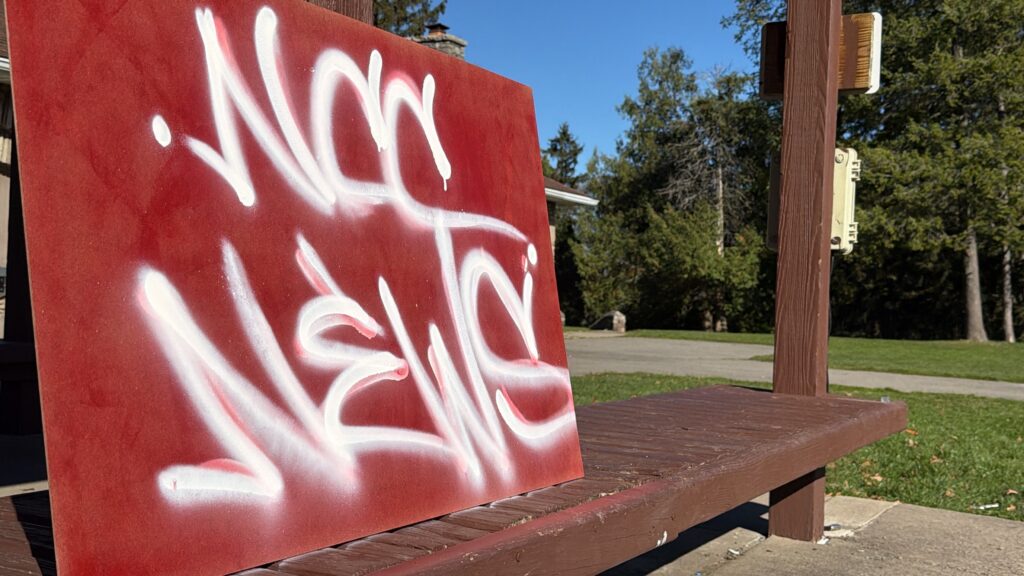

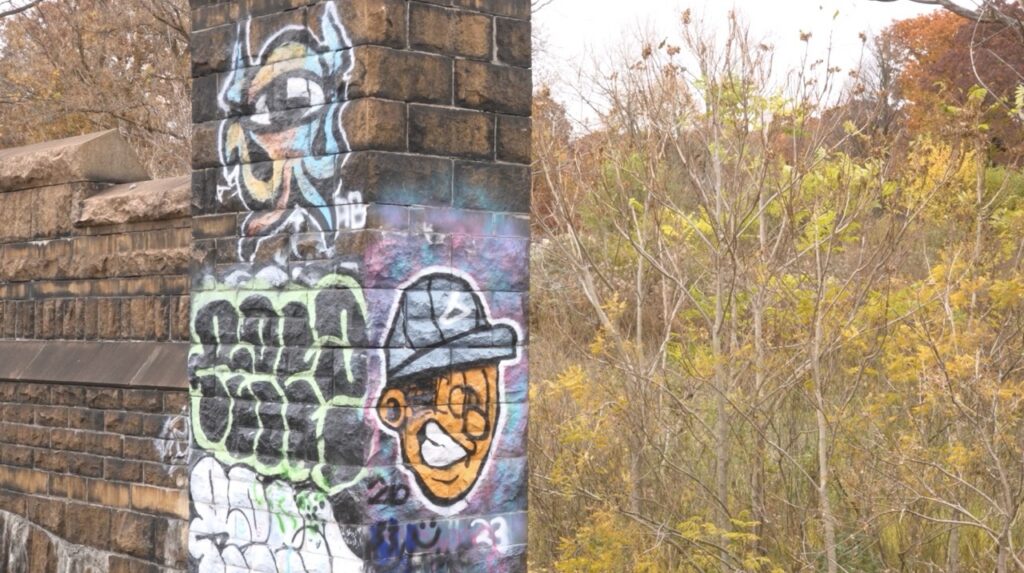
VIDEO TRANSCRIPT: A Constant Impermanence
Jackson Breslin: It’s all around Syracuse. It’s everywhere, really. Beside roads, on city walls. If it can be there, it probably is. And there’s no shortage of opinions on it.
Syracuse Resident 1: I see it as self expression.
Syracuse Resident 2: On certain topics, it can be a problem that needs to be cleaned up.
Syracuse Resident 3: It makes it feel more like a city.
Syracuse Resident 4: It makes it feel junky.
Breslin: But for Tommy Lincoln
Tommy Lincoln: I’ve been doing graffiti for
Breslin: Graffiti is more than just a point of debate.
Lincoln: A long time now.
Breslin: Lincoln owns Stay Fresh, a design agency and art gallery on the West Side of Syracuse.
Lincoln: We give a lot of graffiti writers the chance to put their art on walls and just kind of show it off in a different location rather than somewhere where you might be seeing it down the street.
Breslin: Inside the gallery is a familiar sight: a watching eye, the symbol of Syracuse’s most notorious and mysterious street artist, Vacant.
Lincoln: “Seeing Vacant’s work go from, what it was to where it was like kind of like, one kind of like, wormy eye, to now it’s like kind of an icon around, you know, you see it, you can see it from here all the way down to Florida.”
Breslin: But Vacant is far from Syracuse’s only artist, who are also known as writers. Lincoln himself writes. He’s just as tight-lipped about his identity, though.
Lincoln: “Oh, I’m not gonna tell you that (laughs), but I appreciate you asking.”
Breslin: It’s the city’s enforcement of graffiti that, in part, allows for it to thrive. While the city says graffiti is enforced like any other municipal code violation, it refused requests for interview to talk more about its stance. Lincoln says that apart from Downtown Syracuse, enforcement is lax, and any battles between artists and the city are usually won by the artists.
Lincoln: “A piece goes up, they get grayed over, another piece goes up, grayed over, and it keeps going at it, and, you know, that’s pretty fun to watch, too. Eventually somebody gives up. Usually it’s the city.”
Breslin: The city’s graffiti community is diverse. There’s writers older than Lincoln, and ones younger, like Boom, whose identity we’ve been asked to obscure.
Boom: “When I see a city that’s just gray and corporate and they just have Walmarts and Taco Bells, just like, dead American cities, I just think that’s so boring.”
Breslin: Boom started tagging when he came to Syracuse. The active graffiti scene here was a big difference from his hometown.
Boom: “There were no other artists there, there was nowhere to really put up anything.”
Breslin: But what is it about graffiti that’s so attractive to artists like Lincoln and Boom, and so divisive among the general public?
Lincoln: “You’re, you know, creating while you’re also destroying, so it’s kind of an interesting balance.”
Boom: “You’re not asking for anything in return.”
Breslin: Most importantly, they say, it’s art.
Michael Schwarzer: “It’s for the people, right? So, it brings it right to the people.”
Breslin: Michael Schwarzer is the co-founder of Art Haus SYR, a contemporary art gallery in Downtown Syracuse. Along with art in a gallery, Schwarzer says that graffiti serves as a direct form of communication and brings a needed element to a city’s art scene.
Schwarzer: “We don’t want it to be too stale, you know, we don’t want it to be too regulated. We still want it to feel that it is not manufactured, but there is true soul and free expression in it.”
Breslin: Through Stay Fresh, Lincoln is working to marry the two ideas: highlighting the soul that only street art can express while also bringing a sort of legitimacy to the form.
Lincoln: “It’s legitimate in other cities, and I think it’s just, you know, there’s a lot of people in Syracuse that need to kind of flip that switch.”
Breslin: Lincoln likes the spontaneity that comes with the art form. He likes that anywhere can be a canvas, and he likes that you may not like it.
Lincoln: “If you walk up on graffiti or street art, and you feel great about it, you still just got a feeling from it.”
Breslin: There’s a constant impermanence to the form. A single piece will come and go. Decades-old graffiti along the I-81 viaduct, for example, will be erased as the reconstruction project continues through Syracuse. But Lincoln knows graffiti will come back. It always does.
Lincoln: “At some point (laughs), graffiti is going to go up on them, so, you know, I can’t wait.”
Breslin: The anonymous hands who leave graffiti change through the years.
Lincoln: “Cats get older and they kind of get out of the game, so it’s up to those youngsters to get a can in their hand and start spraying.”
Breslin: But the goal remains the same.
Boom: “The beautiful pieces that respect the fundamentals of art and, like, are in crazy spots that you’re like, ‘How the hell did they even reach that?’ I think it just adds so much to a city.”
Breslin: Painting a portrait of the city, on their own terms. In Syracuse, Jackson Breslin, NCC News.
SYRACUSE, N.Y. (NCC News) – It’s all around Syracuse – it’s everywhere, really.
Beside roads, on city walls – if it can be there, it probably is – and there are no shortage of opinions on it.
But for Tommy Lincoln, graffiti is more than just a point of debate.
“I’ve been doing graffiti for a long time now,” Lincoln said.
Lincoln owns Stay Fresh, a design agency and art gallery on the West Side of Syracuse.
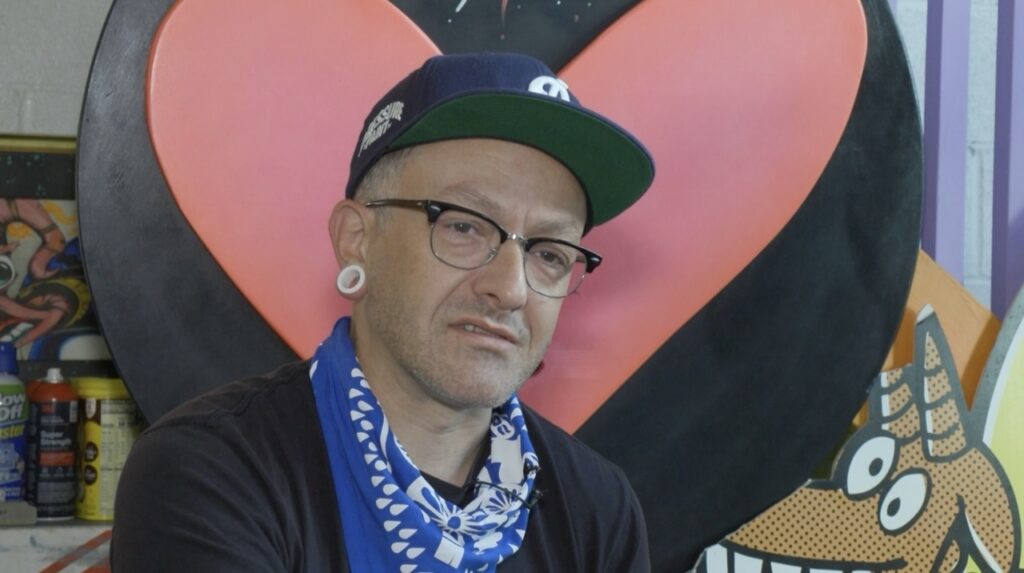
“We give a lot of graffiti writers the chance to put their art on walls and just kind of show it off in a different location, rather than somewhere where you might be seeing it down the street,” Lincoln said.
Inside the gallery is a familiar sight: a watching eye, the symbol of Syracuse’s most notorious and mysterious street artist – Vacant.
“Seeing Vacant’s work go from what it was where it was like, one kind of wormy eye, to now it’s kind of an icon around,” Lincoln said. “You know, you can see it from here all the way down to Florida.”
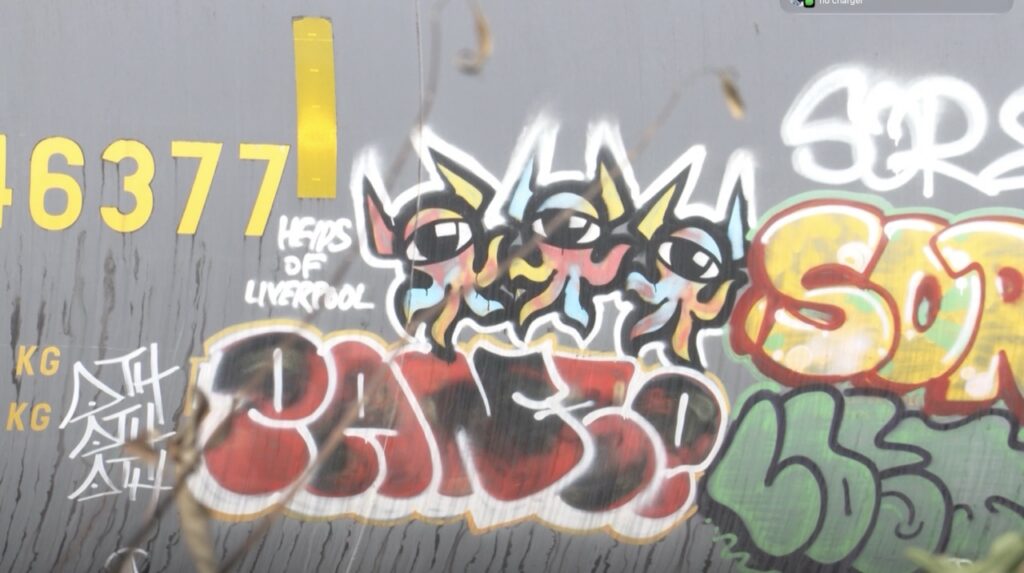
The City of Syracuse’s enforcement of graffiti, in part, allows for it to thrive. While the city said graffiti is enforced like any other municipal code violation, it refused requests for an interview to talk more about its stance. Lincoln said that apart from Downtown Syracuse, enforcement is lax, and any battles between artists and the city were usually won by the artists.
“A piece goes up, they get grayed over, another piece goes up, grayed over, and it keeps going at it,” Lincoln said. “You know, that’s pretty fun to watch. Eventually somebody gives up – usually it’s the city.”
The city’s graffiti community is diverse: there are writers older than Lincoln, as well as ones younger, like Boom, a young writer who asked to remain anonymous.
“When I see a city that’s just gray and corporate and they just have Walmarts and Taco Bells.” Boom said. “I just think that’s so boring.”
Boom started tagging when he came to Syracuse. The active graffiti scene here was a big difference from his hometown’s graffiti scene.
“There were no other artists there. There was nowhere to really put up anything,” Boom said.
Graffiti has been a divisive topic since it gained prominence in New York during the mid 20th century.
“It’s for the people, right? So, it brings it right to the people,” said Michael Schwarzer, the co-founder of Art Haus SYR, a contemporary art gallery in Downtown Syracuse.
Along with art in a gallery, Schwarzer said that graffiti serves as a direct form of communication and brings a needed element to a city’s art scene.
“We don’t want it to be too stale, you know, we don’t want it to be too regulated,” Schwarzer said. “We still want it to feel that it is not manufactured, but there is true soul and free expression in it.”
Through Stay Fresh, Lincoln is working to marry the two ideas: highlighting the soul that only street art can express while also bringing a sort of legitimacy to the form.
“It’s legitimate in other cities,” Lincoln said. “There’s a lot of people in Syracuse that kind of need to flip that switch.”
Lincoln said he likes the spontaneity that comes with the art form – that anywhere can be a canvas, and he likes that it might not be liked.
“If you walk up on graffiti or street art, and you don’t get a great feeling about it, you still just got a feeling from it,” Lincoln said.
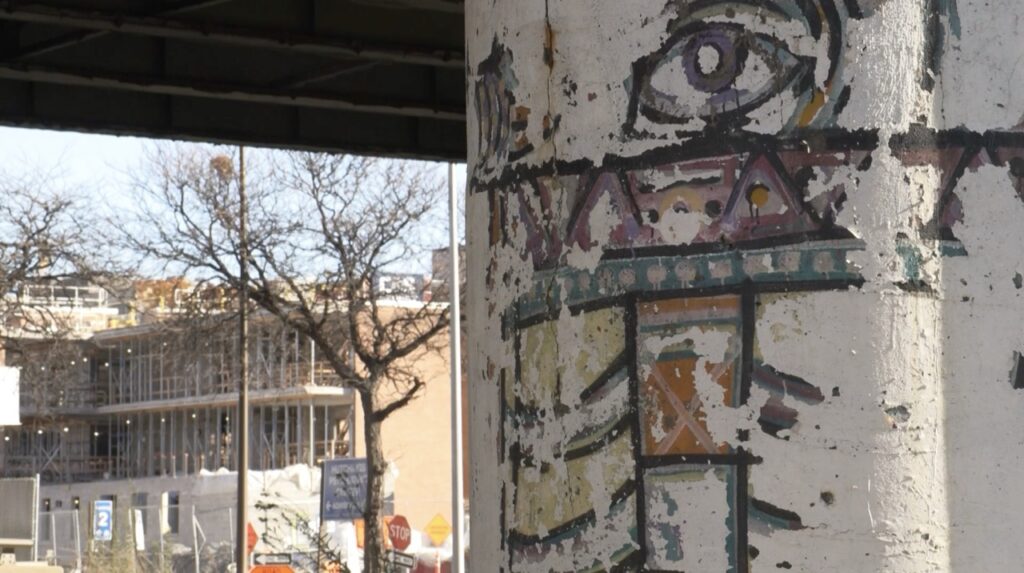
There is a constant impermanence to the form – a single piece comes and goes. Decades-old graffiti along the I-81 viaduct, for example, will be erased as the reconstruction project continues through Syracuse; but Lincoln knows graffiti will come back – it always does.
“At some point, graffiti is going to go up on them, so I can’t wait,” Lincoln said.
The anonymous hands who leave graffiti change through the years.
“Cats get older and get out of the game, so it’s up to those youngsters to get a can in their hand and start spraying,” Lincoln said.
But the goal remains the same: to paint a portrait of the city on their own terms.
“The beautiful pieces that respect the fundamentals of art and are in crazy spots that you’re like ‘how the hell did they even reach that?’ I think it just adds so much to a city,” Boom said.