

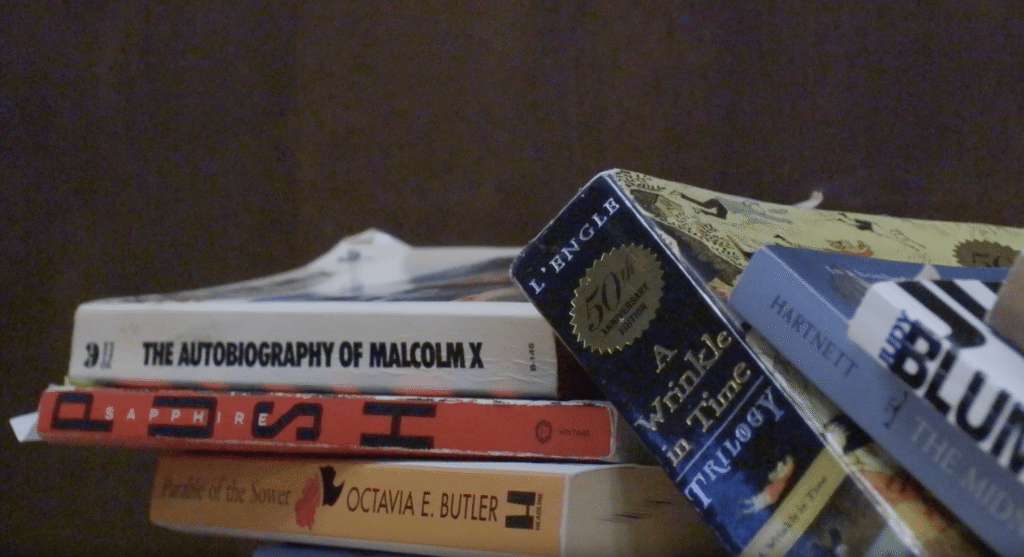
SYRACUSE, N.Y. (NCC News) — Banned Books Week brought conversations about censorship and freedom of expression to Syracuse University, where students and faculty explored how restricting information could affect more than just the books people read.
The university participated through events including interactive activities, public readings and discussions about access to information.
At Bird Library, Melinda Dermody, associate dean for academic success at Syracuse University Libraries, said censorship could interfere with education by limiting the ideas students encounter.
“We not only want ideas, but we want creation of knowledge, and that doesn’t happen by limiting what people are exposed to,” Dermody said. “Information is not helpful unless you can find it, and that is where censorship goes against everything that we’re about.”
The university’s libraries maintain collections that support a wide range of research and academic interests. Students can search for books, including titles challenged or banned elsewhere, through the university’s online library catalog.
But this year’s conversations also reached beyond library shelves.
Ian Spangler, a visiting lecturer and interim director of the Spatial Analysis Lab at the University of Richmond, spoke on campus about censorship in cartography and how maps could influence people’s understanding of history. Spangler pointed to Lake Ontario as a local example of why place names carry historical significance, particularly when considering the region’s Indigenous history.
“There is a history to the name of Lake Ontario,” Spangler said. “That history dates back to Indigenous people who lived here long before Syracuse University existed.”
Spangler emphasized that changing names on maps could have both practical and symbolic consequences for how communities understand familiar places.
Through its Banned Books Week programming, Syracuse University encouraged students to consider how censorship could shape the information they access, the ideas they encounter and the history they remember.