

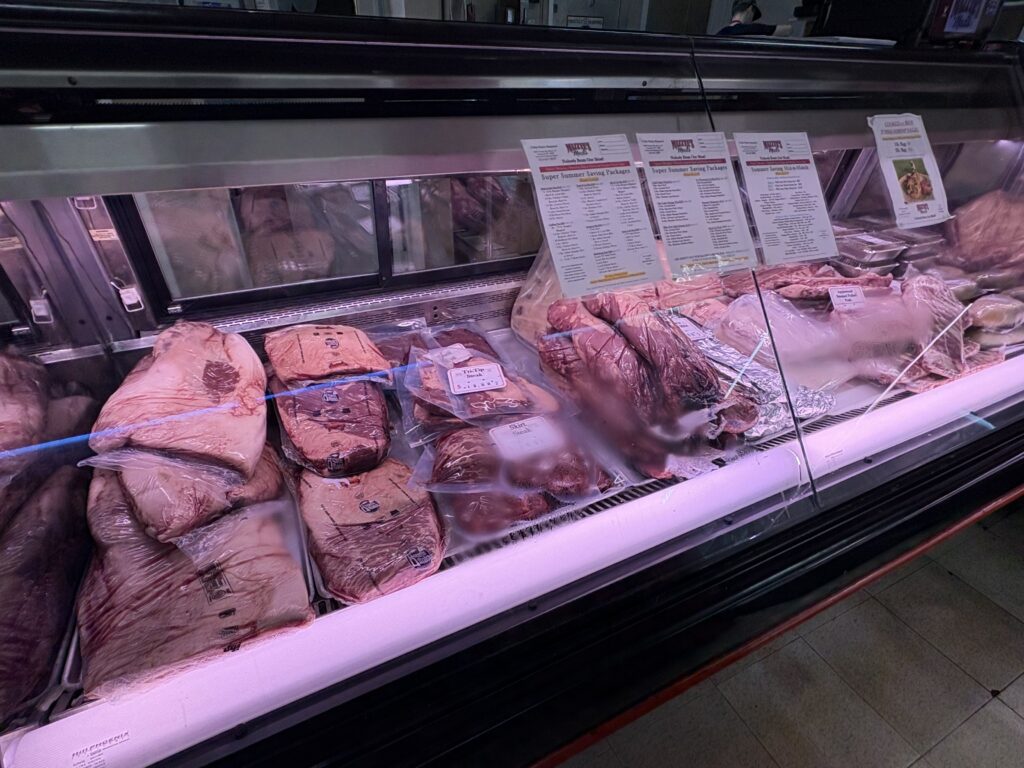
LIVERPOOL, N.Y. (NCC NEWS) – Meat prices continue to rise heading into the summer across Central New York. Local businesses, farmers, and consumers are all being impacted.
Local butcher shops say supplier costs and delivery surcharges are making it increasingly difficult to keep prices down, while farmers say larger industry pressures and shortages in cattle are also factors behind increased prices.
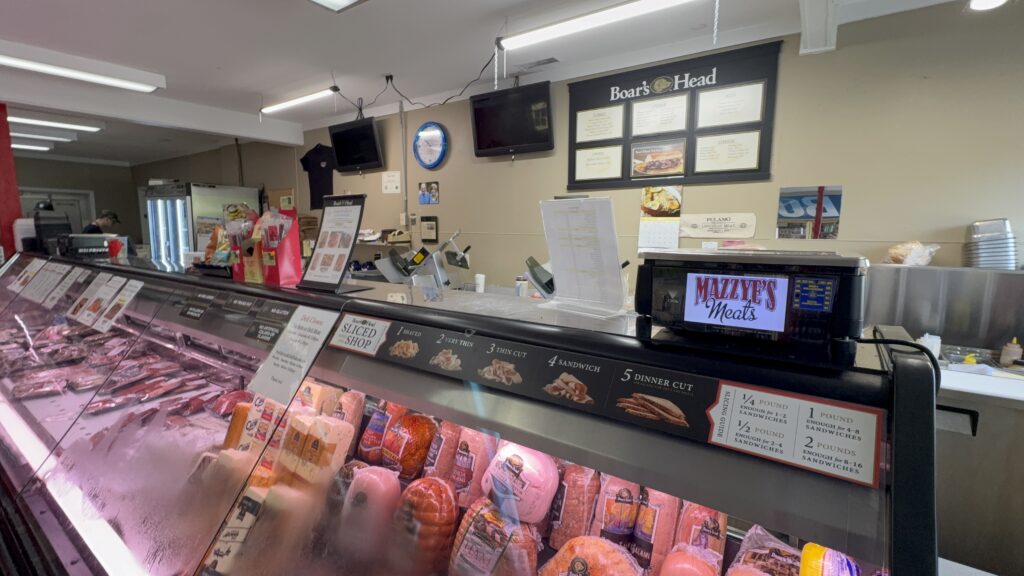
At Mazzye’s Meats in Liverpool, Chef Drew D’Angelo says additional fees from suppliers have become a growing challenge.
“The new things that are happening right now with the meat prices are that the people who are delivering it to us have absurd amounts of charges to get the meat delivered,” D’Angelo said. “They have a $50 surcharge right off the bat. Then they have a fuel charge, they have a delivery charge. It can be almost $100 worth of charges just to get the meat here.”
D’Angelo says those added costs eventually impact customers shopping for summer cookouts and grilling season.
“That ultimately affects the meat prices to the consumer, because I have to raise my prices just to keep up,” D’Angelo said.
The problem goes beyond local meat shops.
Michael Forward of Forward Family Farm and Market in Camillus says there are not enough beef cattle to increase supply and keep up with demand.
“The prices are high enough that many farmers who are under any kind of financial stress or close to retirement age are not expanding their herds but are selling off their poor breeding stock,” Forward said.
Forward adds that the reason why there is a cattle shortage is because there has been a long-term drought in the southern part of the county, particularly the southern plains area. He says a large amount of the U.S. beef cattle is raised in the plains area.
“They don’t have enough feed to feed the cattle,” Forward said. “This started probably 10 years ago, and it’s been cycling on and off.”
Forward also pointed to the meatpacking industry as another major factor impacting prices. He says a handful of companies control 85% of the country’s beef production.
Sen. Chuck Schumer recently announced he is pushing legislation aimed at increasing competition within the meatpacking industry in hopes of lowering prices for consumers.
In terms of what could change in the near future, Forward says he expects prices to stay steady.
“I don’t expect increases; I don’t expect decreases anytime soon.”