

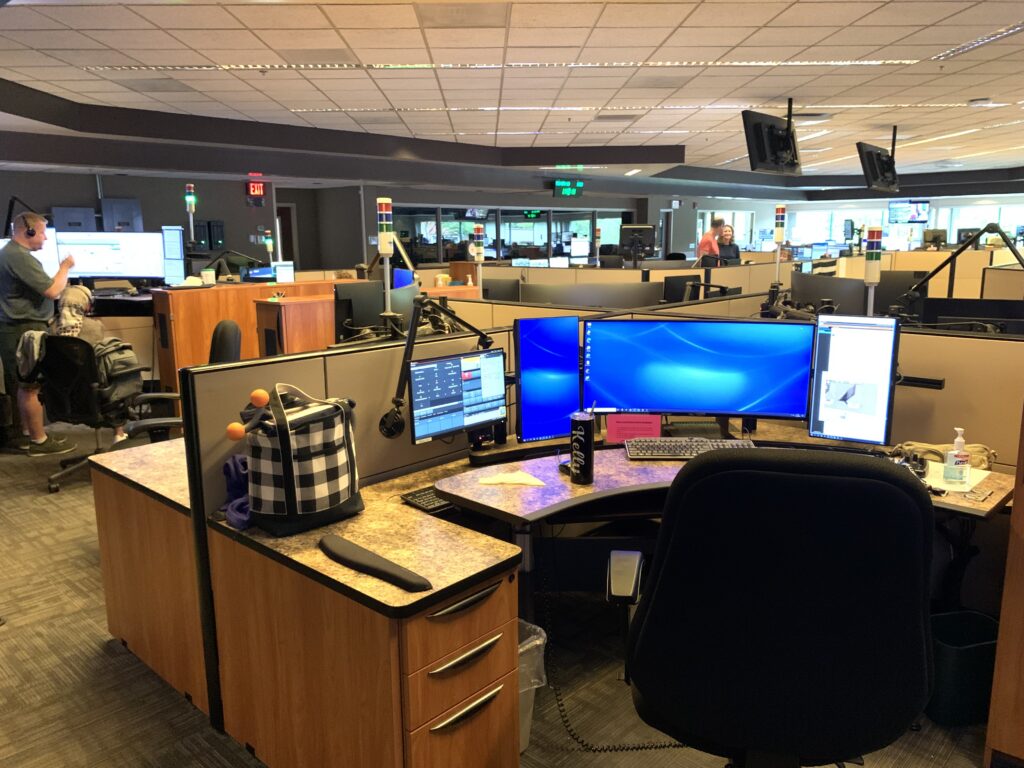
Syracuse, N.Y. — Onondaga County is beginning to integrate artificial intelligence into its 911 system, introducing new tools designed to support dispatchers during emergency calls and improve how quickly information is processed in critical situations.
The first phase of the rollout centers on real-time transcription. Dispatchers can now see a live written version of conversations as they happen, allowing them to follow details more closely while handling fast-moving or overlapping calls.
The system also generates summaries of calls. These summaries are intended to give first responders a clearer picture of what is happening before they arrive on the scene, helping them prepare more effectively.
Additional tools are designed to help identify callers’ locations more quickly, which can be crucial when time is limited and information is incomplete.
Dr. Shinjeng Lin, an expert on AI technology in high-pressure environments, said the system is meant to support — not replace — the people answering emergency calls.
“The role AI plays is to automate,” Lin said. “Not to take call takers’ jobs.”
Supporters of the technology say it could help reduce strain on dispatchers, who often manage multiple emergencies at once under intense pressure. Automating tasks such as transcription and summarization may allow call takers to focus more on communication and decision-making.
However, the technology comes with limitations, particularly in the unpredictable conditions of emergency calls.
“In high-stress environments, it’s not your normal tone, speaking at ease,” Lin said. “There can be some issues with transcription.”
Callers may be panicked, speaking quickly or difficult to understand, which can affect how accurately AI systems capture information in real time.
Those concerns are part of a broader conversation about how reliable artificial intelligence can be in life-or-death situations, especially when communication is unclear or incomplete.
Lin also warned about the possibility that increased reliance on AI could create new risks over time.
“Humans may become too overly reliant on the technology,” he said.
Future phases of the project are expected to expand the system’s capabilities, including potential translation tools to assist non-English speakers and improve accessibility across more communities.
For now, the focus remains on integrating current features into daily operations while ensuring dispatchers remain central to the process. The system will continue to be evaluated in real-world situations and adjusted as needed over time to improve accuracy and reliability.