

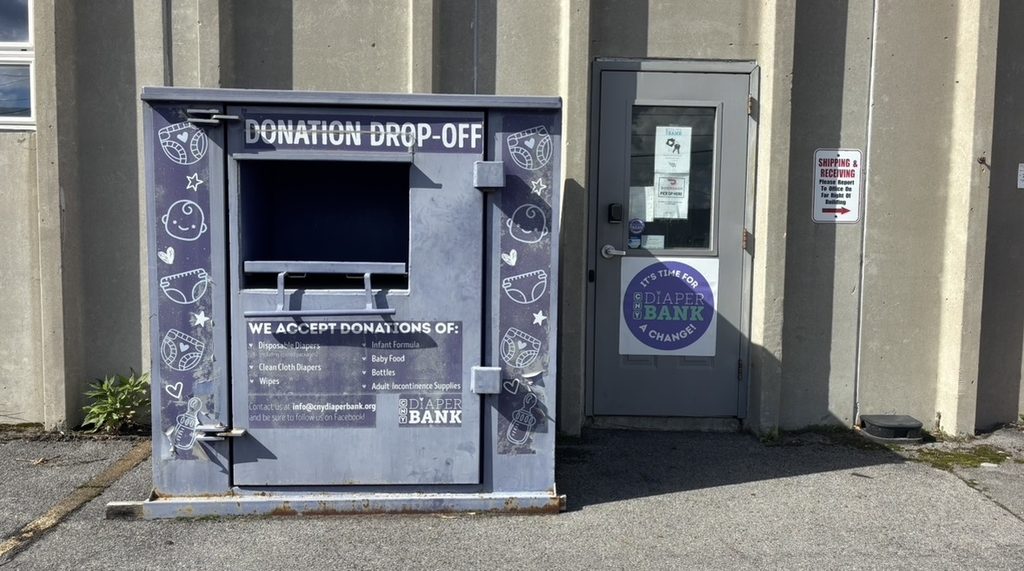
SYRACUSE, N.Y. (NCC News) — For New York families struggling to afford basic necessities, federal assistance programs help cover the cost of groceries and infant formula but leave out another essential baby product: diapers.
Neither the Supplemental Nutrition Assistance Program (SNAP) nor the Special Supplemental Nutrition Program for Women, Infants and Children (WIC) cover diapers, leaving families responsible for purchasing them even when they qualify for federal assistance.
SNAP benefits are intended for food purchases, while WIC provides specific nutritional foods and support for women, infants and young children. Because diapers are not a food product, they aren’t covered by either program.
An October 2026 report from the RAPID Survey Project found that 13% of surveyed parents with infants and toddlers reported not having enough diapers in March. Among those parents, 80% said cost was one of the barriers to purchasing them.
“I realized that every month, that’s like paying, you know, bills. You could compare it to car insurance.”
– Dominique Roberts, parent
In New York, lawmakers have pushed for more funding to help families who struggle to afford diapers. In January, state Sen. Roxanne J. Persaud and Assembly members Michaelle C. Solages and Brian Cunningham called for $2.5 million in the state’s 2026-27 budget to support diaper banks across New York.
The final state budget allocated $1.75 million for 18 diaper banks, according to The New York State Senate. The funding is intended to support organizations that address diaper insecurity.
In Central New York, the CNY Diaper Bank is one of the organizations working to meet that need. Program Manager Melissa Grabowski said one in every two families with young children face diaper insecurity.
The organization buys diapers in bulk and distributes them through community partners to families in need.
Summer Merrick, director of Help Me Grow Onondaga, said struggling to meet basic needs can affect parents’ ability to focus on employment, education and mental health.
“I always say that as a family, if your own basic needs are not taken care of, you can’t even think about anything else,” Merrick said. “Out goes the door if you’re looking for job employment, educational things, your own mental health, because you’re under such stress.”
While state funding has helped support diaper assistance programs, families across New York continue to need help affording diapers. Organizations like the CNY Diaper Bank are working to meet that need, providing families with supplies that federal assistance programs don’t cover.
VIDEO TRANSCRIPT: Diaper Need
Hazel Neham: At the CNY Diaper Bank, Program Manager Melissa Grabowski sees Onondaga County’s diaper needs firsthand.
Melissa Grabowski: Over 10,000 children suffer from diaper insecurity. Currently, we’re servicing close to 4,500 children a month.
Neham: A national RAPID survey found that cost was the most common barrier that prevented parents from meeting their children’s diaper needs.
Neham: Buying a larger box like this means less money spent per diaper, but for families who can’t afford those upfront costs, those savings are out of reach.
Neham: Diapers are not covered by federal assistance programs like SNAP or WIC. The Diaper Bank distributed over 2.8 million diapers in 2025 through local partner agencies. Summer Merrick, director of Help Me Grow Onondaga, works to connect families with these resources, but the impact of unmet diaper needs can go beyond a family’s budget.
Summer Merrick: I always say that as a family, if your own basic needs are not taken care of, you can’t even think about anything else. Out goes the door if you’re looking for job employment, educational things, your own mental health, because you’re under such stress.
Neham: For local parent Dominique Roberts, the monthly cost of diapers was an eye-opening expense.
Dominique Roberts: I realized that every month, that’s like paying, you know, bills. You could compare it to car insurance, and I’m like, wow, this is a real big game changer for first-time parents.
Neham: Hazel Neham, NCC News.