

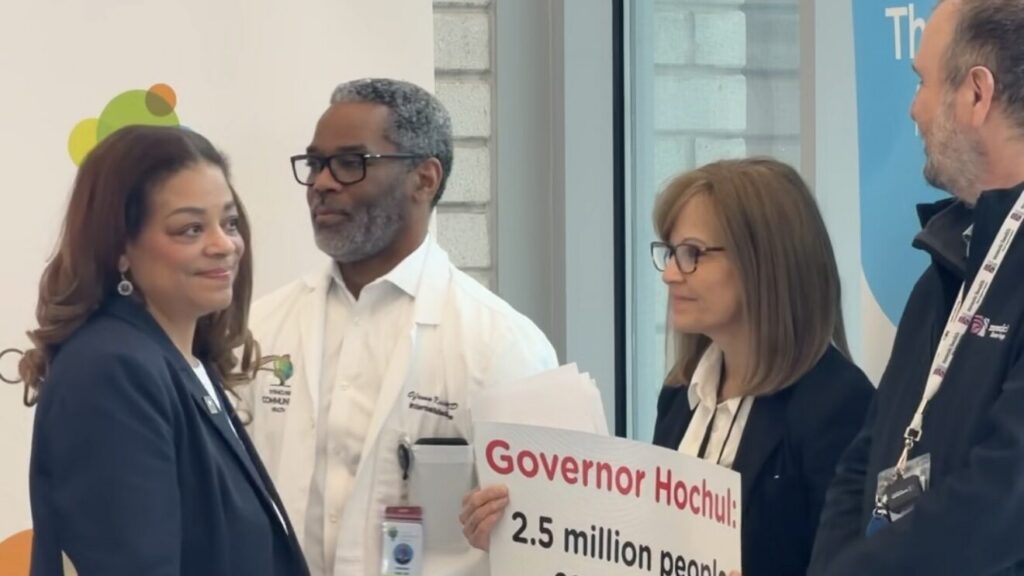
SYRACUSE, N.Y. (NCC NEWS) — Health leaders, providers and patients gathered in Syracuse on Thursday to urge state lawmakers to invest $300 million into community health centers, warning that without immediate funding, millions of New Yorkers could lose access to care as insurance coverage declines.
At a press conference held at Syracuse Community Health, brought together members of Community Health Care Association of New York State and local providers as New York’s state budget negotiations stretch beyond deadline.
Changes at the federal level could leave 1.5 million New Yorkers without health insurance, sending more patients to community health centers (CHCs), which already serve as a safety net for underserved populations. Without reimbursement, health centers statewide could lose an estimated $300 million in revenue.
“I stand here before you today not only as a president and CEO, but as a physician. Health care in our community is not just about medicine, it’s about survival,” said Dr. Ofrona Reid, president and CEO of Syracuse Community Health.
Reid pointed to widening disparities in Central New York, where Black residents are significantly more likely to die before age 65 compared to white residents. She said patients often face multiple challenges at once — from chronic illness to food insecurity and lack of transportation.
“You cannot manage diabetes without healthy food. You cannot stay healthy if care is out of reach,” she said. “You cannot dismantle the solution and expect the problem to improve.”
Community health centers across New York operate nearly 900 sites and serve more than 2.5 million patients annually, about one in eight residents. Many patients rely on these centers for primary care, dental services, behavioral health and substance use treatment, regardless of their ability to pay.
Patients feel the financial strain
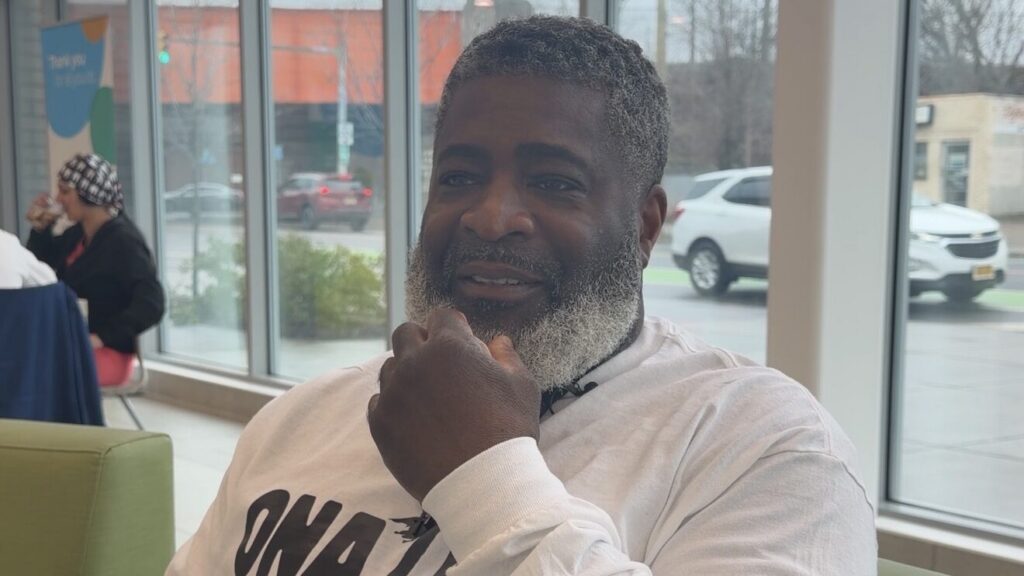
Syracuse resident Reginald Pickard, a caregiver for his older brother, who lives with paranoid schizophrenia, said a sudden spike in medication costs forced him to make difficult financial decisions.
“I went to pick up his medication, and they told me it was $690. It used to be around $10 or $12. Nobody could explain what changed,” Pickard said.
Pickard said he has no choice but to pay the cost to ensure his brother remains stable. He worries about others facing similar challenges without support.
He continues, “I get up every day and fight for him. Because if he doesn’t have that medication, everything changes. If it was just him on his own, no family, no help… how would he deal with that? I don’t think people understand,” Pickard said.
Delayed care, higher costs
Tricia Peter Clark, CEO of ConnextCare, said patients who lose Medicaid often delay treatment or skip medications entirely due to cost.
“When patients don’t have coverage, they don’t come in or they come in sicker. We hear people say, ‘I cut my pills in half because I can’t afford my prescription,” Clark said.
She informs that her organization expects to lose about $1.5 million in the coming year due to coverage changes. Some services have already been reduced, including dental programs and a health center closure last year.
Without investment, she said, the burden will shift elsewhere.
“If you don’t pay for it now, you’re going to pay for it later and it will cost more. People will end up in emergency rooms, and taxpayers will feel that,” Clark said.
Funding gap remains
While Gov. Kathy Hochul and state lawmakers have proposed funding increases ranging from $60 million to $100 million, advocates say those figures fall far short of the need.
CHCANYS is calling for a $300 million investment to stabilize the system, protect jobs and maintain access to care.
The group is also advocating to:
- Protect the federal 340B drug pricing program
- Expand telehealth reimbursement
- Allow medical assistants to administer vaccines
Advocacy events have taken place across the state, including in Western New York, the Bronx, Long Island and the Capital Region, as providers present a unified message.
Why it matters
Health leaders say the issue extends beyond clinics, affecting entire communities and the broader health care system. Community health centers often serve patients who would otherwise go without care, helping reduce hospital overcrowding and prevent costly emergency visits.
“If we weaken this system, we weaken the entire safety net. These outcomes are driven by housing instability, food insecurity and lack of transportation,” Reid said.
As budget negotiations continue in Albany, advocates say the outcome will determine whether that safety net holds — or begins to unravel.
Community health centers have responded by expanding services beyond traditional care, including food pantries, mobile clinics and partnerships to address social needs, but leaders warn those efforts are at risk without additional funding.
For patients and families, the stakes are personal. Pickard said a recent change in coverage left him facing a $690 copay for medication that was once affordable.
“I have to do what I have to do to make sure he receives his medicine, regardless of what I have to pay,” Pickard said.
He said going without medication is not an option. Pickard said he worries about others who may not have the financial means or family support to manage similar costs.
Community health centers rely heavily on Medicaid, which accounts for about 42% of their revenue. However, reimbursement rates are based on decades-old cost structures, leaving providers struggling to keep up with rising expenses and workforce shortages.
“As budget negotiations continue, anything short of $300 million leaves community health centers vulnerable,” said Rose Duhan, president and CEO of CHCANYS.