

The Community Folk Art Center hosted an intimate conversation about how art can be transformative in environmental activism. The speakers highlighted how art can connect the environment, people, and their communities for minorities.
The event, hosted by the Environmental Storytelling Series of Central New York, featured Dr. Tanisha Jackson and Linda Infante-Lyon, who discussed how their work connects identity, the environment and the healing power of art.
“Art is a vehicle and can be a vehicle to create or get you anywhere. So essentially it could be used as a tool to cultivate community, to connect different communities in ways,” said Jackson.
Jackson is an assistant professor in Syracuse University’s Department of African American Studies and the executive director of the Community Folk Art Center, whose research spans African diaspora art, Black Women’s Studies and Arts Education.
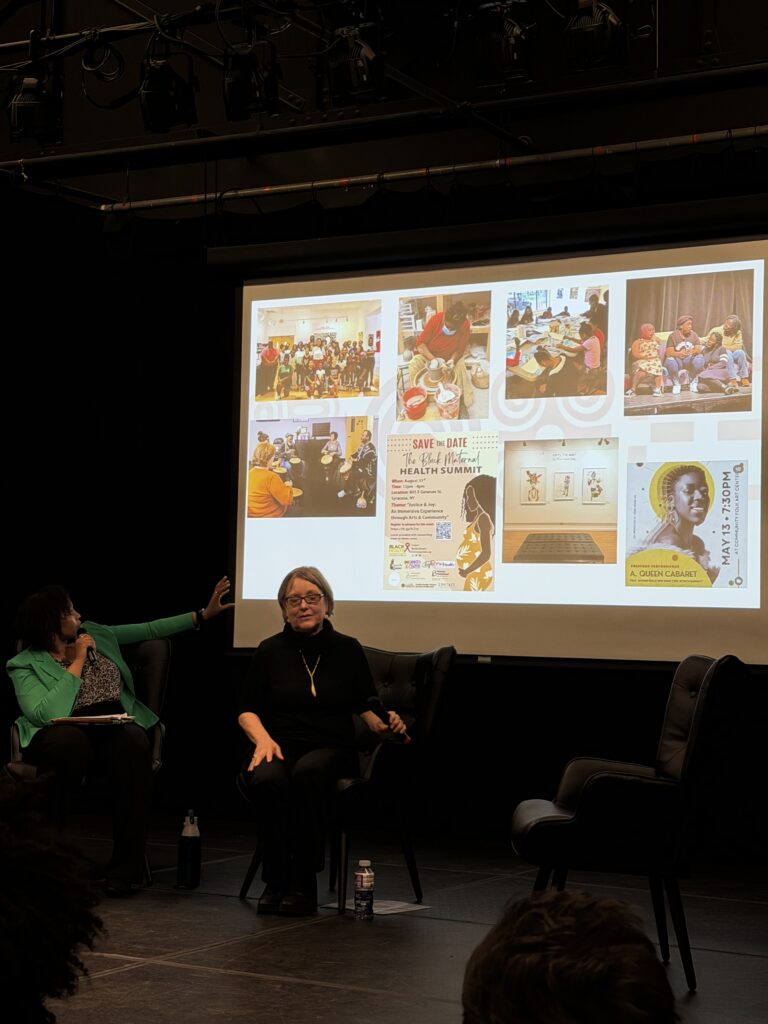
During the conversation, Jackson focused on her work with the arts as a curator and researcher for Syracuse University. She spoke to her research and experiences about how art is used to bring people together.
“Our conversation tonight, we’ve planted some seeds for people to think about how they can engage their community, how they can support artists and art in ways that help to spread the knowledge of eco feminism, of environmentalism and also the importance of the arts when it comes to archiving our lived experiences,” Jackson said.
Her conversation partner brought a perspective from thousands of miles away. Linda Infante-Lyon is a painter and multimedia artist whose work engages themes of Indigenous sovereignty, cultural resilience, and environmental sustainability.
From Anchorage, Alaska, and a member of the Alutiiq people, Infante-Lyon said the environment connects people regardless of where they come from.
“Just speaking with the Community Folk Art Center here, you can find that we have a lot in common where we’re looking at some of the same issues, and just reaching out and communicating is important to make those connections and the environment through our community,” Infante-Lyon said.
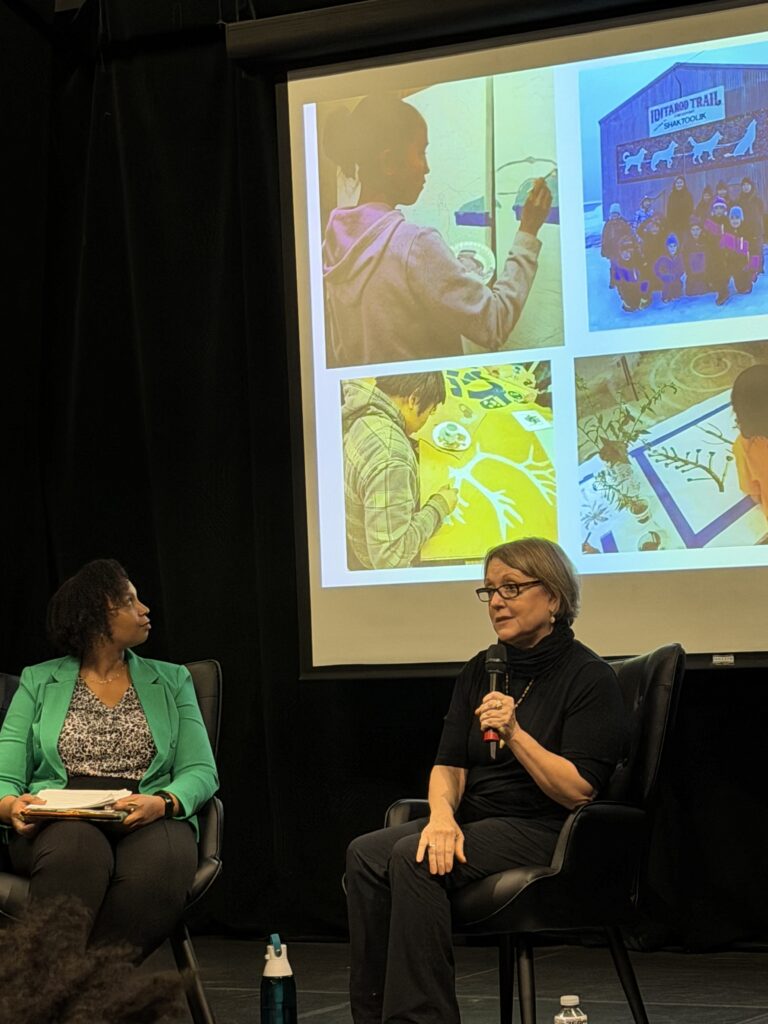
The event was part of the Environmental Storytelling Series’ ongoing mission to build cross-cultural understanding. Co-director Brice Nordquist stressed the importance of creating space for this kind of intersection.
“When it’s a conversation between Indigenous women’s representation and Black women’s experience and representation, this kind of intersection of different experiences, but really intimately intertwined experiences, is really important. It’s really important to engage with audiences of all kinds of different backgrounds and experiences, especially around issues of environmental justice,” Nordquist said.
The Environmental Storytelling Series plans to continue hosting events like this one. For more information, visit envirostorycny.com.