

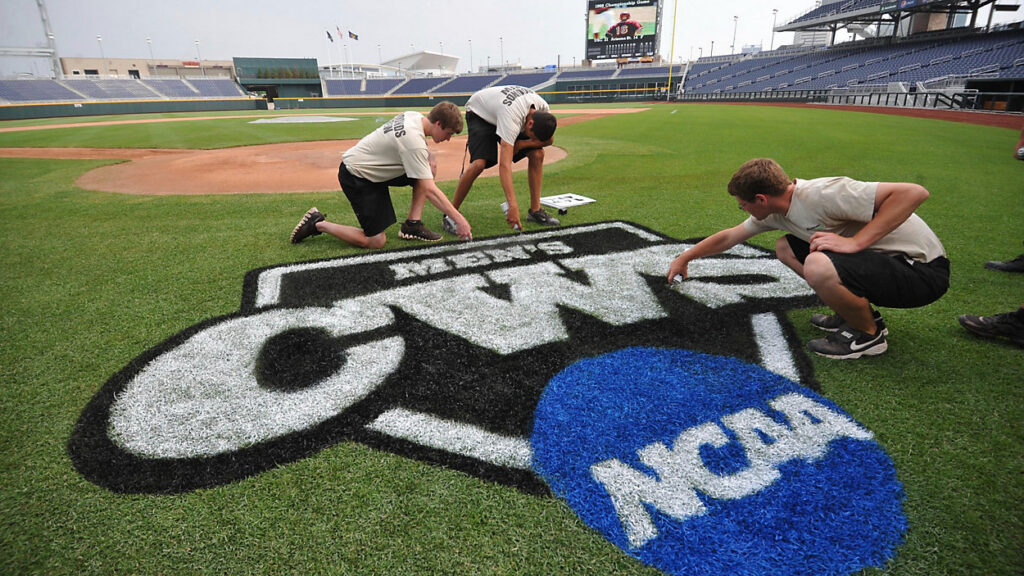
OMAHA, NEBRASKA (NCC News) — Eight teams remain. Hundreds have been eliminated. Beginning Friday, the road to a national championship runs through Charles Schwab Field in Omaha, Nebraska once again.
College baseball doesn’t sell itself on star power or television deals. It sells itself on moments, and Omaha has been manufacturing them for 79 years, coining the title “the Greatest Show on Dirt.”
Since moving permanently to Omaha in 1950, the event has grown from a modest championship tournament into a national spectacle that attracts tens of thousands of fans from across the country. The city transforms into college baseball’s capital each June as passionate fan bases take on Nebraska in hopes of witnessing history.
Unlike many postseason formats, the College World Series requires teams to survive a grueling journey. Programs must navigate conference play, conference tournaments, NCAA regionals and super regionals before earning one of the coveted eight spots in Omaha.
That difficult path is part of what makes the event so special for players, coaches, umpires and fans alike.
“What makes the tournament great is that it’s the biggest stage in college baseball, but it still feels raw and intense,” said Shaun Anderson, a pitcher for the Los Angeles Angels and a 2017 national champion with the Florida Gators. “Teams are playing with everything on the line. Every game feels massive, and when we (Florida) gets rolling the atmosphere is different because our fans travel so well and take over the stadium.”
The intensity Anderson describes has become synonymous with Omaha. Every pitch carries weight. Every inning can define a season. A College World Series run often hinges on a handful of moments and the emotions that come with them.
That atmosphere has left lasting memories and imprints for players who have experienced it firsthand.
“Getting to go to Omaha and playing in the CWS is like reaching the top of a mountain,” said Enrique Bradfield Jr., a top Baltimore Orioles prospect and former Vanderbilt standout. “It’s what you play for. If you’ve made it to Omaha, you’ve survived the gauntlet that is a college baseball season.”
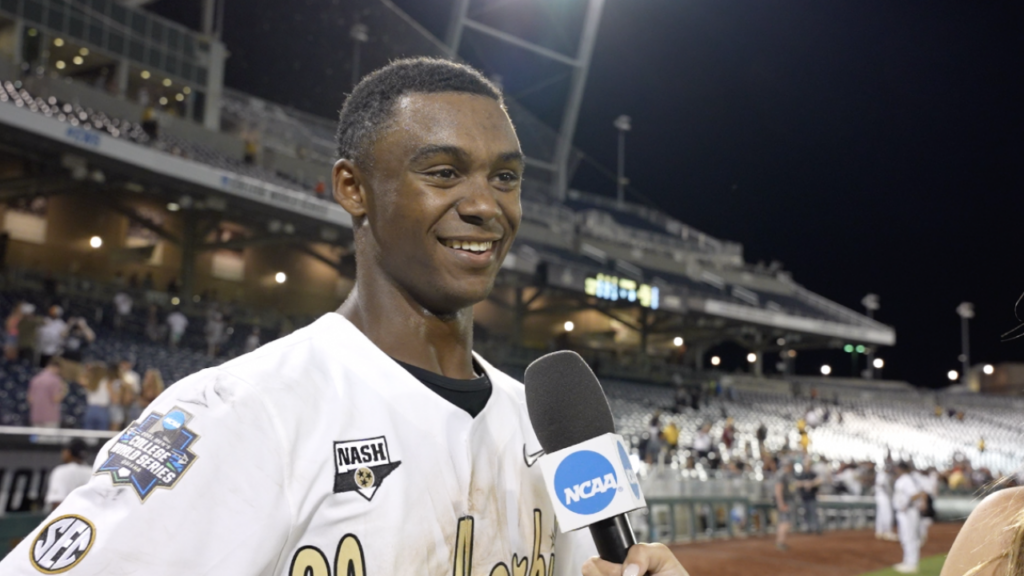
Bradfield helped Vanderbilt reach the 2021 College World Series finals and remembers the environment as unlike anything else in his baseball journey.
“I had a great time,” Bradfield said. “Stepping out on that field in the ’21 finals for Game 1 and hearing 20,000-plus Mississippi State fans boo us was incredible. That’s hands down the biggest and best atmosphere I’ve got to play in. The energy, the crowd, the teams. Omaha is about finding out who is the best. Tough teams survive and advance. By far the most special thing I’ve got to be a part of during my time at Vandy.”
The tournament’s appeal extends beyond the players competing on the field. It means just as much for coaches, staff, and even umpires.
Derek Mollica is a longtime umpire who has climbed as high as the Triple-A ranks. After working in the ACC and SEC, he earned a College World Series assignment. Getting selected for the umpire crew for this tournament represents the highest achievement in his profession. Only a select few are chosen each year from across the country.
“Umpiring the College World Series is one of the highest honors in college baseball,” Mollica said. “Only a small group of officials earn that opportunity each year, and getting chosen means I’ve been recognized as one of the best in the country.”
Mollica said the significance of the assignment goes beyond the games themselves.
“The College World Series is the pinnacle of NCAA baseball,” he said. “Just as players dream of making it to Omaha, umpires dream of earning the opportunity to work there. Umpiring the College World Series means I’ve reached the highest level of my profession.”
The experience becomes even more meaningful because of the people who helped him reach that point.
“The most meaningful part of it all is being able to fly my family out, put them up in a hotel, and allow them to experience it alongside me,” Mollica said. “They’ve been part of the sacrifices and support that helped me get here, so sharing that moment with them makes the honor even more special.”
This year’s field includes programs carrying the hopes of entire communities. It has been seen in past tournaments with the 2025 Murray State Racers, the 2024 Evansville Purple Aces, and 2016 national champion Coastal Carolina Chanticleers.
This year’s Cinderella story is the Troy University Trojans. They are the first team to reach Omaha with at least 30 losses, finishing 38-30, but then the boys got hot. They won four straight elimination games in the Gainesville Regional and then had the opportunity to host a Super Regional. The town packed their home stadium, Riddle-Pace Field to win a Super Regional on their own turf. The 2,500-seat stadium was pressed with over 15,000 fans to witness history. That energy was felt throughout the Trojan clubhouse.
“The Troy Super Regional was one of the most electrifying atmospheres we have ever experienced,” said Troy senior left-handed pitcher Zack Crotchfelt. “The city, the school, the fans are one of a kind and we’re motivated to win for them.”
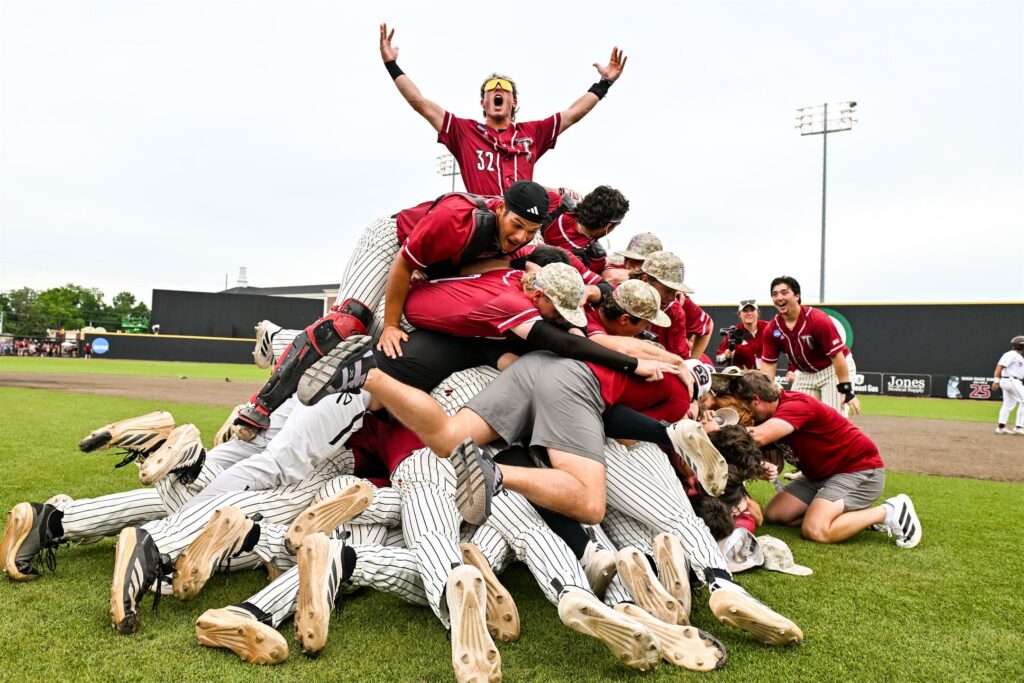
Now, the Trojans have the opportunity to compete on college baseball’s biggest stage as the nation’s heartthrob.
“We’re excited to be able to compete in the greatest atmosphere college baseball has to offer,” Crotchfelt said. “We’re looking forward to getting to play with each other in the most meaningful baseball of our lives thus far.”
As the first pitch of the 2026 College World Series approaches, the story remains the same as it has for generations. Eight teams arrive believing they can be the last one standing. Only one will leave Omaha as national champion.
For the players, coaches, umpires and fans who make the annual journey, the College World Series represents more than a tournament. It is a celebration of the sport’s traditions, its pure passion and its pursuit of excellence that embodies all the traits of amateur sports.
Omaha is where a walk-off in the ninth can rewrite a program’s entire history. It’s where a team from small-town Alabama can stare down a dynasty and mean it. Omaha doesn’t care about rankings, and it never has. One city. One week. Every outcome on the table.
VIDEO TRANSCRIPT: Where is Troy University?
Joey Cicini: The best thing about college sports is Cinderella stories and that’s no different in Omaha starting tomorrow for the 2026 College Baseball World Series. And who’s wearing Cinderella’s glass slippers this year? The Troy Trojans. I took a trip around Central New York asking people if they knew where Troy University was and where that magic carriage is going to pick up the Trojans and take them to Omaha.
Syracuse Resident 1: Um, California?
Syracuse Resident 2: Troy University is in Arizona.
Christian Locker: I don’t know, like Arkansas? No. Let’s go with Mississippi, maybe?
Tasman Goodrick: I’m guessing because it’s in the Sunbelt Conference, probably down south somewhere. So I’m going to say Louisiana. Something like that.
Syracuse Resident 3: I’m gonna go Alabama.
Adam Crooks: Troy’s in Alabama. It’s not hard. It’s in Southern Alabama below Auburn.
Christian De Guzman: This is just based on college football gameplay knowledge. Troy might be in Alabama.
Augie Walters: Troy is in Alabama. Brittle-Pace Field. Not one of my finest outings back in the day.