

© Leah Masi, 2026
SYRACUSE, N.Y. — Putting down your phone isn’t always easy, especially when your job depends on staying connected.
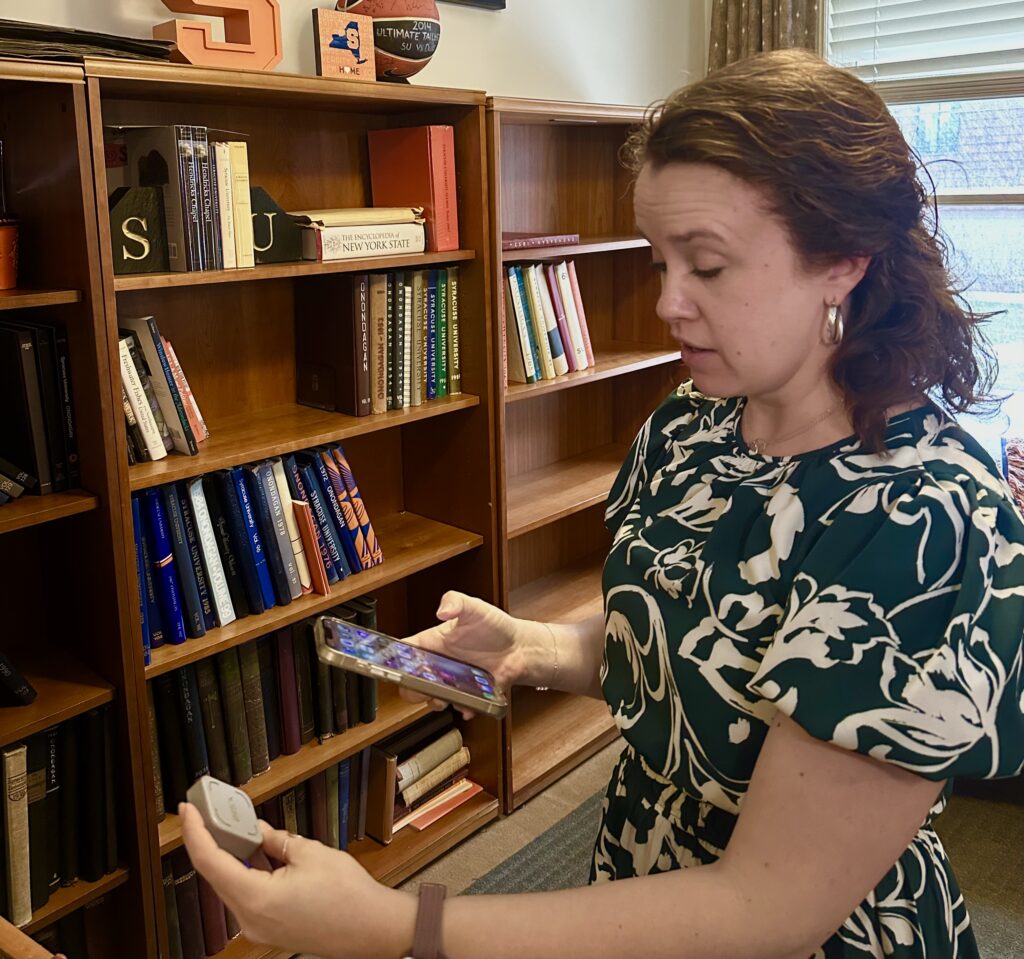
For Kim Infanti, executive director of alumni and constituent engagement at SU, finding a balance between staying connected and knowing when to unplug has become a challenge.
Infanti, like many others, is looking for ways to cut back on screen time. She turned to a small device called Brick, which helps curb the urge to constantly check your phone.
“I definitely feel like there’s a level of addiction,” Infanti said. “And so, for me, I was like, what can I do to break the addiction? And that’s where Brick came into the equation.”
The gadget is small enough to fit in the palm of your hand and allows users to lock themselves out of selected apps on their phones with a simple tap.
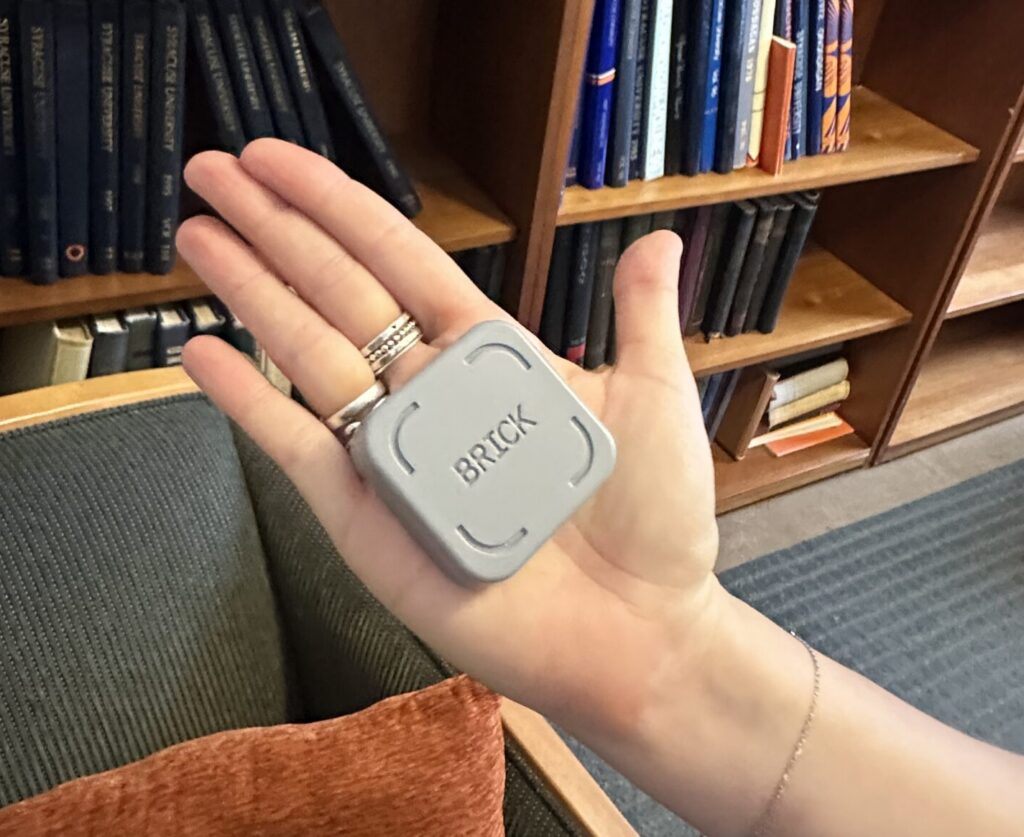
She purchased two Brick devices around Christmas. One for her husband, NewsChannel 9 sports director Steve Infanti, and one for herself. She said his remains unopened, and she hasn’t used hers as much as she would like.
“It’s really hard, especially in a job when I’m kind of required to keep an eye on social channels and stay on top of my email,” she said. “You feel the need to check. I hate that. I don’t want to be so constantly feeling connected.”
Users can choose which apps to “brick,” and Infanti said she targeted platforms that tend to draw her in.
“Instagram, Facebook, X are the social apps that really get me going. I didn’t choose to brick my work email because I felt it was important to be able to still check that,” Infanti said. “But what I really like about brick is that you decide which ones you’re going to put into this certain mode.”
But Infanti said the device does more than block access. She said it forces a moment of reflection through the physical action of tapping her phone to the device.
Video Transcript
Leah Masi, reporter: A small gadget that can fit in the palm on your hand. It’s called Brick. It can help lock you out of certain apps on your phone with just a tap.
Kim Infanti: I feel a temptation to constantly check my phone.”
Masi: Kim Infanti is the executive director of alumni and constituent engagement at S-U and she says she had to make a change to break her bad habits.
Infanti: “I definitely feel like there is a level of addiction. And so for me, I was like, what can I do to break the addiction? And that’s where brick came into the equation.”)
Masi: But she hasn’t used the device as much as she’d like to admit.
Infanti: It is really hard, especially in a job when I’m kind of required to keep an eye on social channels. Stay on top of my email. You feel the need to check. I hate that I don’t want to be so constantly feeling connected.
Masi: Infanti says you get to choose which apps you ‘brick’ and she picked apps such as Instagram, Facebook and Twitter that suck her in.
Infanti: When you have a five year old in a playroom playing saying, ‘Mom, come do Mario Karts with me’ and I’m going over to the fridge to unbreak my phone. Well, that allows me to ask the question, do I really need to, brick right now? Or should I be more present with him as a mom where he needs me?
Masi: It’s too easy to get caught up doomscrolling for way longer than you should and S-U student Victoria Chen says exsessive phone usage is impacting her everyday life.
Victoria Chen, student: You think it’s going to be for like two seconds, two minutes, and it ends up being like two hours. So it really gets in the way.
Masi: While Chen tries to cut back on her phone time, Infanti understands why devices like Brick are gaining popularity.
Infanti: I’m seeing a lot more of it on social media, a lot more influencers using it. I think that’s going to start to trickle down mainstream, as we all look for a way to get away from that addiction.
Masi: Trying to find a balance between staying connected and knowing when to put the phone down. In Syracuse, Leah Masi, NCC News.
“When you have a five-year-old in a playroom saying ‘Mom, come do Mario Karts with me,’ and I’m going over to the fridge to unbrick my phone, it allows me to ask the question, do I really need to unbrick right now?” Infanti said. “Or should I be more present with him as a mom where he needs me?”
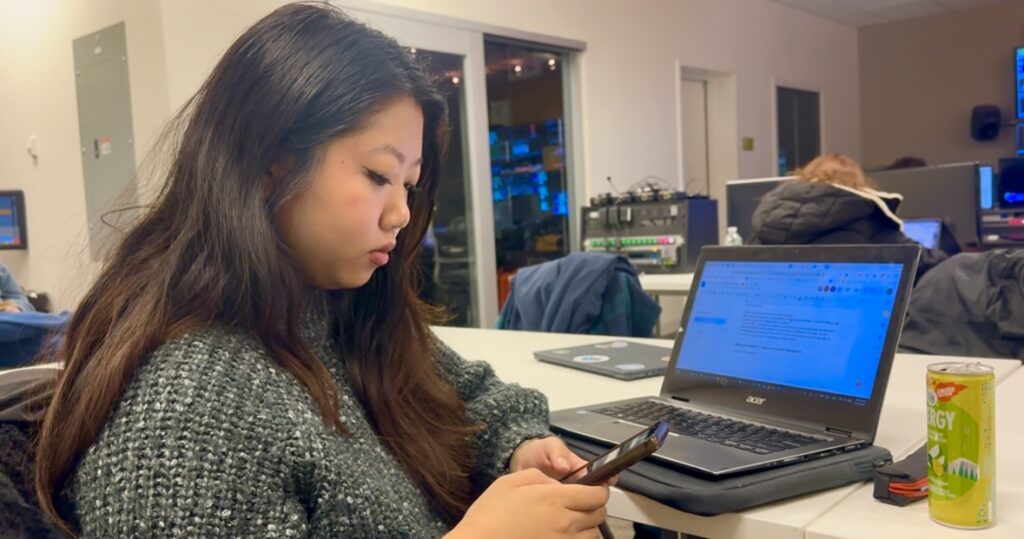
Infanti isn’t the only one struggling. SU student Victoria Chen also finds screen time hard to manage.
Syracuse University student Victoria Chen said excessive phone use often interferes with her daily life.
“You think it’s going to be for like two seconds, two minutes, and it ends up being like two hours,” Chen said. “It really gets in the way.”
Chen said she has tried making conscious efforts, such as using screen time tools to limit phone usage, but breaking the habit has been difficult.
“It has the button that’s like, ‘add another 15 minutes’ or completely exit out of the screen time, or add a passcode to get out of there,” she said. “There are all these barriers and it’s so easy to go through them.”
© Leah Masi, 2026
She said she has also noticed a rise in content encouraging people to reduce their screen time.
“On TikTok, people have been going more analog, encouraging journaling or using a notebook instead of using an iPad to take notes as a way to get out of that digital black hole,” she said. “Ironically, through social media, people have been encouraging others to get out of social media by using old-school tactics.”
While Chen is still working to reduce her screen time, Infanti said she’s noticed devices like Brick gaining traction, especially online.
“I’m seeing a lot more influencers using it,” Infanti said. “I think that’s going to start to trickle down mainstream, as we all look for a way to get away from that addiction.”