

A quarter of clients who use the food pantry at the Westcott Community Center are SU students. Food affordability remains a burden for SU students and many are unaware of the resources available to help.
SYRACUSE, N.Y. (NCC News) – College students are often associated with opportunity and privilege. However, this perception can overlook the financial challenges many students face in affording everyday necessities – including food. For students who already struggle to pay for tuition and housing, the cost of food can be an additional financial burden.
The prevalence of food insecurity on college campuses ranges from 19% to 56%, according to a 2023 review by researchers Brittany Loofbourrow and Rachel E Scherr. They also examined the negative effects that food insecurity can have on a student’s academic performance and overall well-being. Syracuse University is not exempt from this statistic.
At SU, where tuition alone approaches $70,000, the cost of food is a factor to consider when students manage their budgets.
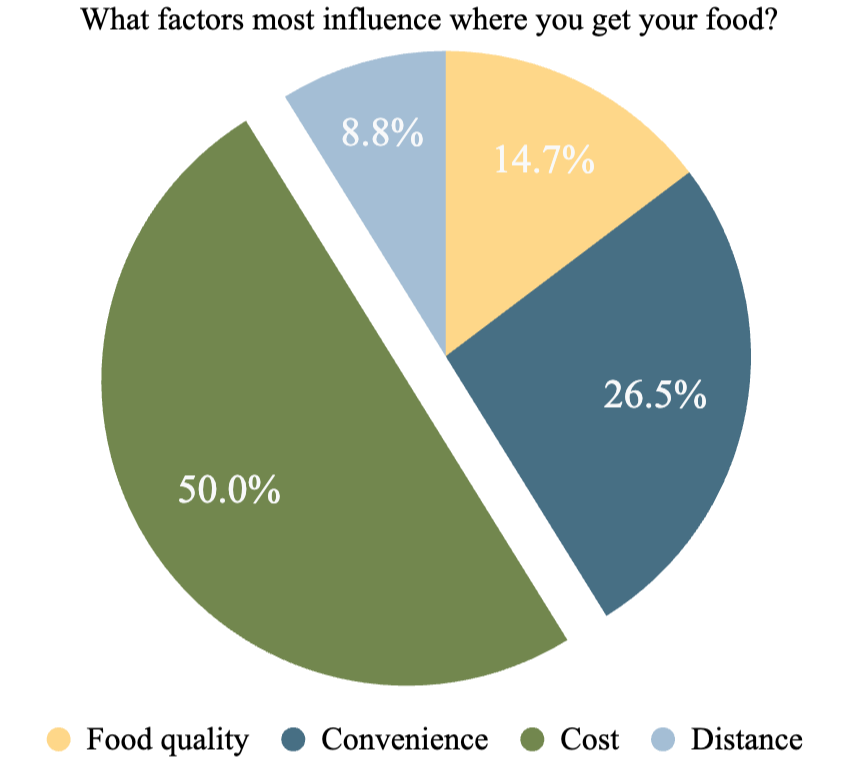
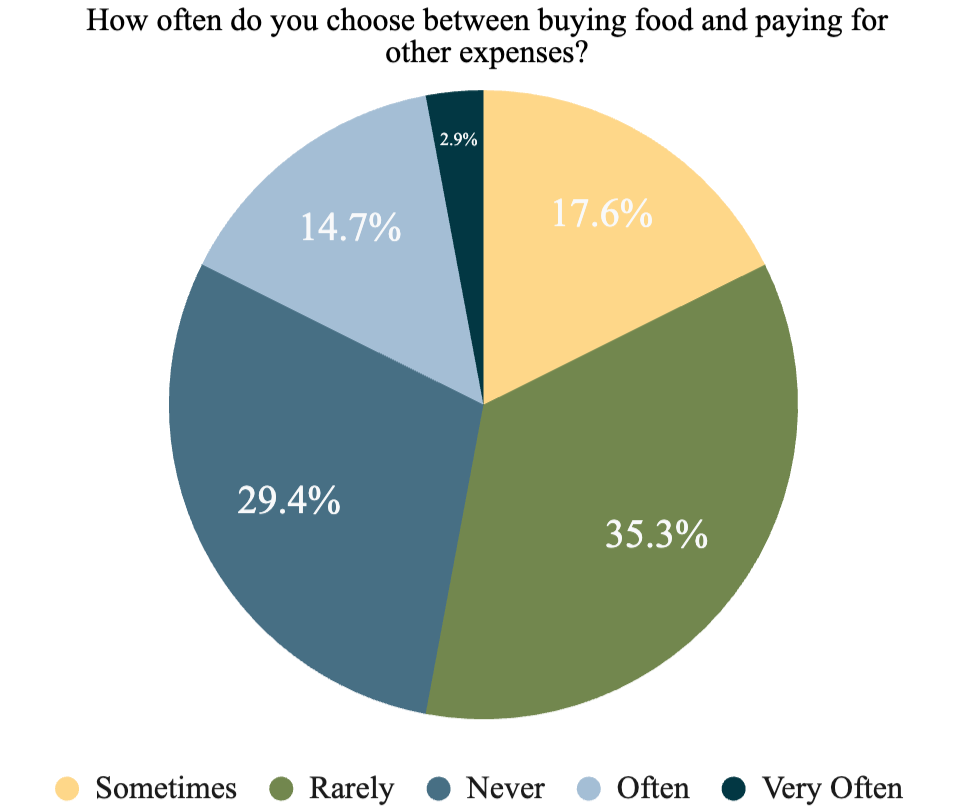
In a survey conducted for the purpose of this story, 50% of participants stated that cost was the primary factor influencing where they buy food. When asked whether they have to choose between buying food and paying for other expenses, 17.6% of participants said they sometimes face this dilemma, while 14.7% said they often do and 2.9% said they very often do. 35 SU students participated in this survey.
There are resources in the Syracuse area that can ease this burden for not only students, but all community members.
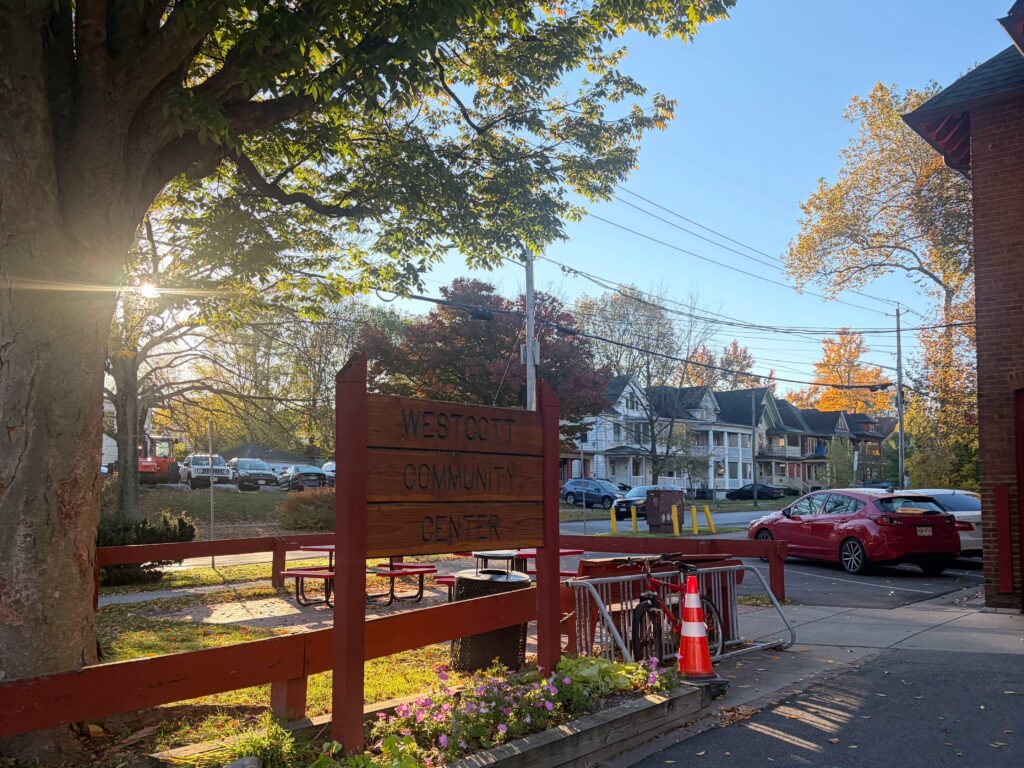
The Westcott Community Center is one option that offers an off-campus food pantry. Located walking distance from SU’s main campus, the community center is a resource that many students utilize.
“27% of the people that attend our pantry overall are Syracuse University college students,” explained the center’s executive director, Joan Royle. “27% of our overall pantry is rather high.”
Royle, who was named executive director of the center in 2015, oversees the funding and staffing of the community center. She attributes students’ reliance on the pantry to the high cost of attending college combined with the rising prices of everyday necessities.
“The cost of tuition is pretty high, so not everybody gets the proper meal plan,” Royle explained. “Everything’s expensive right now, no matter where you go or what you do.”
While resources like the Westcott Community Center’s food pantry help address food insecurity among students, many are unaware of the resources available to them both on and off campus.
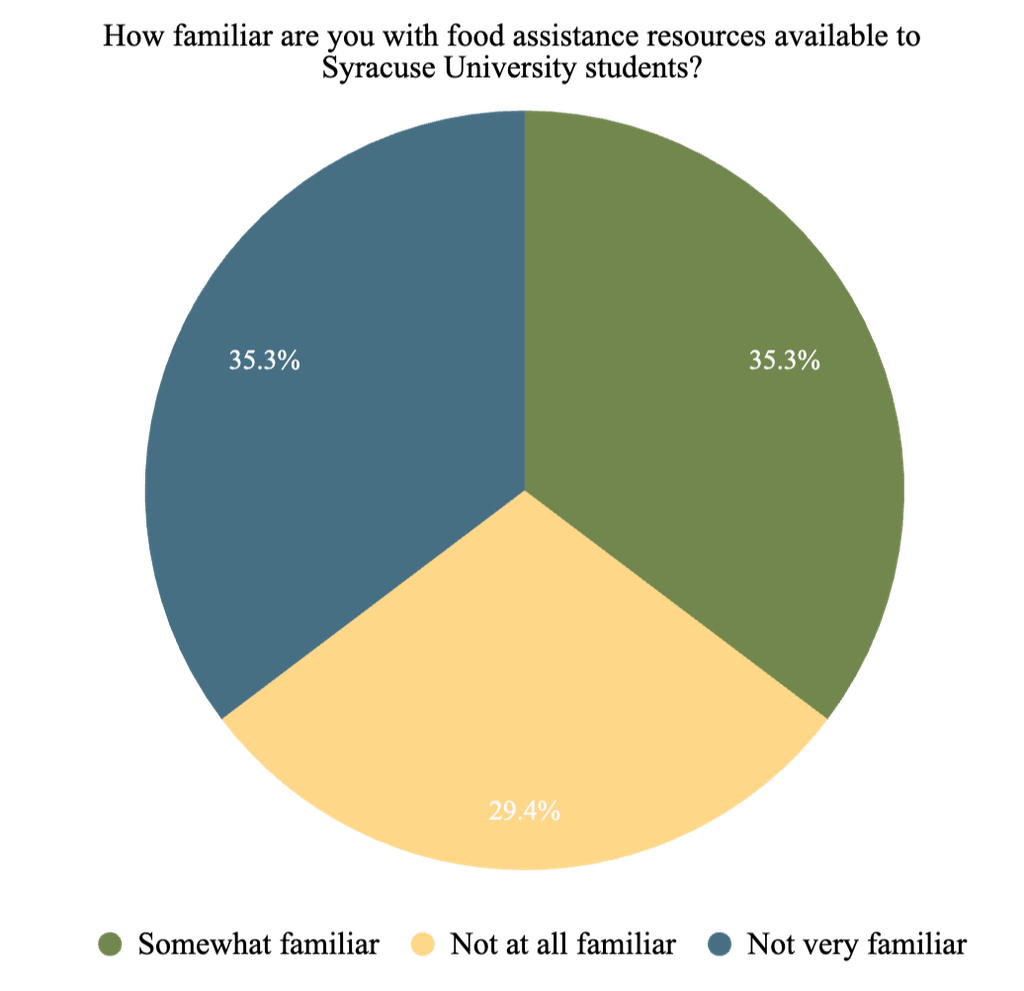
Survey responses indicated a lack of awareness about available food assistance resources at SU. While no participants reported being very familiar with the resources available to them, 70.6% said they were somewhat or not very familiar with these resources, and 29.4% said they were not familiar with them at all.
At SU, there is a food pantry available in two locations on campus. The Coach Mac Food Pantry can be found at the lower level of SU’s Hendrick’s Chapel as well as at a second location at the university’s South Campus. The pantry provides food and basic personal and household items to all SU students.
“I can tell you now that if I went to like almost all 80 of my residents, maybe five of them would know that that exists,” said Ava Lubkemann, a resident adviser at SU’s Milton Hall. “But there’s also another food pantry on South Campus that I didn’t even know about and I lived there for two years.”
Lubkemann is a senior studying environmental engineering at SU who, aside from working as a RA, founded her own company. Lubkemann’s Revamped works to reduce textile waste on college campuses, an endeavor that was motivated by her experience of dumpster diving as a form of income for basic needs in which she would upcycle and resell what she found.
“I didn’t know what was at the bottom of a dumpster until I was living off of it,” said Lubkemann.
Lubkemann’s own experience with food insecurity has also motivated her to help other students. At a previous residence hall where she worked, she was able to establish a mini food pantry for the residents on her floor.
“Something that I witnessed with my residents on South Campus, is they just felt as if they were falling through the cracks, and I saw it, and it’s disheartening,” Lubkemann explained.