

VIDEO TRANSCRIPT: 450,000 New Yorkers are losing their health insurance July 1
Miguel Freire: At the end of this month, nearly half a million New Yorkers — including 9,000 right here in Onondaga County — will lose their health insurance because of federal cuts. Lawmakers pushed Albany to act. The state budget passed without a fix. NCC News reporter Matthew Davison has the story. Matthew?
Matthew Davison: Danny, Miguel thanks. These are people caught in the middle — they have jobs, but earn too much to be eligible for Medicaid, but don’t earn enough to afford what comes next. I spoke with some of the affected residents earlier today.
Teri Felt: They need to thank God that they’re not in this situation.
Matthew Davison: After suffering a stroke last September, Liverpool’s Teri Felt was put on the Essential Plan — free insurance to cover her medical costs. But as of July 1, she’ll have to find a new plan.
Teri Felt: The other plans I’ve looked into are running about $600 a month. Who can afford an extra $600 — but who can afford not to when you’ve had these health issues going on?
Matthew Davison: Felt is one of nearly half a million New Yorkers losing coverage under the Essential Plan. Federal cuts dropped the income eligibility threshold. The state budget, signed May 28, passed without a fix.
Sarah Hamersma: This is one of those cases where the state government is trying its best to minimize the impact.
Matthew Davison: Maxwell School public policy professor Sarah Hamersma says the impact will be felt across Central New York’s healthcare system. Hospitals are required to treat patients regardless of their insurance status — but when patients can’t pay, the financial burden falls on them.
Sarah Hamersma: They need to take care of people, and then they have to figure out the money later — and what that means is, in some of these cases, the money just won’t be figured out later, because there isn’t any insurance to draw on.
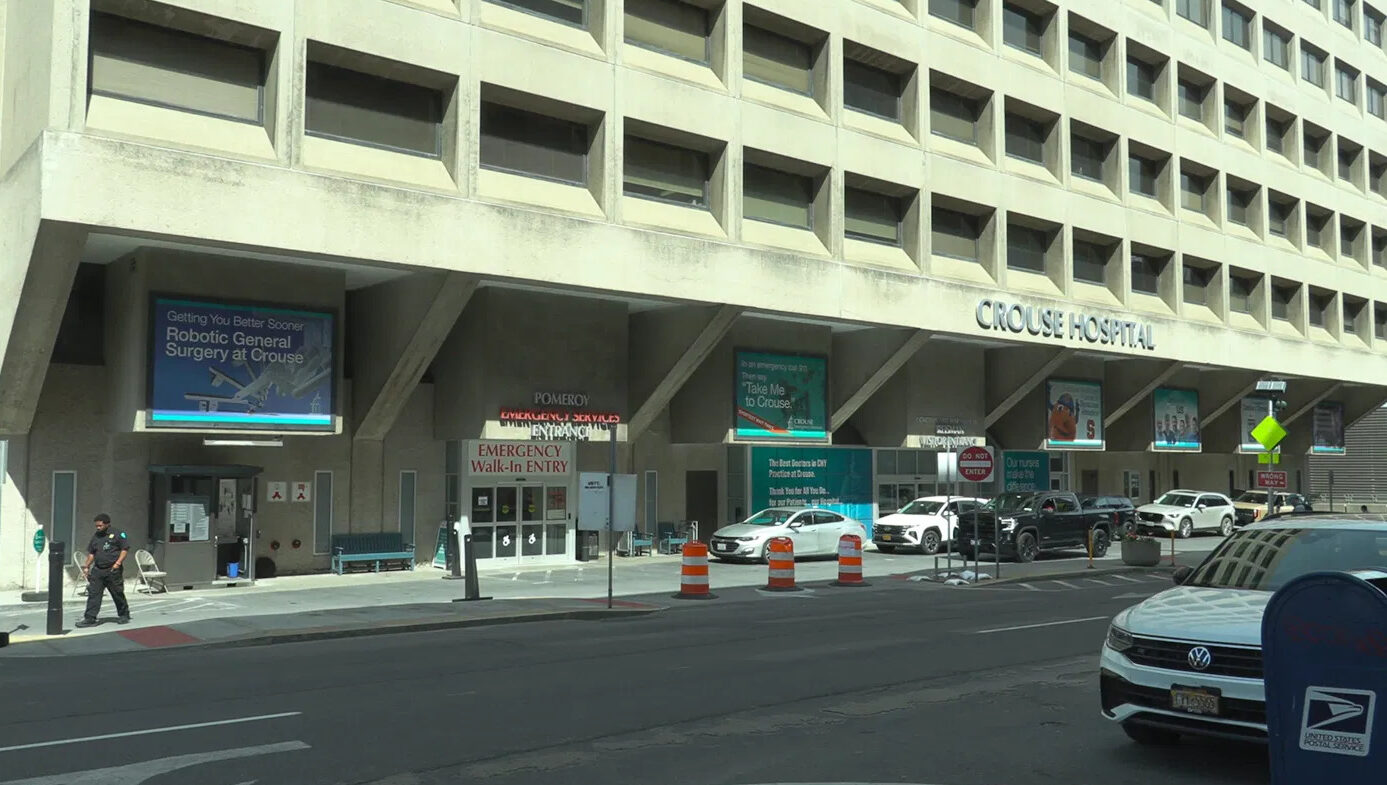
Matthew Davison: Affected residents have until August 30 to enroll in a replacement plan and can request a retroactive July 1 start date to avoid a gap in coverage. The New York State Department of Health says it is providing personalized guidance to those impacted. Live outside Crouse Hospital, I’m Matthew Davison, NCC News.
SYRACUSE, N.Y. (NCC News) — Teri Felt suffered a stroke last September and was enrolled in New York’s Essential Plan, health insurance which offers low copays, no deductible and no monthly premium.
But in April, a letter arrived. She was no longer eligible.
“I thought, that’s got to be a mistake,” Felt said. “I actually make a little less than I did when I got set up on the plan, and just overnight it seems like all of a sudden I’m making too much money.”
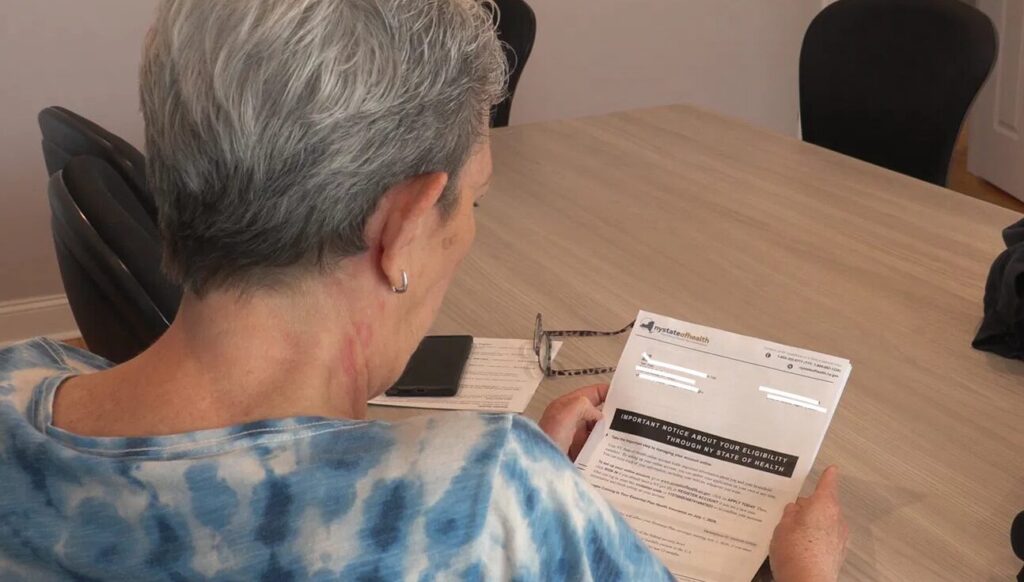
On July 1, Felt will be among nearly half a million New Yorkers losing coverage under the Essential Plan, a program for residents who earn too much to qualify for Medicaid but not enough to comfortably afford private insurance.
According to the New York State Department of Health, people with household incomes above 200% of the federal poverty level — $31,920 for an individual or $54,640 for a family of three — will lose eligibility on July 1. The changes stem from federal funding cuts under H.R. 1, also known as the One Big Beautiful Bill Act, signed by President Donald Trump in July 2025.
The department said the changes affect about 450,000 enrollees statewide and that notices were sent beginning April 1.
The least expensive replacement plan Felt has found costs about $600 a month and carries deductibles in the thousands.
“Who can afford an extra $600?” she said. “But who can afford not to when you’ve had these health issues going on?”
In Buffalo, Brittany Mertel, 39, a single mother who works part time, says her best replacement option costs $477 a month and comes with a $5,500 deductible.
“It’s not doable. It’s not an option,” Mertel said. “I will just go uninsured.”
Mertel said she has four doctor’s appointments scheduled in June and hopes to address as many health concerns as possible before her coverage ends.
“We need health care, we need universal health care, we need them to fight for us,” she said.
Sarah Hamersma, an associate professor of public administration and international affairs at Syracuse University’s Maxwell School, said the effects will extend beyond those losing coverage.
“The hospitals just simply won’t get paid for some of the services that they provide that they used to get paid for,” Hamersma said. “The hospitals pay part of the price, the individuals pay part of the price.”
When Gov. Kathy Hochul signed the state budget on May 28, it did not include a remedy for the coverage loss. NCC News reached out to the governor’s office for comment. As of publication, the office had not responded.
The New York State Department of Health said affected residents have until Aug. 30 to enroll in a replacement plan and can request a retroactive July 1 coverage start date to avoid a gap in insurance. Free enrollment assistance is available by calling 855-355-5777.