

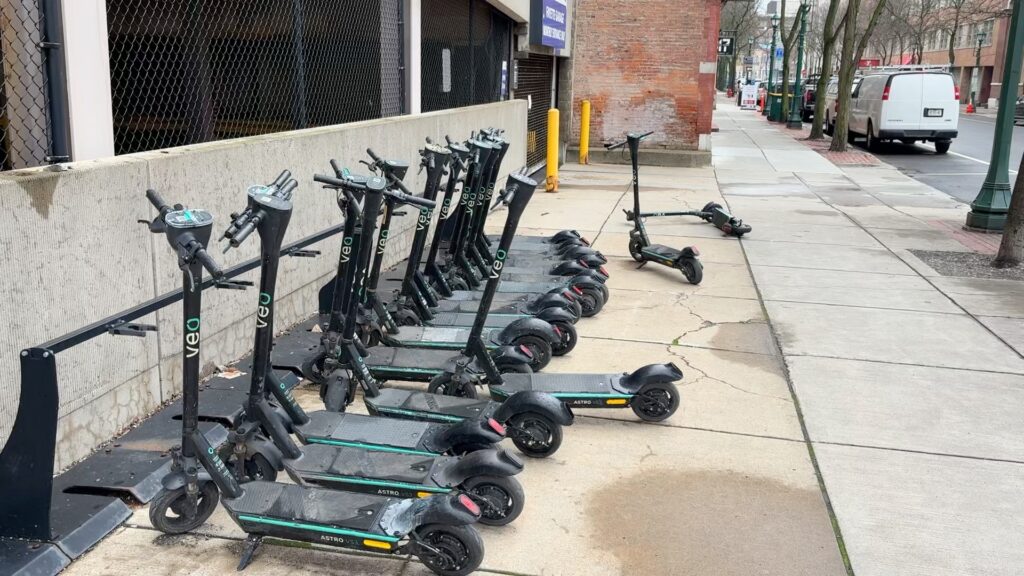
SYRACUSE, N.Y. (NCC News) — As the snow melts and spring returns, so do the teal and black Veo bikes and scooters scattered across Syracuse streets. Their reappearance marks another year in the city’s five-year pilot program, one designed to expand transportation options — but also one that continues to divide opinion.
For many residents, the scooters offer a simple, low-cost way to get around. Syracuse Veo Operations Manager Jeff Calobufo said the program plays a key role in a city where nearly 30% of residents do not own a car. Public transit, he noted, cannot meet every need.
“The buses can’t be everywhere at once,” Calobufo said. “Our job is to fill in the gaps, to be that extra mode of transportation.”
He described the scooters as a “first-mile, last-mile” solution, helping people travel between bus stops and final destinations like work, home or grocery stores. This year, Veo has added front baskets to its scooters to support short trips like grocery runs.
Still, that promise comes with tradeoffs.
Syracuse Common Councilor Marty Nave said complaints from residents remain steady, especially in his district. He and his constituents point to scooters left on sidewalks, lawns and even in the street, sometimes forcing pedestrians and drivers to navigate around them. In some cases, he said, residents have reported being unable to leave their driveways due to blocked access.
“I get calls from constituents saying it’s on my lawn or in the middle of the road,” Nave said. “Vehicles have to go around.”
Nave also described recurring “pileups” of scooters in high-traffic areas, including near Syracuse University and along major corridors, where dozens of bikes can accumulate. In one case, he said a local business owner called about a large cluster left sitting near a property for an extended period.
Safety concerns go beyond parking. Nave said he regularly hears about riders weaving through traffic, ignoring signals or lacking experience. He also raised concerns about underage riders using accounts tied to parents, despite the 18+ requirement.
“You have people riding the bikes who shouldn’t be on them,” Nave said. “They don’t know how to drive and they zig-zag through traffic.”
He added that some riders treat the scooters more like recreational vehicles than transportation, using them for “joyrides” rather than practical trips, which can increase risky behavior.
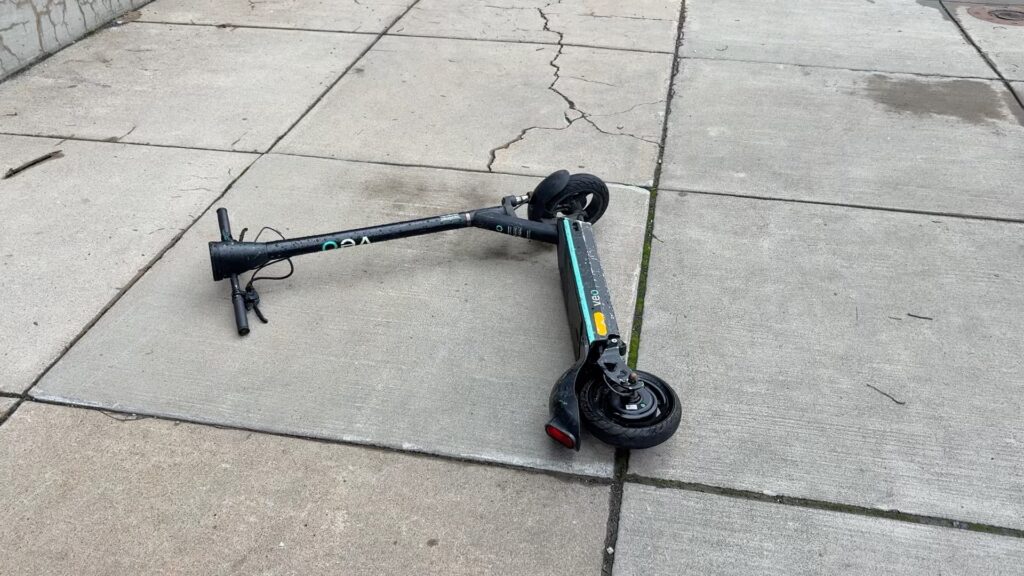
Maintenance remains another point of tension. Nave recalled an incident where a rider claimed their brakes were not working properly, raising concerns about how often scooters are inspected. He also described seeing damaged units — including ones with torn seats and worn tires — still sitting in public spaces.
Environmental impact has also surfaced as a concern. Nave said city officials have reported scooters being dumped in areas like Onondaga Creek, suggesting misuse that goes beyond simple parking violations.
Veo officials say they are working to address these issues. Calobufo said the company uses a combination of enforcement, data and new technology to improve operations. He meets regularly with city departments to share data that can help guide infrastructure decisions like bike lanes and transit planning.
Riders who park improperly or break rules can face fines, and repeat violations can lead to suspension. The company has also introduced a required end-of-ride photo system and is testing AI tools that can detect poor parking in real time.
Still, some challenges are harder to control. Calobufo said issues like underage riding largely come down to education, since scooters cannot always verify who is actually using an account.
Meanwhile, questions about accountability remain. Nave pointed to past cases where residents reported damage involving scooters but struggled to identify riders or resolve claims without filing formal reports, adding another layer of frustration.
The city continues to weigh improvements. Nave said he has pushed for more bike lanes, designated parking areas and clearer safety features, such as better signaling systems and visibility measures for riders. Without those changes, he believes concerns will persist.
Despite his criticisms, Nave acknowledged the scooters still serve a purpose for many residents.
“It’s a good alternative mode of transportation if they don’t want to take the bus,” he said.