

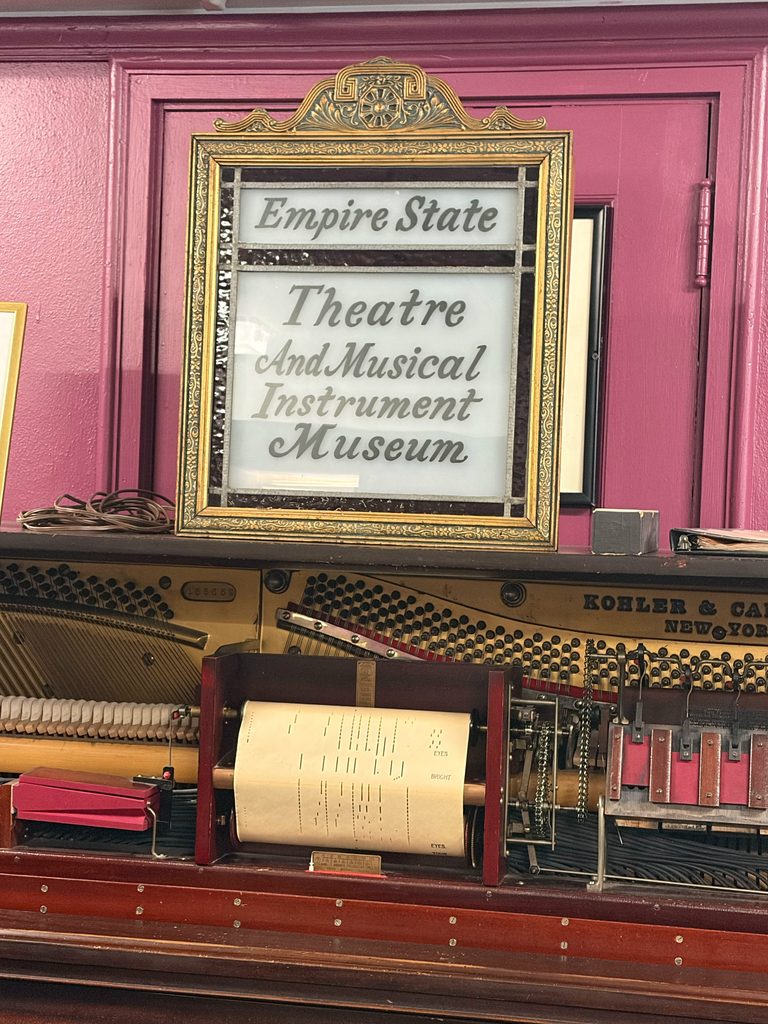
SYRACUSE, N.Y. (NCC News) — Dale Abrams has tuned, rebuilt and maintained organs that are more than a century old.
For nearly 15 years, Abrams has worked at the Empire State Theatre and Musical Instrument Museum, or ESTMIM, located on the New York State Fairgrounds. Abrams was invited to take over the position as organ technician from a retired member of the organization.
“I was handed the proverbial tuning lever,” said Abrams. “I go through every voice on the organ, every note, make sure they reliably play. If not, I investigate why, it’s usually a magnet that’s not firing.”
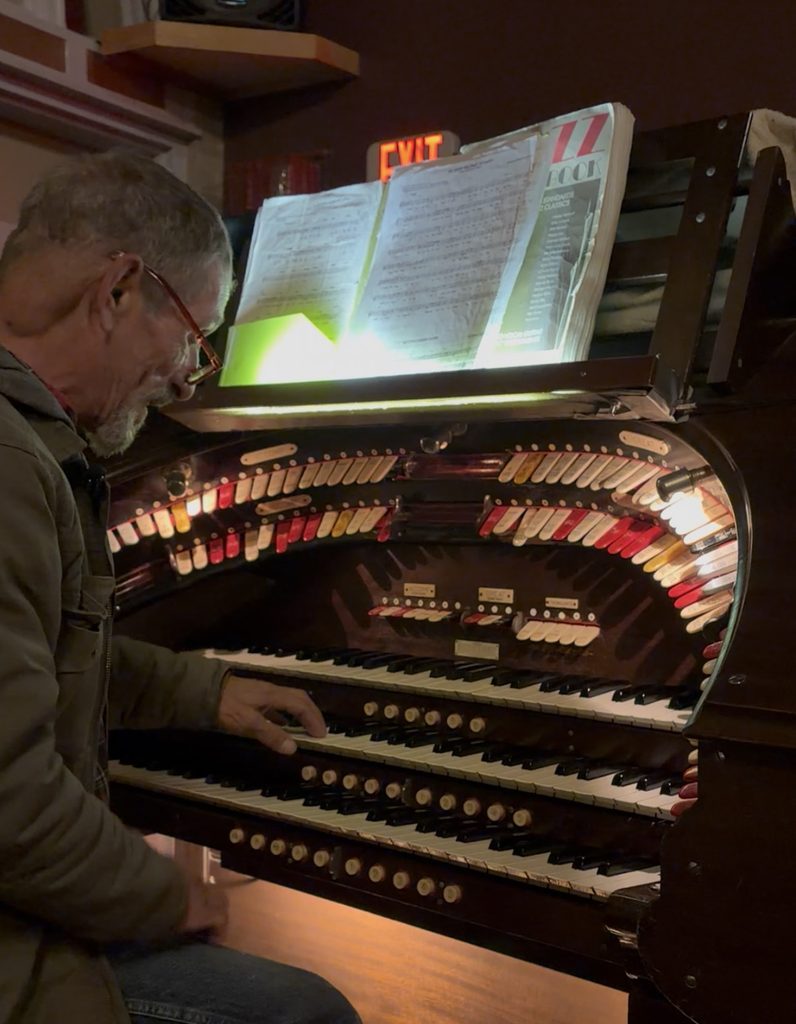
Abrams comes in weekly for the upkeep of the museum and the Wurlitzer Theatre Pipe Organ. The organ is more than 100 years old, built in Tonawanda, New York in 1925. The organ was originally kept at the RKO Keith Theatre on Salina Street, before moving to the fairgrounds in the ’60s.
The Wurlitzer organ, installed in the Empire State Theatre, can be heard during special programs throughout the fall and spring. The programs include silent films accompanied by the organ and full concerts. During the offseason, Abrams provides restoration as needed to the organ.
“If there’s anything we have to take apart, and sometimes it might be a part for a couple of weeks or a month, and we do specialized maintenance work,” said Abrams.
The rest of the ESTMIM’s collection of player pianos and organs can be found in the museum. The museum also contains projectors and other history from the silent film era. Each instrument has its own unique story.
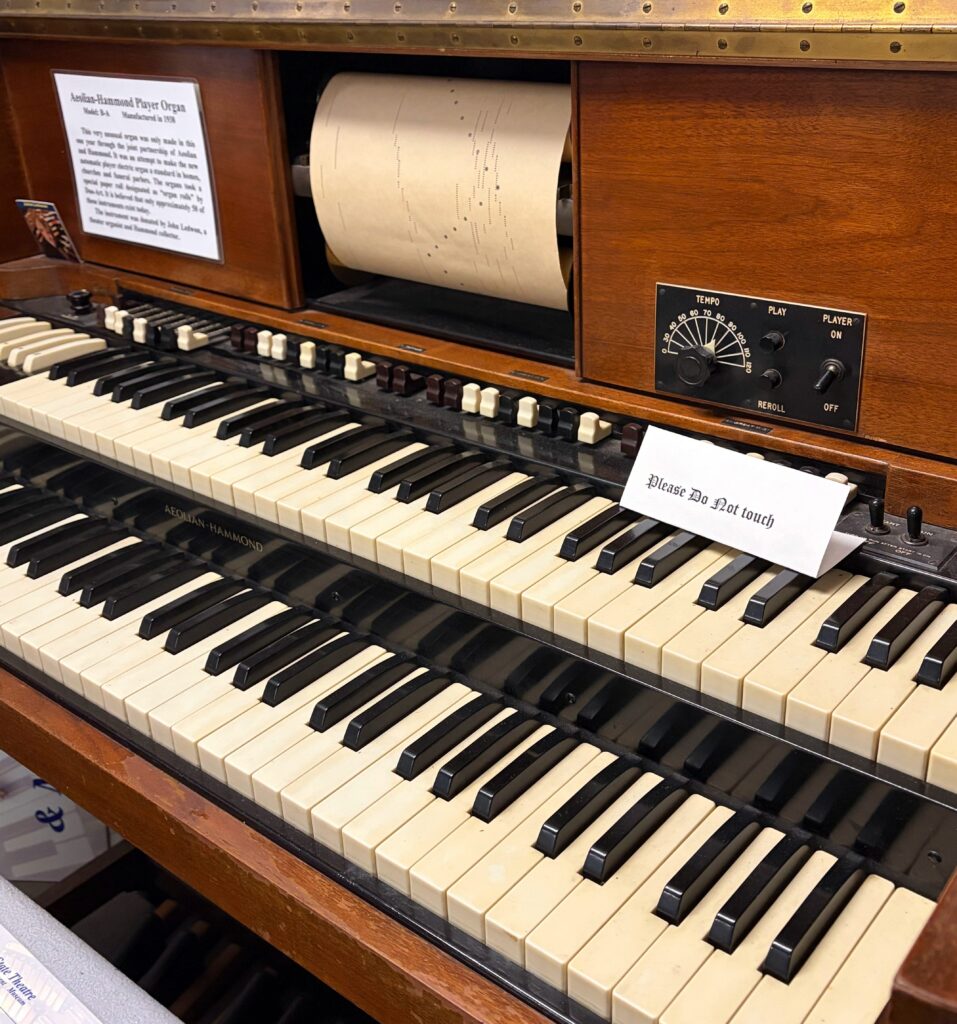
The museum owns an Aeolian-Hammond player organ from 1938. Only about 100 to 200 were made in one year by the Aeolian Organ Company.
“It can be played manually or with a paper roll,” said Abrams.
This organ was only manufactured for one year, as an attempt to make automatic player electric organs a standard in the home. According to the museum, about 50 of these organs still exist today.
The ESTMIM is in possession of the Kohler & Campbell Player Piano from 1913, and plays by pumping foot pedals to activate the player mechanisms inside the piano. Right next to it sits a reed pump organ from the 1890s, one of the oldest instruments the museum has in its collection.
The 1924 George Steck is a small grand piano that can more accurately replicate a selection played by the original artist due to the special rolls it uses. A piano roll is a continuous sheet of paper with punched out holes that correlate to performance data, including note timings and dynamics.
“This piano is a little different as it has about eight levels of automatic expression from soft to loud, all encoded in special rolls,” said Abrams.
The instruments are on display during the State Fair with demonstrations of how the still-functioning organs and player pianos work.
The ESTMIM is a nonprofit organization and relies on volunteers like Abrams to preserve the musical history.
“Once these are gone, they’re gone. You can’t replace them for under a couple million dollars,” said Abrams.