

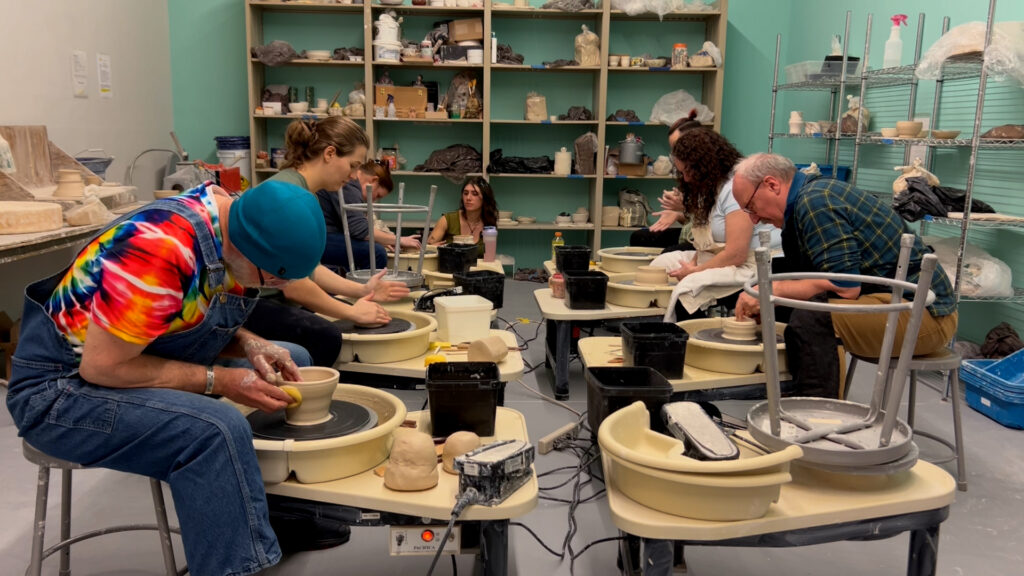
SYRACUSE, N.Y. (NCC News) — Ceramic artist Marley Montague gives a warning to all her first-time students.
“I tell everybody you’re going to make a pile of mush,” Montague said. “It’s a rite of passage. You have to make mush to be able to make something later.”
At the Schweinfurth Art Center in Auburn, Montague is showing people of all ages that wheel throwing is about more than shaping clay. It’s about embracing failure, practicing patience, and finding a creative outlet that can ease the stress of everyday life.
“Wheel throwing can be very chaotic and stressful if you’re starting out. But once you find it, there’s a point where your brain shuts off and you can’t really think about anything but what you’re doing,” she said. “It’s a little escape from the rest of the world, which everybody needs.”
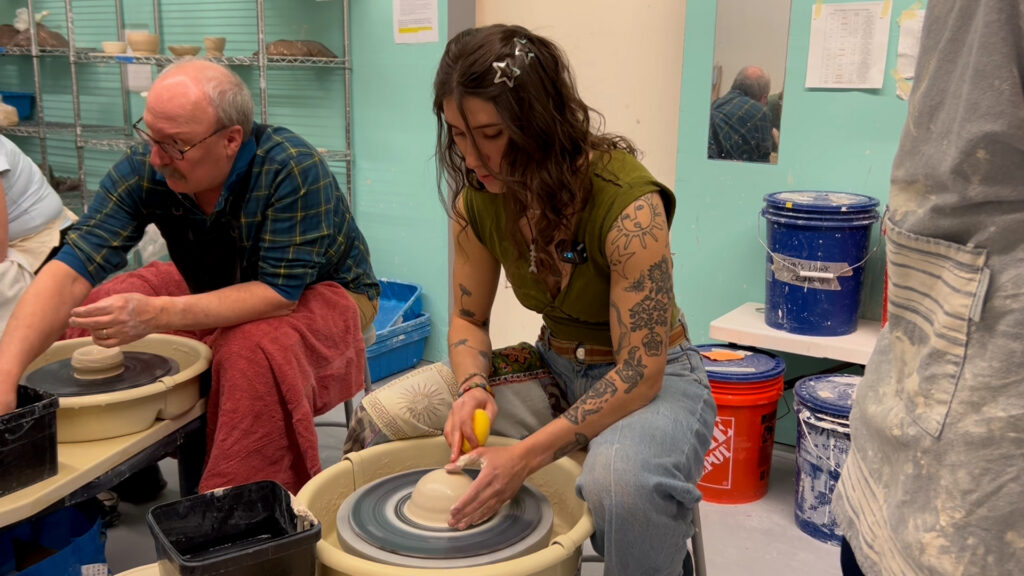
When Montague first started making pottery in high school, it was anything but relieving.
“I hated it at first. It takes time to get to that point and just making sure that you’re okay with not knowing everything,” she said. “It’s hard to be bad at something.”
She stuck with it in college, building the skill and love for wheel-throwing. Now, she teaches it, guiding students through the same messy beginnings she once faced.
“I’ve always loved teaching,” Montague said. “The idea of sharing something I love with other people, kids especially, and making sure that people can be creative, it’s an expression that I think people need in their lives.”
Meghan Lampman, one of Montague’s adult students, said the skills and perspective she’s gained from wheel-throwing apply beyond the art studio.
“It’s a good lesson in patience,” Lampman said. “A lot of the things that happen during class and working with the clay transfers to real life.”
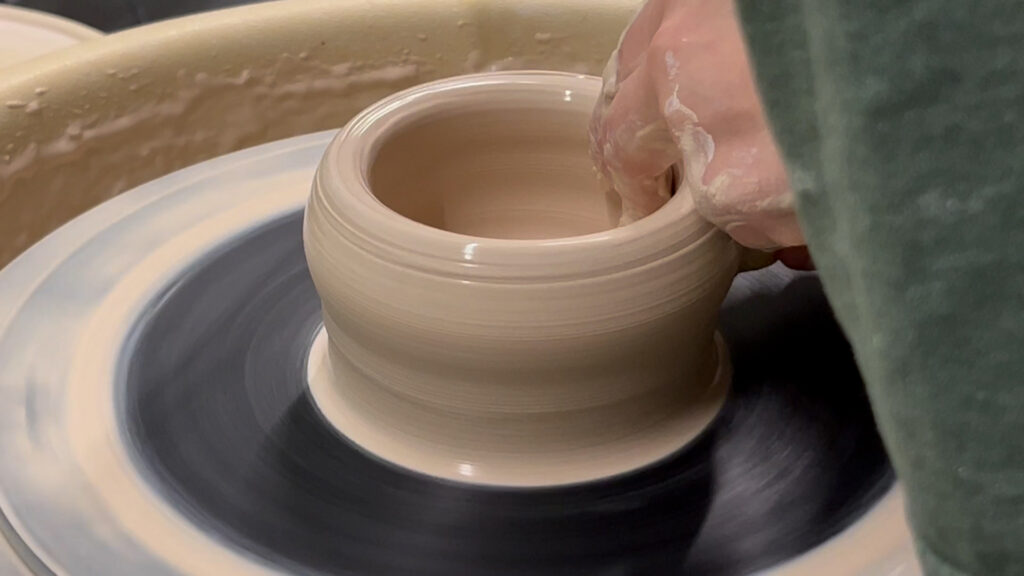
Lampman compared the practice to a form of therapy.
“Some days it’s just come and play with the clay and have your mind kind of quiet down,” she said. “Being able to see something that you’ve made is pretty powerful.”
That sense of calm isn’t just anecdotal. Research from Drexel University and the Sage Neuroscience Center shows that engaging in art activities like pottery can significantly reduce stress and anxiety levels.
The research also agrees with Montague on one critical point: the skill level of the artist is irrelevant.
“A lot of people are always like, ‘I’m not an artist, I can’t do it,’ but I don’t think anybody is an artist unless they try,” she said. “If you’re putting effort into something, you’re an artist. You made art. That’s what an artist does.”
She emphasized that the value of wheel-throwing lies not just in the outcome of the piece crafted but the mindset overall, a perspective everyone can benefit from.
“Sometimes good things in life take practice,” she said. “Good things aren’t easy, and it’s okay to be bad at things to start with. Be kind to yourself.”
VIDEO TRANSCRIPT
SPENCER BULEY, REPORTER: It starts as a lump of mud, even for the teacher.
MARLEY MONTAGUE, WHEEL-THROWING TEACHER: First class, I tell everybody, ‘you’re going to make a pile of mush.’
SPENCER: That was a hard concept for Marley Montague to grasp as a college art student.
MONTAGUE: It takes time to get to that point and just making sure that you’re okay with not knowing everything. And that’s why I hated it at first. I guess it’s hard to be bad at something.
SPENCER: But overtime, she came to love the process.
MONTAGUE: This is an idea that you have to come up with and how you express yourself in this idea.
SPENCER: And now, she’s a wheel-throwing teacher, helping people of all ages along their creative journey.
MONTAGUE: The idea of sharing something I love with other people, kids especially, making sure that people can be creative. It’s, expression that I think people need in their lives.
SPENCER: One of Montague’s students is Meghan Lampman.
MEGHAN LAMPMAN, STUDENT: It’s a good lesson in patience and a lot of the things I have during class and working with the clay transfers to real life to have patience.
SPENCER: Those life lessons keep her coming back.
LAMPMAN: This has kind of been like a therapy for me. Being able to actually, like, see something that you’ve made is pretty powerful.
SPENCER: Wheel throwing certainly isn’t easy at the start, but the best advice is classic: practice makes perfect.
MONTAGUE: Good things aren’t easy. It’s okay to be bad at things to start with. If you’re putting effort into something, you’re an artist. You made art. That’s what an artist does.
SPENCER: In Auburn, Spencer Buley. NCC News.