

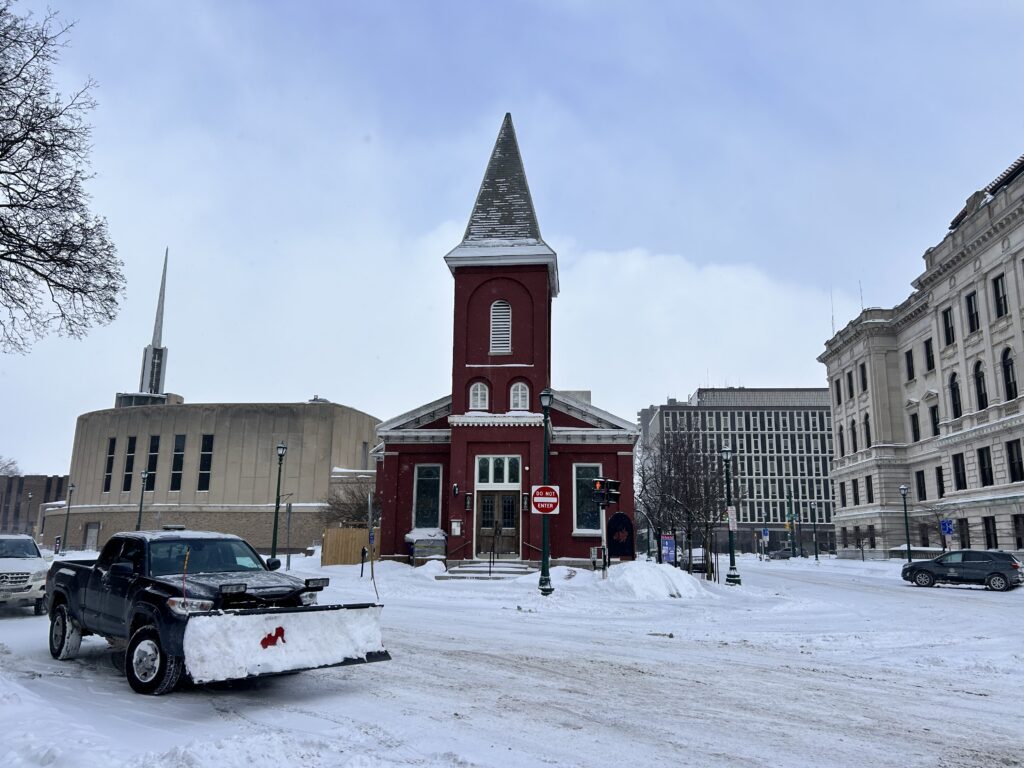
SYRACUSE, N.Y. – Diners now fill the space inside a red brick building that sits on the corner of East Onondaga Street and East Jefferson Street, but in the 1840’s, the space was a center for reformist activism and a major Underground Railroad site.
Downtown restaurant, Noble Cellar, is housed inside the Wesleyan Methodist Church. Originally built in 1846, the historic site was a stop on the Underground Railroad, providing refuge to freedom seekers in its basement.
“Historic structures require preservation, they require love, they require investment, and we are blessed to have that church as a reminder,” Robert Searing, curator of history at the Onondaga Historical Association (OHA), said. “To me, it is a symbol of freedom that speaks to the human condition.”
Before housing Noble Cellar, the Wesleyan Methodist Church housed two other restaurants since 2000. The Mission Restaurant spent 20 years before closing due to COVID-19, followed by Luna Loca, a Cali-Tex Mex restaurant, which closed in 2022. The space was transformed by Noble Cellar owners, Sarah Pelligrini and Rob Zaccaria, in February 2024.
The Underground Railroad first gained momentum in Syracuse after personal liberty laws were weakened by the Supreme Court in 1842, causing the slave trade and recaptures to increase.
At the center of Syracuse’s network was Reverend Jermain Loguen, also known as the Underground Railroad King. He and his wife, Caroline, helped shepherd more than 1,500 enslaved people to freedom in Canada from their home near East Genesee and Pine Streets.
“There were other places where people would have been shepherded to and held for for however many days or hours it needed to happen, but what’s really great about the Wesleyan Methodist Church is that it’s still there, and we know that it was tied in… that’s what makes the Western Methodist Church so special, and that’s also what makes the loss of places like Reverend Loguen’s home just such a tragedy.”
During urban renewal in the 1960s and 1970s, many abolitionist sites in Syracuse were lost, including Loguen’s home.
“We don’t have many buildings left in the downtown core that are of that era, from the 1840s, from the very intense, polarized time,” Searing said. “To be able to keep that building and to maintain it, and to have people in there, and to have to have life breathed into that building, to have people there enjoying food and enjoying community and enjoying loved ones and joy in that space, I think, is tremendous.”
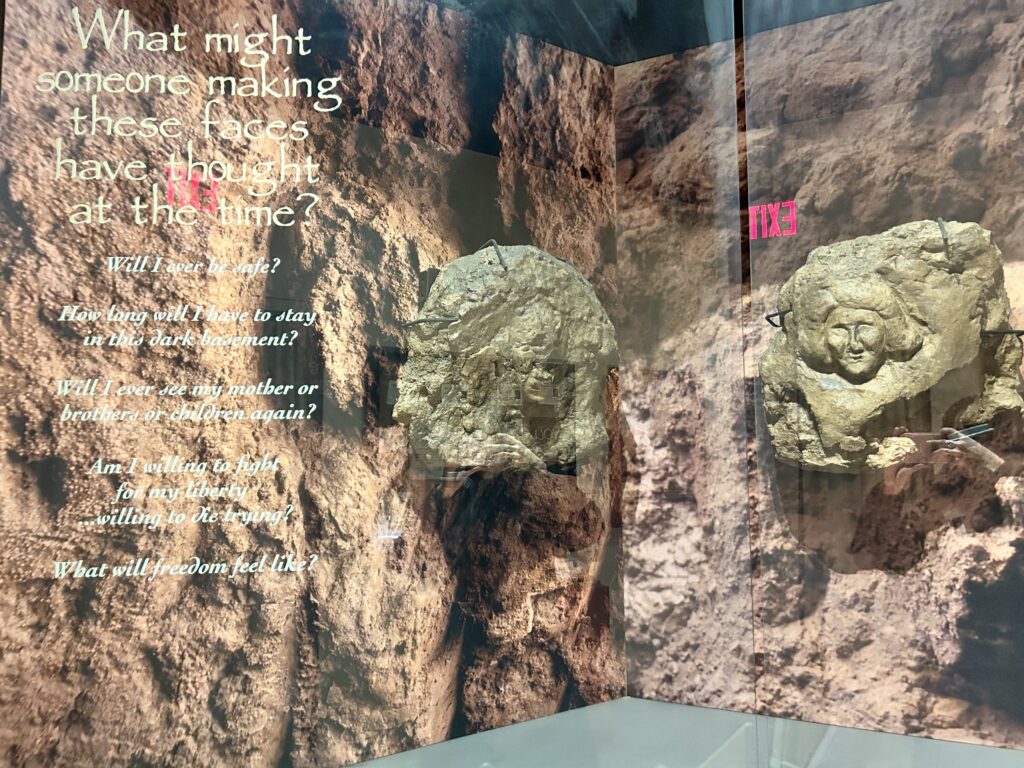
The basement is not accessible to the public, but the building’s history is preserved at the OHA through the Freedom Bound exhibit.
“I think people are really taken aback by how involved Syracuse was in the broader abolitionist movement,” Juniper Feliciano, Guest Service Representative at OHA, said. “Being able to see and hear about the specific people that were involved in the movement from an organizational level, and then just the little narratives that crop up and as people are moving towards liberation, really speaks to a lot of our patrons that come through the exhibit.”
In 2003, faces from the basement, believed to be carved by freedom seekers, were removed and are now displayed in the exhibit.
“Having some of those physical objects there to invoke some of that cultural memory is something that a lot of people don’t come into it expecting to be affected as much as they are emotionally as they go through the exhibit,” Feliciano said.
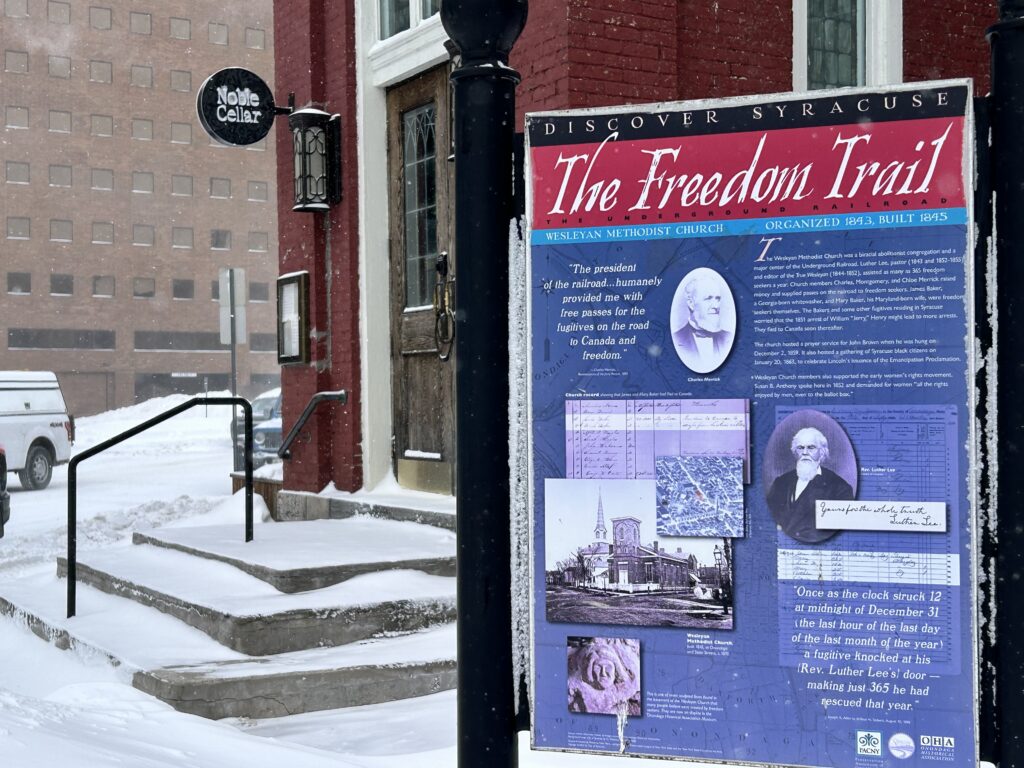
Whether passing the Freedom Trail signs on the way to Noble Cellar, learning about the history inside the restaurant or visiting the OHA, Searing said he is happy that visitors are gaining a deeper understanding of Syracuse’s abolitionist history. His hope is that these experiences inspire people by showing the courage of individuals who risked everything for freedom.
“I think that we can be inspired by the noble and courageous actions of individuals,” Searing said. “Sometimes the weight of all of the badness in the world weighs you down, and history provides perspective.”
TRANSCRIPT – Syracuse Restaurant Once a Stop on the Underground Railroad
Marisa Nuñez: Today, Noble Cellar is a place to eat, but it was once a refuge for freedom seekers on the Underground Railroad.
Robert Searing: It is a symbol of freedom that speaks to the human condition.
Nuñez: Originally, the Wesleyan Methodist Church, built in 1846, the Underground Railroad portion of the space is not open to the public, but its history is preserved in the Freedom Bound exhibit.
Juniper Feliciano: People are, I think, really taken aback by how involved Syracuse was in the broader abolitionist movement.
Nuñez: The Underground Railroad in Syracuse extended far beyond the Wesleyan Church, but the building is one of the last of its kind still standing across Syracuse. Reverend Jermaine Logan and his wife, Caroline, helped guide more than 1,500 enslaved people to freedom in Canada.
Feliciano: We have the carved faces in the very back of the exhibit. Having some of those physical objects there to invoke some of that cultural memory is something that I think a lot of people don’t come into it expecting to be affected as much as they are emotionally.
Nuñez: Even as a restaurant, the building remains a living part of history.
Searing: To be able to keep that building and to maintain it, and to have people in there, and to have to have life breathed into that building, to have people there enjoying food and enjoying community and enjoying loved ones and joy in that space, I think, is tremendous.
Nuñez: Visitors at Noble Cellar pass by the Freedom Trail sign outside as a reminder of the building’s role in the Underground Railroad. Marisa Nuñez, NCC News.