

SYRACUSE, N.Y. (NCC News) — Major media outlets refused to sign the Pentagon’s controversial agreement regarding new rules for media coverage. The policy imposed restrictions, including pre-approval of all coverage, leading to a fierce debate among journalists about the freedom of the press.
Defense Secretary Pete Hegseth defended the new media policy.
“It used to be, the press could go pretty much anywhere in the Pentagon, the most classified area in the world,” Hegseth said on Tuesday, as reported by Politico. “Also, if they sign onto the credentialing, they’re not going to try to get soldiers to break the law by giving them classified information. So it’s commonsense stuff, we’re trying to make sure national security is respected and we’re proud of the policy.”
The controversy centered on the new rules, which The New York Times reported was a stark departure from the past: the old guidelines fit on one page, but the new ones fill 21. The policy memo formalized restrictions, including the requirement that journalists be escorted through most of the Pentagon, and stated that reporters were required to have their published material approved by an authorized official. The deadline for media outlets to sign or risk losing their press credentials was October 15, 2025.
Organizations across the industry strongly condemned the restrictions. The Associated Press (AP) issued a statement saying the policy “undermines the First Amendment and AP’s core values as an independent global news organization.” National Press Club President Mike Balsamo called the requirement a “direct assault on independent journalism,” warning that the public would only receive “what officials want them to see.”
The White House Correspondents’ Association and the State Department Correspondents’ Association stood in solidarity with the Pentagon Press Association, stating, “The public has a right to know how the government is conducting the people’s business.”
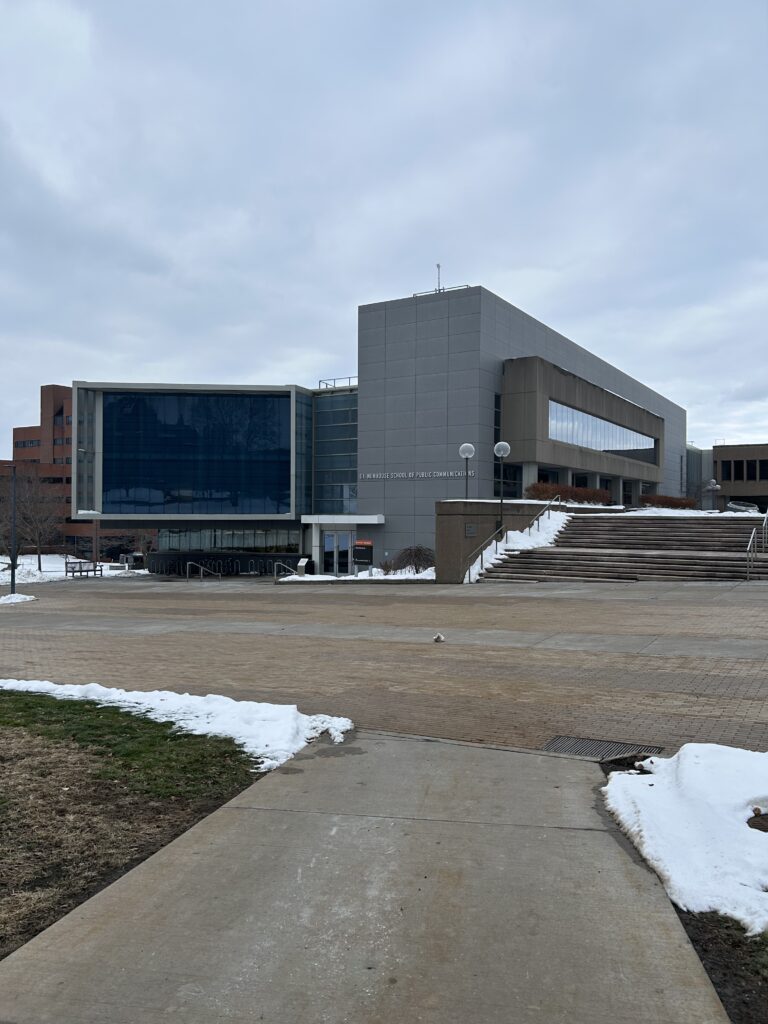
At the S.I. Newhouse School of Public Communications, faculty and students weighed in on the pressure journalists were facing.
Sophia Brownsword, a Syracuse University junior studying journalism and political science, said the administration was “pressuring journalists to compromise their careers.” Brownsword described the situation as uncomfortable, stating she was unwilling to compromise her career to fit in and wants to report freely without consequence.
Newhouse freshman Zac Ventola commented on the challenges journalists felt reporting freely under the new administration. He described the situation as “forcing journalists to twist stories in certain ways, or else they won’t get the opportunity to speak their mind.”
Faculty have also had to discuss how to teach these moments while staying true to the ethics code. Aileen Gallagher, an SU professor of journalism and ethics practice, offered advice for aspiring students and current professionals.
“Every journalist should know what their rights are. What is protected by the First Amendment,” Gallagher said.
Professor Gallagher emphasized that journalists must work in cooperation to come together and stand up for themselves.
As this story continues to unfold, most major news organizations, including ABC News, CBS News, FOX News, and The Wall Street Journal, declined to sign the agreement, which led them to lose their press passes to the Pentagon. News reports indicated that only a handful of reporters, primarily from right-leaning outlets, agreed to the policy, while dozens of journalists turned in their credentials on the deadline.
AUDIO TRANSCRIPT: PENTAGON PRESS RESTRICTIONS
Anchor: Tension is building up between the news outlet and the Trump administration due to the new Pentagon restriction on media access to the defense department. Javier Lopez has more on this.
Javier Lopez: Journalists and major news organizations are refusing to sign the new Pentagon press restrictions. This ongoing issue has seen the New York Times and the Associated Press not sign the agreement. A junior at Newhouse, Sophia Brownsword spoke about the pressure some journalists feel to compromise their careers.
Sophia Brownsword: The administration is definitely pressuring journalists to, like, feel like they have to compromise their careers, whether or not journalists themselves are actively doing it.
Javier Lopez: Newhouse freshman Zac Ventola spoke about the challenges journalists feel reporting freely under the new administration.
Zac Ventola: Forcing journalists to twist stories in certain ways, or else they won’t get the opportunity to speak their mind. Javier Lopez: Aileen Gallagher, journalism and ethics practice professor, provided some advice for aspiring students and current journalists about ways to advocate for themselves.
Aileen Gallagher: Every journalist should know what their rights are. What is protected by the First Amendment, and they should also. Work in cooperation with other reporters to stand up for themselves.
Javier Lopez: As this debate continues over media access. Journalists continue to emphasize that the truth should always be reported freely. Javier Lopez, NCC News.
Anchor: Thank you, Javier. As of now, over 30 news organizations have declined to sign over the policy.