
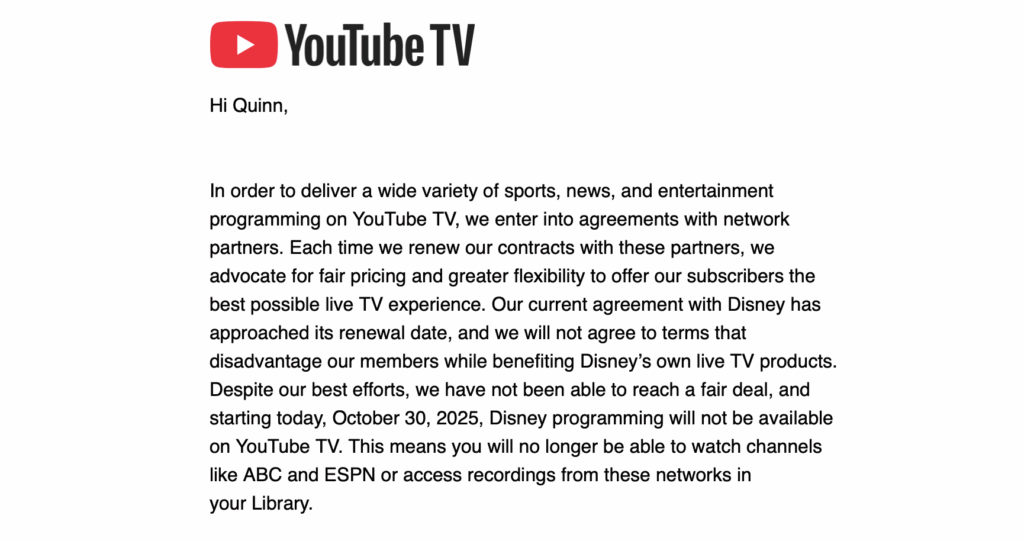
SYRACUSE, N.Y. (NCC News) — On October 30, YouTube TV, a Google-owned streaming service, notified its customers that all Disney programming, including ESPN networks, would be pulled from the platform after the two companies failed to reach a new distribution agreement. Suddenly, sports fans were unable to watch staples like SEC football, ACC basketball, and Monday Night Football. Most of these customers were less than pleased.
“I got YouTube TV four months ago and this is the second or third time this has happened in this span, so it’s frustrating,” said Quinn Conway.
Rick Burton, a former sports executive and sport management professor at Syracuse University, said disputes over carriage fees are no new phenomenon.
“It’s not uncommon that we see these spats, which are when someone wants a rate increase…and someone refuses to pay the increase because they have to pass it on to their customers,” he said.
YouTube TV is no stranger to tense contract negotiations with content providers. In August, it narrowly avoided losing rights to FOX properties by signing a last-minute deal before the start of the NFL season. Similarly, in October, YouTube TV went two days without NBC channels but managed to reach an agreement before Sunday Night Football was missed.
Though this time was different. The ESPN blackout lasted for over two weeks in the middle of the busiest sports window of the year. Fans became angry and started assigning blame to the companies involved. Lewis Williams, who shares a YouTube TV account with his roommate, was quick to pick a side.
“I think YouTube TV is still doing great things. I think ESPN is just trying to find a lot of money,” said Williams. “So I think it’s more on ESPN’s fault than YouTube TV’s fault.”
While fans might be upset at the situation, according to Burton, the problem is more complicated than one party simply having ill intent.
“I don’t think anyone’s to blame,” he said. “It’s just usually that both sides have very strong opinions about what they need to get out of a deal and how that’s going to be translated into profitability or annual revenues that influence how their stock trades.”
On November 14, both sides agreed on a new contract, finally putting the dispute to rest. All Disney programming is now restored on YouTube TV, but neither side disclosed the length or value of the deal.
YouTube TV customers have until December 9 to redeem a $20 credit for their inconvenience.
VIDEO TRANSCRIPT: Contract dispute between YouTube TV and Disney comes to an end
Brennan Finder: On October 30, YouTube TV, a Google-owned streaming service, notified its customers that all Disney programming, including ESPN networks, would be pulled from the platform after the two companies failed to reach a new distribution agreement. One customer, Quinn Conway, wasn’t happy.
Quinn Conway: I got YouTube TV four months ago and this is the second or third time this has happened in this span, so it’s frustrating.
Finder: This blackout with Disney lasted over two weeks, leaving fans ready to point fingers.
Lewis Williams: I think YouTube TV is still doing great things. I think ESPN is just trying to find a lot of money. So I think it’s more on ESPN’s fault than YouTube TV’s fault.
Finder: Last Friday both sides agreed on a new contract, finally putting the dispute to rest. While the length of the blackout was rare, these types of disputes are fairly common according to Sport Management Professor Rick Burton.
Rick Burton: I don’t think anyone’s to blame, it’s just usually that both sides have very strong opinions about what they need to get out of a deal and how that’s going to be translated into profitability or annual revenues.
Finder: All Disney programming is now restored on YouTube TV, but neither side disclosed the length or value of the deal. Brennan Finder, NCC News.