

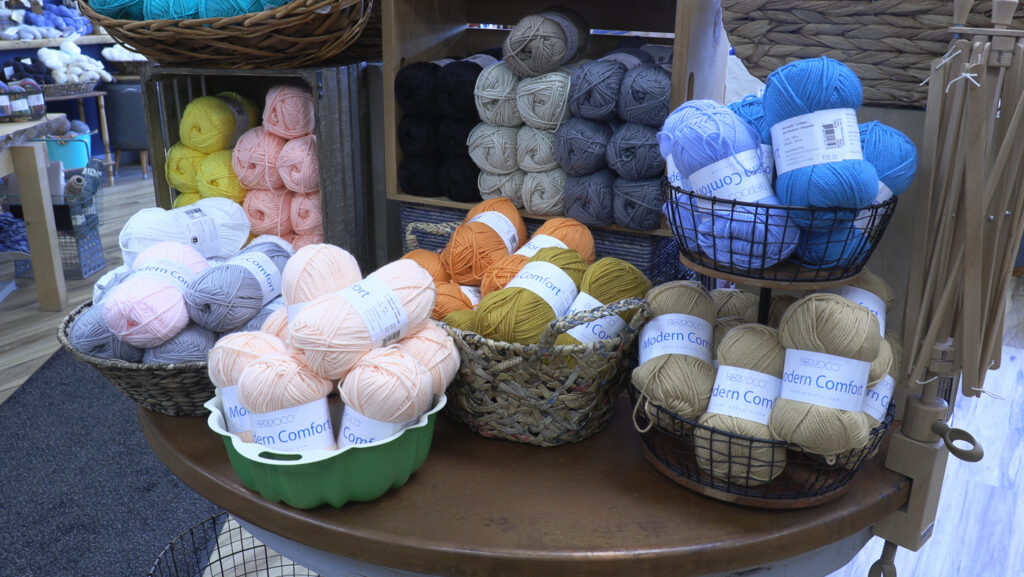
SYRACUSE, N.Y. — The stereotype of the gray-haired grandmother hunched over her knitting needles is unraveling.
Across the country, a new generation is picking up hooks and yarn — not out of necessity, but to unwind. The hashtag #crochet has racked up more than 15 billion views on TikTok, and local yarn shops like Knitty Gritty Yarns in Liverpool, NY are experiencing the surge.
“People are getting a little tired of how TikTok is owning their brains,” said Kerry Heckman, owner of Knitty Gritty Yarns. “They’re looking for other things to do besides endlessly scroll.”
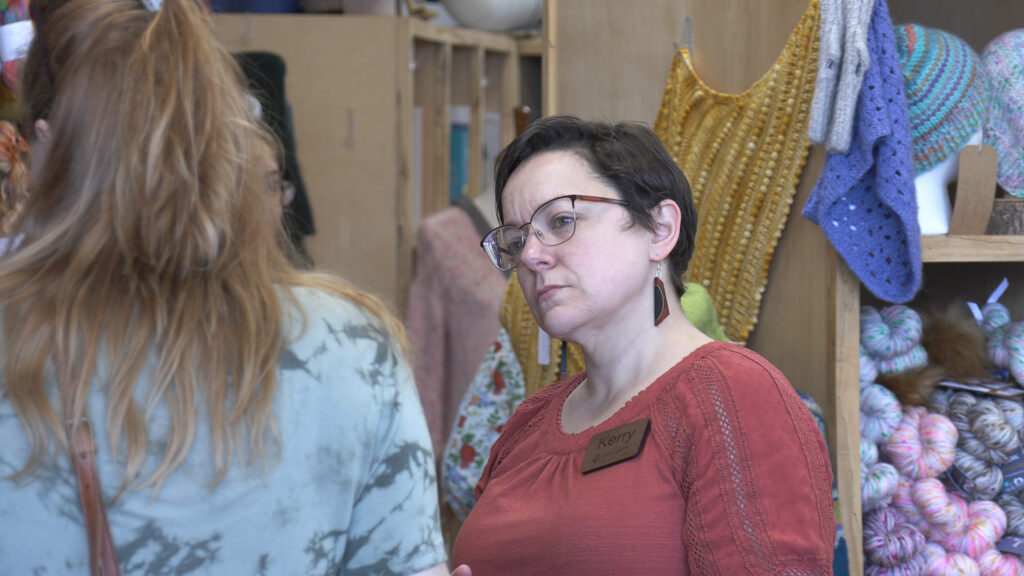
Heckman said the shift began after the COVID-19 pandemic, when younger shoppers started filtering into her store in search of a slower, more intentional way to spend their time.
“We’ve seen a real resurgence in what Pinterest calls granny crafts — knitting, crochet, cross stitch, embroidery,” she said. “It’s a very visual medium. It takes really great photographs, so it really came alive for younger people when it started appearing on Instagram from influencers.”
The appeal goes beyond aesthetics. A study published in the British Journal of Occupational Therapy found that 81 percent of knitters with depression reported feeling happier after the craft, with more than half saying they felt “very happy.”
Jolene Roosekrans, an employee at Knitty Gritty, said the store’s unofficial motto captures that sentiment bluntly.
“We have a slogan that says, ‘I knit so I don’t kill people,'” Roosekrans said. “Not literal — but accurate… It helps with the calming down and helping the overactive brain.”
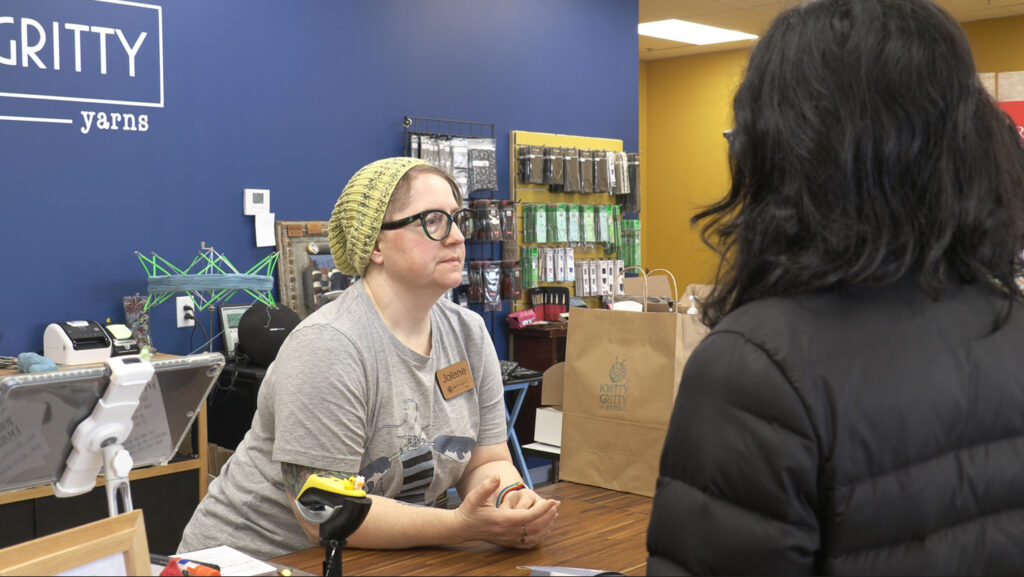
Roosekrans, who has worked at the store for three years, said she took up the craft herself for similar reasons.
“I’m a very tactile person and a very creative person, and it helps slow my mind down,” she said. “I can’t ever sit and do one thing at a time, so it helps my super crazy brain calm down.”
For Julia Fancher, a senior studying physics and applied mathematics at Syracuse University, crochet has become a tool to relax.
“I can kind of turn my brain off a little bit and just kind of do this,” Fancher said, working on the front panel of a sweater she’s crocheting by hand. “It helps kind of reset so I’m not constantly focusing on homework or schoolwork.”
Fancher said she first learned to crochet as a child but picked it back up in college after helping a friend teach the craft to others. She said she’s found more peers sharing the hobby than she expected.
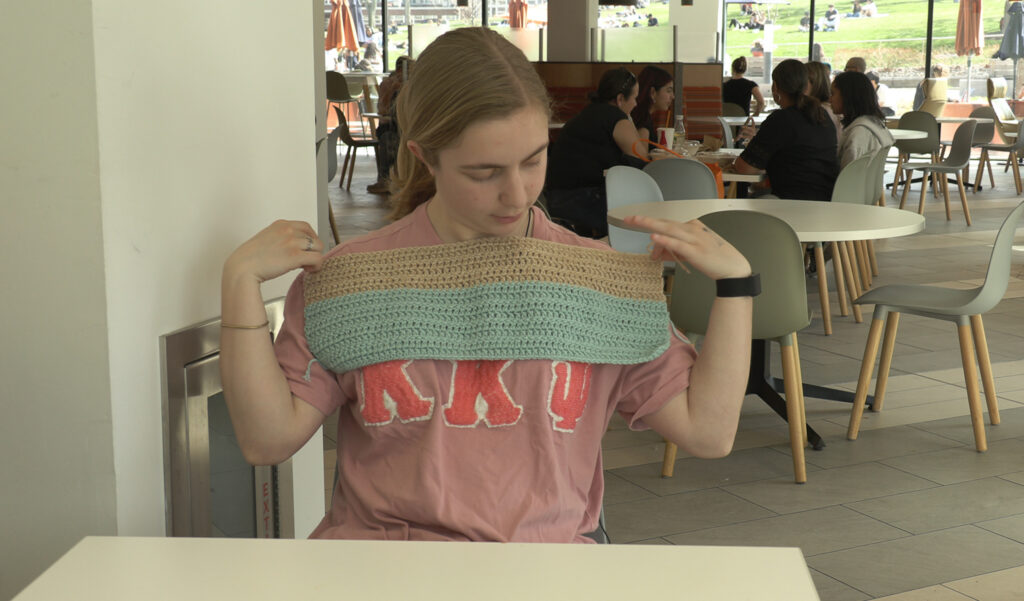
“The more I do it, the more I find people who are like, ‘Oh, I do that too,'” she said.
Sufia Bakshi, a 29-year-old medical student visiting Syracuse from New York City, said the trend has reached her program as well.
“Some of my classmates actually started a crochet club,” Bakshi said. “It’s just a really great way to de-stress. Using your hands sort of just takes off the mental load of whatever happened in your day.”
Heckman said part of what’s drawing younger customers is the tactile nature of the experience — something that can’t be replicated online. She said the community around the craft may be just as appealing as the craft itself.
“It connects us to our own families and a much longer history that goes back literally thousands of years,” Heckman said. “To see more and more people finding their way into it — it makes the rest of us who are already in it feel warm and fuzzy.”
Video Transcript:
Davison: Does your mind ever feel like a spinning wheel? Well, many are turning to knitting and crochet to slow down, tune out and find some peace.
Roosekrans: We have a slogan that says, I knit so I don’t kill people. And I think that that’s very not literal, but accurate for this hobby…. with the meditativeness and the calming down and helping the overactive brain.
Davison: The craft dates back centuries, but it’s seeing a modern revival. The hashtag crochet has racked up more than 15 billion views on TikTok alone. But it’s harder than it looks.
Davison: This is hard. A delicate balance between the yarn and the needles. It’s definitely not going to be meditative in the beginning.
Davison: So not meditative in the beginning, but once you get the hang of it. For a lot of people, this becomes their escape, a way of meditation.
Fancher: So this is the front or back panel. It’ll be kind of like this.
Davison: Julia Fancher is a physics student at Syracuse University. She turned to crochet to decompress.
Fancher: It’s nice to kind of have something like I can follow the directions, and I can kind of turn my brain off a little bit and just kind of do this, and it helps kind of reset so I’m not constantly focusing on homework or schoolwork. I can kind of just take a break.
Davison: That’s why a growing number of young people are buying up yarn.
Heckman: People are getting a little tired of how TikTok is owning their brains, and they’re looking for other things to do besides endlessly scroll.
Davison: In Syracuse. Matthew Davison, NCC News.