


Syracuse, N.Y. (NCC News) — A replica of a boat that once carried transformed New York’s trade and commerce was docked at Onondaga Lake Park.
In 1825, Governor DeWitt Clinton embarked on a symbolic journey aboard the “Seneca Chief,” sailing through the newly completed Erie Canal—a waterway that would reshape New York’s future and fuel its rise as a center of commerce. Now, 200 years later, that journey has been revived. The Buffalo Maritime Center has built a handcrafted replica of the original vessel. Once again, the Seneca Chief sails across the Erie Canal, commemorating its legacy on a 23-day voyage.
Brian Trzecika, Executive Director of the Buffalo Maritime Center, said the project has been in the works since the 1990s. The vessel was completed in September, marking the start of a historic voyage to retrace the canal’s original route.
“The word ‘surreal’ gets thrown around a lot, but it actually is,” Trzecika said. “We’re already a third of the way through and it’s already been a breath of air.”
The voyage began in Buffalo and is making its way south to New York City for its final stop. But the story doesn’t start there. Long before the Erie Canal was built, the land and waterways belonged to the Haudenosaunee Confederacy—the Seneca, Oneida, and other Indigenous nations who first called this region home.
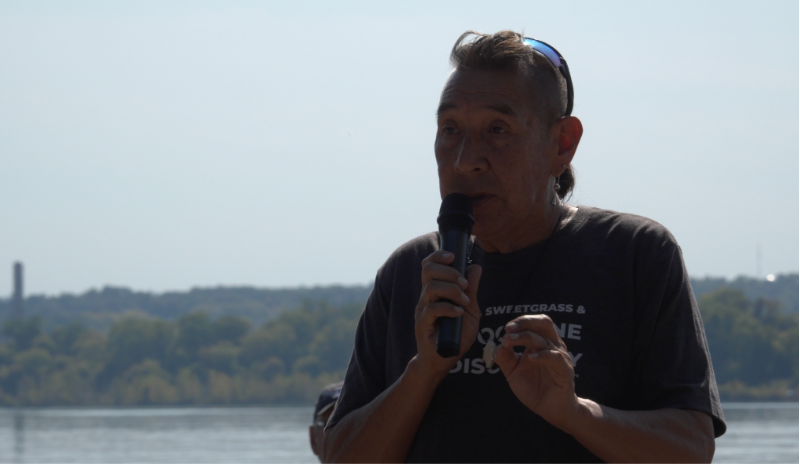
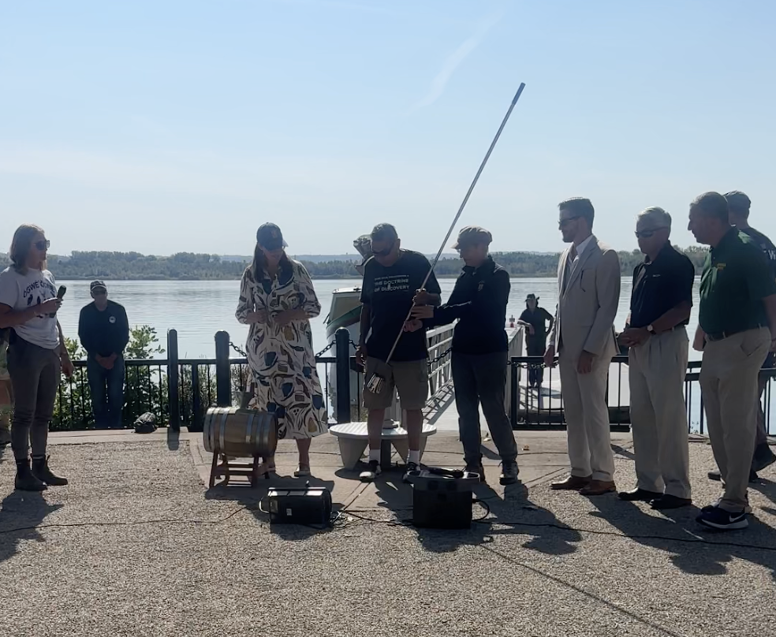
At Onondaga Lake State Park, a ceremony marked the voyage, featuring speakers who celebrated the canal’s history while also centering Indigenous perspectives.
“Obviously everyone is here for the boat itself and the canal celebration,” said Paul Winney, a member of the Tonawanda Seneca Nation and a Native American environmental activist. “I feel happy that I’m able to spread the indigenous perspective on it.”
For the Haudenosaunee, the land the canal was built on once held deep cultural and spiritual meaning. It was taken without negotiation, leaving behind a legacy of loss that still echoes today. Winney spoke about the generational trauma Native communities continue to face and his hope that events like this will amplify Indigenous voices and honor their heritage.
“We’re very invisible as indigenous people,” Winney said. “We’re very run over in terms of development and governmental policies.”
He also discussed the Federal Indian Policy, which he said treats Native Americans as only partially sovereign. “We’re the only category of people in the United States that have our own separate laws,” Winney said.
“What I’m trying to do is make people aware that we’re still here,” he continued. “We’re not looking for restitution…We want to be considered free and independent and not under the auspices of the United States Congress.”
Facing the challenges of recent political opposition, such as attempts under President Trump’s administration to undermine Native citizenship, Trzecika hopes to shift the narrative surrounding the Erie Canal’s 200-year legacy.
“What we need to talk about is the displacement of the Haudenosaunee in order to get to this place,” Trzecika said. “We’ve teamed up with Indigenous scholars and communities to help tell that story – that they’re a part of the story.”
As part of the voyage, the crew plans to plant an eastern white pine tree at the end of their journey, using water collected along the canal. The tree, a Haudenosaunee symbol of peace, will serve as a living reminder of unity and renewal.
“We’re spreading what we were taught from our peacemaker,” Winney said. “The tree of peace was put here to try to help form the Confederacy and join the Five Nations into one… we still try to stay recognized.”