

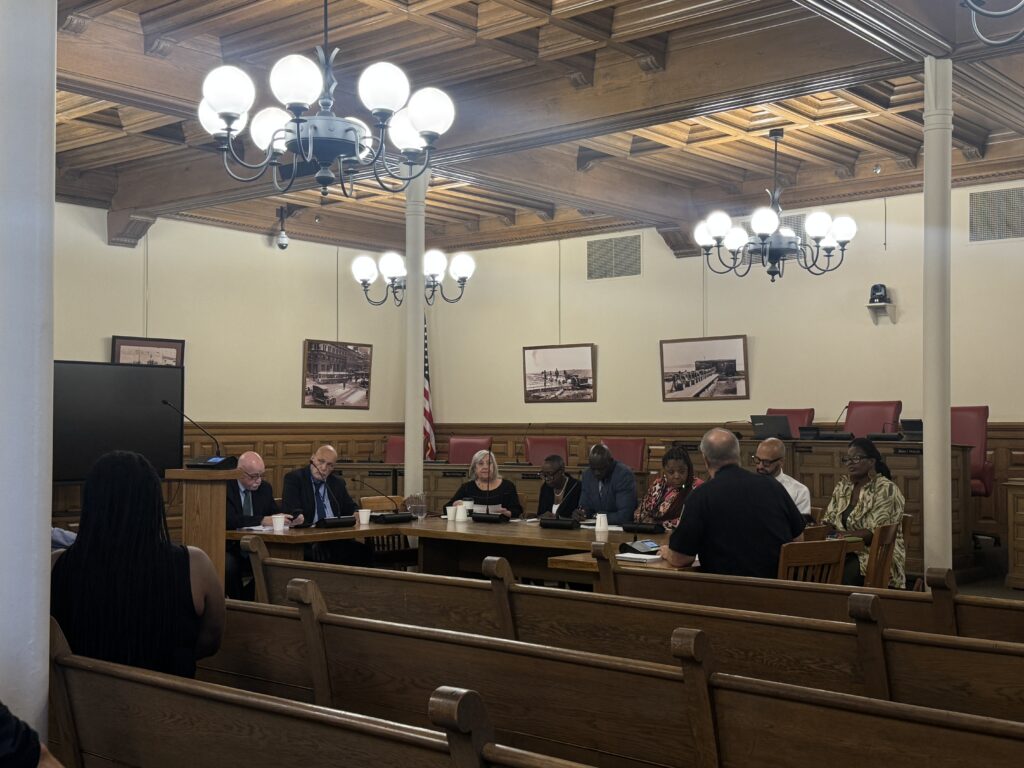
SYRACUSE, N.Y. (NCC News) — City officials are weighing a major step in public safety: a proposal to use drones as first responders to certain 911 calls.
The drones would arrive before officers to provide live video of the scene, giving police critical information before they enter potentially dangerous situations. Police officials said the drones would not be used for random patrols or to monitor the city continuously. Instead, they would be deployed only in response to 911 calls or incidents reported by officers in the field.
The Syracuse Police Department said strict data policies will govern how footage is used and stored, with plans for a public database of flights and annual reports to ensure transparency.
The proposal is currently under review by the city’s Surveillance Technology Working Group, a body created by Mayor Ben Walsh under Executive Order No. 2 to ensure new surveillance technology undergoes public input, ethical review and analysis of its impact on the community.
The estimated cost of the program is $619,000. About $250,000 would come from city funds, with another $369,000 from a state grant.
Not everyone supports the idea. Privacy advocates and community groups have raised concerns about possible surveillance overreach, data retention policies and whether the public has had enough opportunity to weigh in.
“Surveillance of private citizens is a violation of our Fourth Amendment rights and marks a disturbing trend,” Lee Cridland, a Syracuse resident, told council members during a recent public hearing.
“This program would use military grade drones to police and surveil our communities. Not only does this militarize Syracuse by equipping police with technologies designed for actual battlefields and war zones,” said Aaron Burnside, another Syracuse resident.
Some advocates have also questioned how long video footage would be stored and who would have access to it. Police officials have pushed back on those concerns, saying the program is designed to protect both officers and residents by providing information faster.
“There is a section on our policy that discusses, you know, sensitive areas, people in sensitive positions, that sort of thing,” Syracuse Police Sgt. Jason Wells said. “All of our operators are directed to turn the camera away, stop recording – whatever means necessary – to not touch that kind of content.”
The police department said video from drones would follow the same retention rules as body camera footage. According to the department, Axon follows the city’s retention policy and automatically deletes footage after three years.
The debate over drones comes as the city builds on years of surveillance technology policy development. Mayor Walsh signed the Surveillance Technology Executive Order in 2020, setting up the framework for reviewing new surveillance tools. In April 2025, the Common Council approved a one-year trial for the drones-as-first-responders program, but key pieces including the software contract with Axon are still under review.
Gov. Kathy Hochul announced in September during a visit to Syracuse that crime in the city is down 28 percent compared to last year, according to the governor’s website. During that visit, Hochul highlighted $1.3 million in state funding to the Syracuse Police Department for technology investments, including drones. Police leaders said the program is necessary to keep that trend going.
Public hearings have been scheduled to gather more feedback, and councilors have delayed a vote on the software contract to give themselves more time to review the police department’s drone policy.
The Common Council is expected to meet again in two weeks to discuss the community’s feedback and revisit the program’s budget. A final vote on funding is scheduled for October 14.
VIDEO TRANSCRIPT: Syracuse debates drone program amid privacy concerns
Lee Cridland: Surveillance of private citizens is a violation of our fourth amendment rights and marks a disturbing trend.
Kaitlin Campbell: A trend that has been in the works for five years…
Campbell: In 2020, Mayor Ben Walsh signed the surveillance technology executive order. In the order Mayor Ben Walsh gives his definition of surveillance.
[Graphic on screen: “Observe or analyze the movements, behavior, or actions of identifiable individuals in a manner that is reasonably likely to raise concerns about civil liberties, freedom of speech or association, racial equity or social justice.” — Mayor Ben Walsh]
Campbell: Yesterday – New York Governor Kathy Hochul announced crime is on the decline in the salt city.
Kathy Hochul: In one year, just compared to last year, Syracuse crime is down 28%. I mean, that deserves a round of applause for the men and women here.
Campbell: But some believe Syracuse might become a militarization zone.
Aaron Burnside: This program would use military grade drones to police and surveil our communities. Not only does this militarized Syracuse by equipping police with technologies designed for actual battlefields and war zones.
Campbell: Syracuse police officer Wells says that the drones will only record when necessary.
Officer Wells: There’s a section on our policy that discusses, you know, sensitive areas, people in sensitive positions, that sort of thing. You know, all of our operators are directed to turn the camera away, stop recording whatever means necessary to, not touch that kind of content.
Campbell: On Tuesday, the common council met to discuss the input from community members heard on Monday…Much of the focus was on the filing of video and who would have access on the shared evidence platform with the military technology company axon.
Syracuse PD Officer: Axon follows our retention policy that we put in place. So when it comes upon the three-year mark, it’ll go through our evidence in automatically deleted all.