

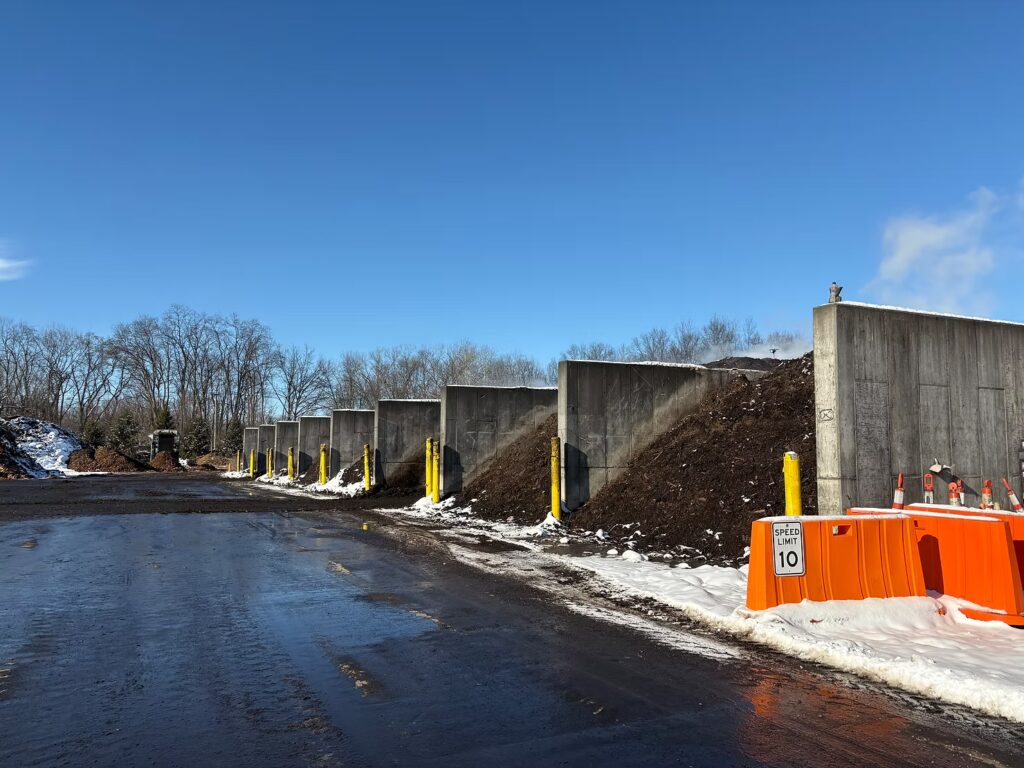
At the OCRRA Amboy Compost Site in Camillus, steam lifts off piles of food waste like breath in the cold air. The sounds of machinery and bulldozers rattle across the yard, and the strong, sour smell of dinner leftovers and yard waste hangs heavy, softened only slightly by scattered coffee beans meant to mask it.
Although it doesn’t look like much at first glance, this is where waste becomes something useful again in Onondaga County. Last year, over nine million pounds of food scraps were processed into compost through the Onondaga County Resource Recovery Agency, or OCRRA.
Tammy Palmer, OCRRA public information officer, said that number not only represents volume, it represents a cycle.
“It is a circular process, sustainable,” Palmer said.
“People grow food, when they have food scraps left over they can drop them off here. We use them to create compost mixed with yard brush and yard waste and then produce a product that’s nutrient rich and helps more food grow and you can just continue that circle over and over and over again.”
How Composting Works
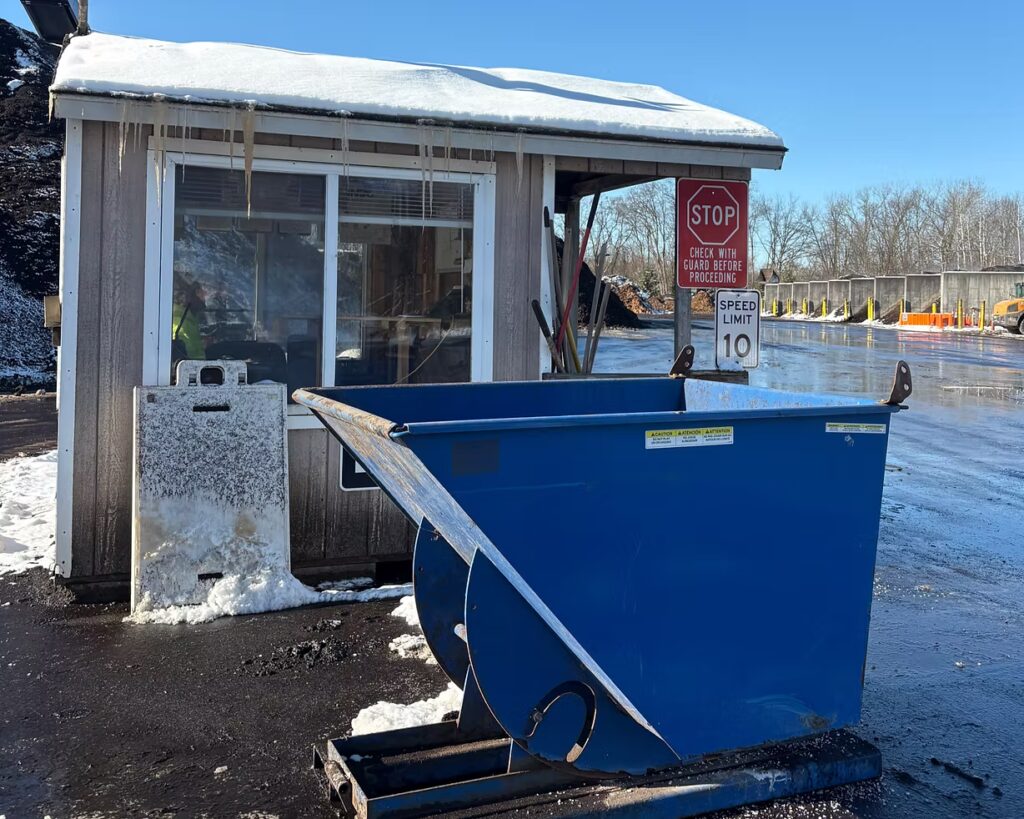
The Amboy site is one of two composting locations OCRRA operates; the other is in Jamesville. Residents can purchase a yearly compost site pass for $25, giving them unlimited drop-off access for food and yard waste.
Once scraps arrive, the breakdown begins. Food waste is combined with yard brush and moved into large bays, where it sits for a couple weeks. During this time, microorganisms heat up and decompose the material. Even on a cold day, steam rises from the mounds, a visible sign of the process happening beneath the surface.
“It’s about a three-month process before it gets to a point where it’s almost just like dirt again,” Palmer said.
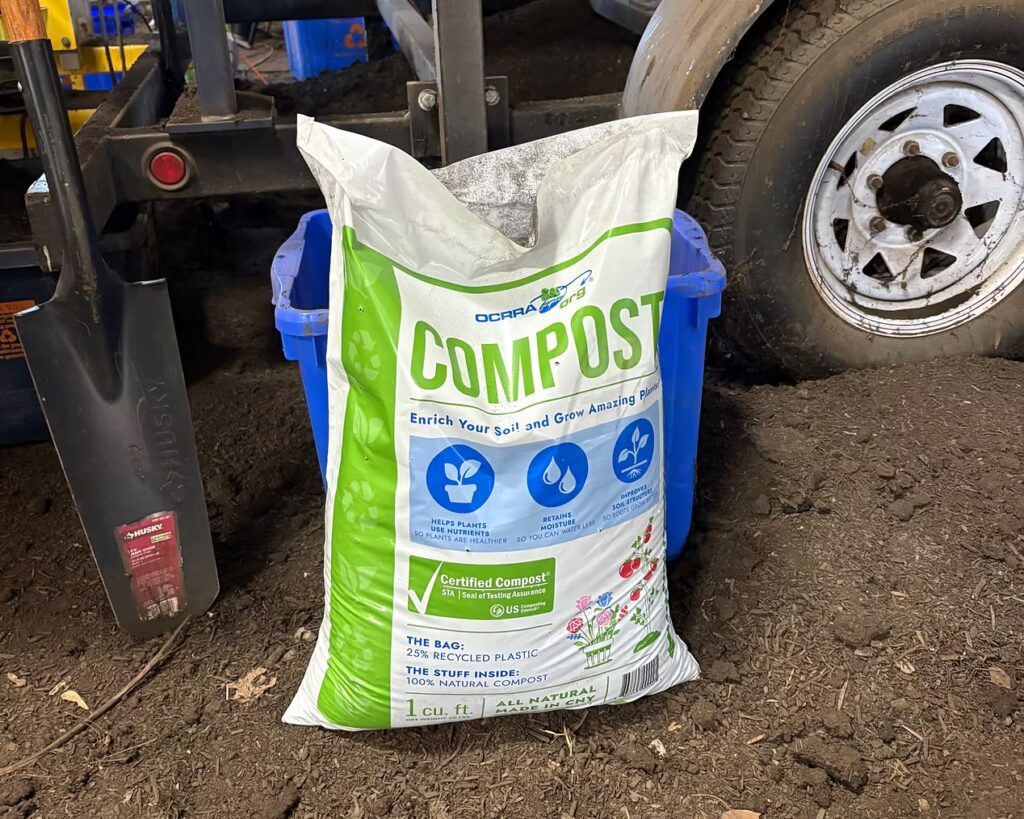
When the compost is ready, residents can return to buy it bagged or by the truckload. Compost is used to enrich soil and grow vegetables, continuing the cycle every time it leaves the site.
Why It Matters
Although composting is available to every resident with a pass, OCRRA hopes more people will participate. Palmer says the benefit extends beyond gardeners, it reduces county-wide waste.
“Instead of the food ending up in the trash, it ends up reusable and sustainable. It’s recycled instead,” she said.
OCRRA’s research shows why that shift matters. A 2019 waste audit found that nearly 20 percent of household trash in Onondaga County is compostable food material.
“You have to think about waste management as more than just trash,” Palmer said.
“We don’t have unlimited capacity for trash but there’s no end to how many times we can take food and yard waste and recycle it and make compost.”
For Palmer, the process isn’t just operational, it’s something she sees work in her own life.
“I buy our compost and add it to my garden and it is my favorite thing to do,” Palmer said.
“And then I know that instead of all of that waste ending up in the trash I was able to in my own life, in my own home, on my own dinner plate apply a much better solution to my life.”
Using compost in her own garden, she says, reminds her that the work being done at Amboy extends well beyond the site itself.
“I see people who are very passionate about what happens here. They’re very dedicated. They believe in what is happening here. They see the results,” Palmer said.