

VIDEO TRANSCRIPT: Immigration enforcement in CNY affecting agriculture industry
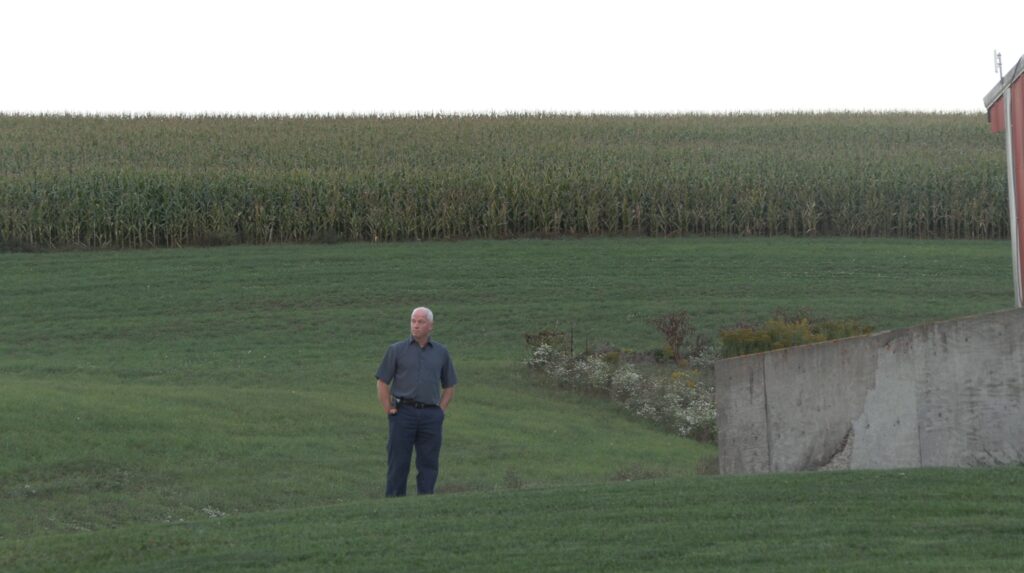
Jackson Breslin: If there’s one constant in Paul Fouts’ life – it’s his farm.
Paul Fouts: “I’ve always been around cows. I don’t – there’s a picture of me in a little bassinette and bulk tank, so I’ve always been around cows – I don’t remember a day when I didn’t think about them.”
Breslin: Paul is the third generation owner of Fouts Farms — his great-grandfather started the dairy farm in 1937. Nearly a century later, the Fouts — and farms like theirs — are seeing enormous changes to the dairy industry.
Fouts: “When I was in high school around 1990 – I had to make a decision, what foreign language do I take in school – it was required in school and I thought well, we’re close to Montreal, I should take French. I should’ve taken Spanish.”
Breslin: Almost 70 percent of agricultural workers in the United States are foreign-born. About half of them are here illegally.
Fouts: “These jobs where you are working with your hands, you’re filthy when you get done, you have to go take a shower as soon as you get home, our society has shoved those jobs down to the point where they’re so undesirable nobody wants them.”
Breslin: Fouts employs five foreign-born workers. He says the need for labor trumps his suspicions about the legitimacy of their documents.
X: “When you’re desperate for help, you ask the least amount of questions possible, and that’s just the reality of the world we’re in.”
Breslin: On a farm in western New York – one migrant worker says life back in Mexico forced him to come to the States illegally.
Anonymous Farm worker: “My life in Mexico [like][like] was difficult [like] economically like my mom y my brother depended on me. My older brother is sick and I had like wanted like one day to be able to pay for his treatment so he could like have like good health.”
Breslin: After getting caught and deported, he tried again. Now – he’s built a life here – and says he’s scared it could be taken away in an instant.
Farm worker: “Well, like, like maybe if I were alone like if I didn’t have family, maybe I would tell you it was okay if they trapped me and ordered me to my country… to my family, no? But now I have my wife and my children, then like like it would not only change my life it would change the life of my family here and of my family in Mexico.”
Breslin: It’s a life filled with fear – and without an easy fix.
Farm worker: “We work, we pay taxes, we have a family, we don’t do anything bad for the country, we contribute to the economy, no? But the system makes it very difficult and very impossible like for a person like me.”
Donald Trump: “We have to take care of our farmers and hotels and various places where they need the people. So a farmer will come in with a letter concerning certain people saying they’re great, they’re working hard, we’re gonna slow it down a little bit for them and then we’re gonna ultimately bring them back, they’ll go out, they’re gonna come back as legal workers.”
Breslin: President Trump has floated multiple ideas for how to protect farmers while enforcing his immigration policies – still – uncertainty of a raid looms over Fouts’ farm – and its future.
Breslin: “Is there fear among farmers in Central New York, farmers like yourself, that your farm could be next?”
Fouts: “Oh yeah. But… I mean it’s probably more pronounced now with the Trump administration, but the fear has always been there. You know, I’m the third generation; my daughter’s the fourth generation — we would lose it all, so, is there fear? Yeah. The fear is here and it’s real and we live with it every day.”
Breslin: Fouts’ fear comes from what he sees as the government’s inability to work together on making a better immigration system.
Fouts: “It just comes down to our congress has failed us. We’ve been begging them – literally begging them for 30, 40, or maybe even 50 years. We need a system that allows us to draw from other countries for labor, and that system doesn’t exist, and the longer they delay, the harder it’s going to be for us to get that system and just, our congress has failed us… and I don’t know what to do about it.”
Breslin: It’s a situation growing bleaker as the divide in Washington deepens.
Fouts: “The political climate is just keeping people from coming to the table and talking it out.”
Breslin: There’s no debating Fouts; without foreign labor, his farm wouldn’t be able to operate.
Farm worker: “I believe that everyone can live without mechanics, without engineers, without architects, no? But we can’t live without food therefore I believe we are the most essential part of the country.”
Breslin: For three generations, Fouts Farm has stood tall. The years have weathered the silos, and the demographic of workers has changed – but the character of the workers never has.
Breslin: “For the people that you know, and the people that you work with, what separates them from any other hardworking American, other than the fact that they may not have the right papers?”
Fouts: “Nothing. I mean, they’re people. They may not speak our language, they certainly don’t look like me, but they’re people.”
Breslin: The backbone of the agriculture industry may soon reach a breaking point. In Central New York, Jackson Breslin, NCC News.
CENTRAL NEW YORK (NCC NEWS) – If there’s one constant in Paul Fouts’ life – it’s his farm.
“I’ve always been around cows,” said Fouts on his Cortland, N.Y. farm. “There’s a picture of me in a little bassinet and bulk tank, so I’ve always been around cows – I don’t remember a day when I didn’t think about them.”
Paul is the third generation owner of Fouts Farm; his great-grandfather started the dairy farm in 1937. Nearly a century later, the Fouts — and farms like theirs — are seeing enormous changes to the dairy industry.
“When I was in high school around 1990, I had to make a decision, what foreign language do I take in school – it was required in school – and I thought well, we’re close to Montreal, I should take French,” said Fouts, taking a beat. “I should’ve taken Spanish.”
The 2021-2022 National Agricultural Workers Survey showed that nearly 70 percent of agricultural workers in the United States are foreign-born. About half of them are here illegally.
“These jobs where you are working with your hands, you’re filthy when you get done, you have to go take a shower as soon as you get home, our society has shoved those jobs down to the point where they’re so undesirable nobody wants them,” said Fouts.
Fouts employs five foreign-born workers. He says the need for labor trumps his suspicions about the legitimacy of their documents.
“When you’re desperate for help, you ask the least amount of questions possible, and that’s just the reality of the world we’re in,” he said.
On a farm in western New York, one migrant worker says life back in Mexico forced him to come to the States illegally.
“My life in Mexico was difficult, economically my mom and my brother depended on me,” said the worker, who wished to remain anonymous. “My older brother is sick and I had wanted one day to be able to pay for his treatment so he could have good health.”
After getting caught and deported, he tried again. Now, he’s built a life here – and expressed fears it could be taken away in an instant.
“Well, like, maybe if I were alone, if I didn’t have family, maybe I would tell you it was okay if they trapped me and ordered me to my country, to my family, no? But now I have my wife and my children, then like, it would not only change my life, it would change the life of my family here and of my family in Mexico,” he said.
It’s a life filled with fear – and without an easy fix.
“We work, we pay taxes, we have a family, we don’t do anything bad for the country, we contribute to the economy, no?” said the farm worker. “But the system makes it very difficult and very impossible for a person like me.”
President Trump has floated multiple ideas for how to protect farmers while enforcing his immigration policies.
“We have to take care of our farmers and hotels and various places where they need the people,” said Trump in a cabinet meeting earlier this year. “A farmer will come in with a letter concerning certain people saying they’re great, they’re working hard, we’re gonna slow it down a little bit for them and then we’re gonna ultimately bring them back, they’ll go out, they’re gonna come back as legal workers.”
It’s a situation growing bleaker as the divide in Washington deepens.
“The political climate is just keeping people from coming to the table and talking it out,” said Fouts
For three generations, Fouts Farm has stood tall. The years have weathered the silos, and the demographic of workers has changed – but the character of the workers never has.
“I mean, they’re people,” said Fouts. They may not speak our language, they certainly don’t look like me, but they’re people.”
The backbone of the agriculture industry, being pushed to its breaking point.