

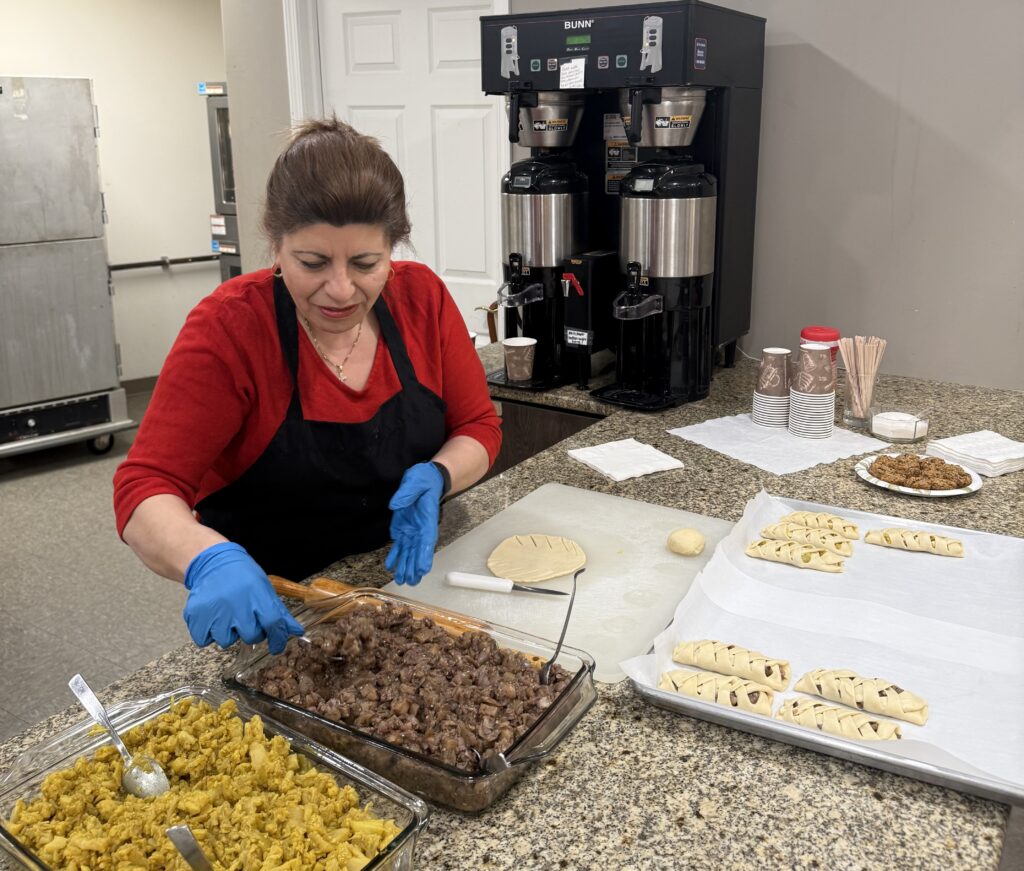
SYRACUSE, N.Y. — Inside the kitchen at St. Elias Church, the sound of rolling pins hitting dough and vegetables being chopped fills the room as community members gather to cook.
On this night, participants are learning how to make fatayer, traditional Middle Eastern hand pies, using entirely plant-based ingredients.
The class offers a hands-on way for people to explore vegan cooking, but for instructor Rita Algattas, it’s also about understanding what goes into the food they eat.
“When you make your own food, you know what’s in it,” Algattas said. “Versus when you go out or order, you don’t know.”
Algattas, who said she has loved cooking since she was 20 years old, brings that passion into each class. She encourages participants to try ingredients they may not normally enjoy.
Rita’s vegan cooking class transcript
Desiree Robinson: Inside a Syracuse kitchen, something a little different is happening.
Desiree Robinson: It may look like another quiet evening at a local church, but inside, this space is turning into a hands-on vegan cooking classroom.
Robinson: Community members at St. Elias Church are learning how to make plant-based dishes from scratch — tonight, traditional Middle Eastern hand pies known as fatayer.
Rita Algattas: When you make your own food, you know what’s in it… versus when you go out or order, you don’t know.
Robinson: For some, this kind of cooking is also tied to something deeper. In the Orthodox Church, periods of fasting often follow a plant-based diet, seen as a way to support both physical health and spiritual discipline.
Algattas: People say, I hate spinach but when we make it fresh, it’s a completely different taste.
Desiree Robinson:
But beyond the food itself, this class is also about building community.
Algattas: You meet your friends, you sit together. We meet here as like one big family.
Robinson: That sense of connection is what keeps many participants coming back.
Sharon Akkoul: I always just love to come and learn some new recipes. The whole learning vegan recipes was interesting to me.
Robinson: And while the recipes may be new for some, many say the experience goes far beyond what’s on the plate.
Akkoul: Even though we’re like strangers, we all feel like family and you kind of leave feeling like family.
Desiree Robinson: Whether it’s for health, tradition, or simply trying something new, this class is bringing people together one meal at a time.
Desiree Robinson: In Syracuse, I’m Desiree Robinson, NCC News.
“People say, ‘I hate spinach,’” she said. “But when we make it fresh, it’s a completely different taste.”
While the class focuses on plant-based cooking, organizers say it is also rooted in a deeper tradition within the Christian Orthodox Church. During certain times of the year, members observe fasting periods that emphasize a vegan diet.
Church president Diala Makhlouf said the practice connects both physical and spiritual well-being.
“It’s not only an ability to strengthen our bodies because of the health benefits of vegan diets,” Makhlouf said. “It’s also a reminder to give back to the poor and those that are needy.”
Makhlouf said the connection between faith and food has become more meaningful over time.
“The connection between what the Orthodox Church tells us and what is physically really good for us is for our mind, soul and body,” she said.
Beyond the health benefits, organizers say the classes are designed to bring people together.
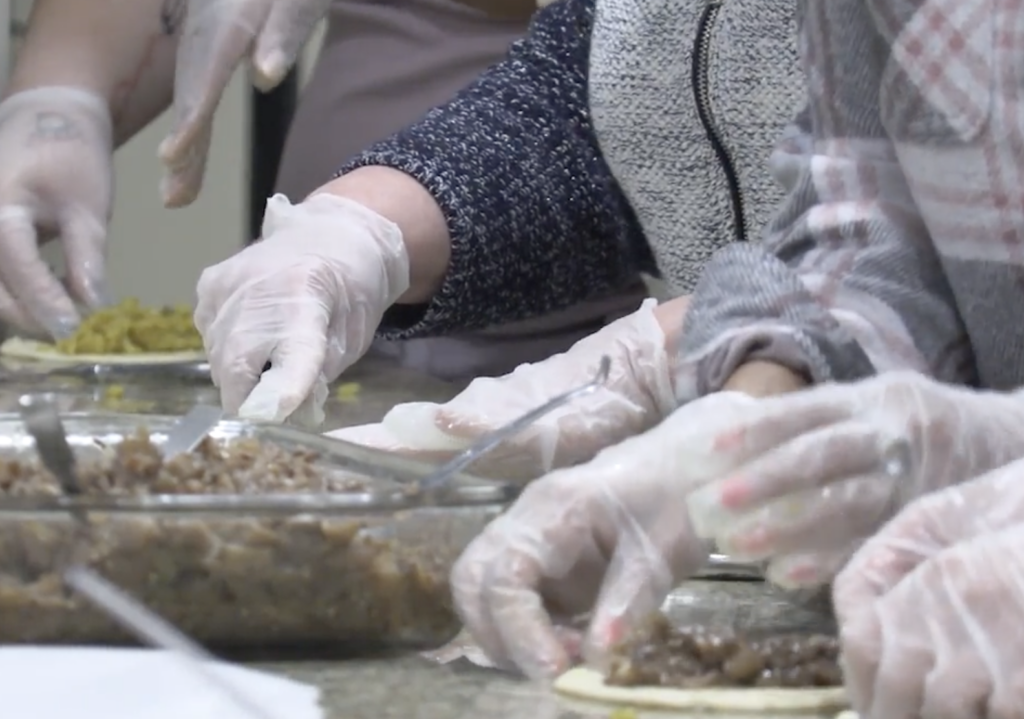
“It’s fun. You meet your friends, you sit together,” Algattas said. “We meet here as like one big family.”
That sense of community is what keeps many participants coming back. Sharon Akkoul said her connection to the class is also personal, her grandmother on her father’s side was one of the founders of St. Elias Church.
“I try to keep some of the traditions going,” Akkoul said.
She said the classes give her a chance to both stay connected to that history and try something new.
“I always just love to come and learn some new recipes,” Akkoul said. “The whole learning vegan recipes was interesting to me.”
For Akkoul, the experience goes beyond the food itself.
“Even though we’re like strangers, we all feel like family,” she said. “And you kind of leave feeling like family.”
The church hosts cooking classes most Thursday nights, continuing to bring the community together one meal at a time.