


SYRACUSE, N.Y. — Adam Mazzoni has to keep his chocolate at just the right temperature. This winter, that has cost him more than usual.
“My last energy bill was higher than average,” said Mazzoni, owner of Sweet On Chocolate, which has operated in Syracuse since 1993. “It was noticeable.”
Mazzoni’s bills have climbed this winter, and he wants more from National Grid.
“The price is the price, and that’s it,” Mazzoni said. “We’re willing to work with you on paying it — but they never seem to want to address the issue of the actual cost itself.”
Mazzoni is among small-business owners across Central New York grappling with rising National Grid bills, driven by a colder-than-average winter and volatile energy markets. According to WWNY, the average customer was expected to pay more than $360 in energy for February alone.
A state-approved delivery rate hike took effect last September, the first in a three-year plan through 2027. According to the New York Public Service Commission, future increases under the plan are driven primarily by rising operating expenses and depreciation of aging infrastructure.

But according to National Grid, the bigger driver of increased costs is the open market price of energy during a prolonged winter. The U.S. Energy Information Administration, an independent federal agency, reported that cold weather increased heating demand nationwide, reduced production and led to record natural gas storage withdrawals this January.
“Cold weather causing increased demand caused supply prices to go up, which impacted the overall total bill,” said National Grid spokesperson Jared Paventi.
Paventi says natural gas powers much of upstate New York’s electricity, and when a cold stretch increases demand, prices on the open market follow.
“When demand goes up, the market will move because the market believes it can get more for its product,” Paventi said.
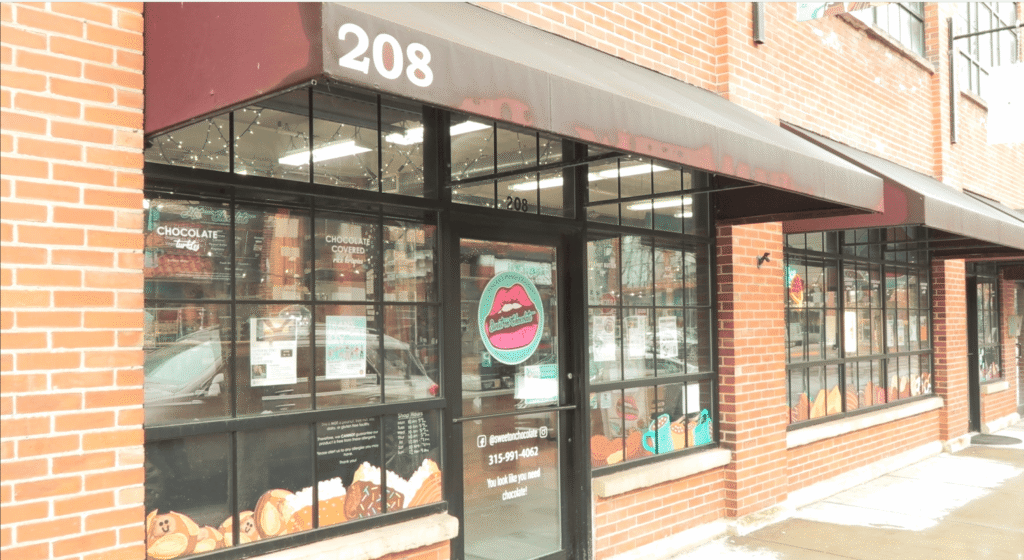
For Mazzoni, there is little flexibility. Chocolate requires consistent temperature control. He expects higher energy use this summer to keep his products cool. He says he cannot simply turn down the thermostat to offset rising costs the way some businesses might.
“We’ve got to keep our chocolate cool,” he said. “It’s not like we can keep it warmer in here.”
Paventi says National Grid passes supply costs straight through to customers without a markup. Delivery charges, however, are where the utility does turn a profit, and those charges are set to continue rising under the three-year rate plan.
According to National Grid, residential electricity customers will see estimated monthly delivery increases of $14.32 in year one, dropping to $6.44 and $4.34 in subsequent years. Gas customers will see increases of $7.66, $8.08 and $9.18 over the same period.
Paventi encouraged business owners struggling with bills to contact National Grid about available energy-efficiency programs. According to National Grid, options include monthly bill credits for income-eligible customers and a free home energy audit through NYSERDA.
Paventi says supply costs should begin to ease as the weather warms and heating demand drops, though higher electricity use for summer air conditioning could offset some of that relief.
Mazzoni says he will manage, but his frustration with the lack of relief on the cost side remains.
“If the average homeowner can weather some higher energy bills, I think that we can too,” he said.
Video Transcript:
Running a chocolate shop means keeping things at just the right temperature. This winter, that’s gotten more expensive.
Adam Mazzone
“My last energy bill was higher than average. It was noticeable.”
Adam Mazzone has owned Sweet On Chocolate since 2018. He can’t just turn down the thermostat — chocolate doesn’t work that way.
Adam Mazzone
“What can I do? I got to pay it.”
He’s not alone. National Grid says the average household natural gas bill this February was about fifty-two dollars higher than a year ago.
Mazzone is frustrated by energy companies’ unwillingness to make concessions.
Adam Mazzone
“The price is the price, and that’s it. We’re willing to work with you on paying it — but they never seem to want to address the issue of the actual cost itself.”
A state-approved rate hike kicked in last September — the first in a three-year plan that’ll raise delivery charges through 2027. National Grid doesn’t profit on energy supply itself, but it does profit off delivery charges.
National Grid says delivery rates are only part of the story. They say what customers are really feeling this winter is the volatile cost of energy on the open market — driven by an unusually long and bitter cold stretch.”
Jared Paventi (National Grid)
“Cold weather causing increased demand caused supply prices to go up, which impacted the overall total bill.”
Paventi says the spike comes down to basic economics — higher demand this snowy winter pushed prices up.
For businesses getting squeezed, National Grid says there are options.
Jared Paventi
“Reach out to National Grid — there are energy efficiency programs for businesses that can help with some of that.”
Utility officials say bills could ease as temperatures warm and heating demand drops this spring.
Matthew Davison, NCC News.