

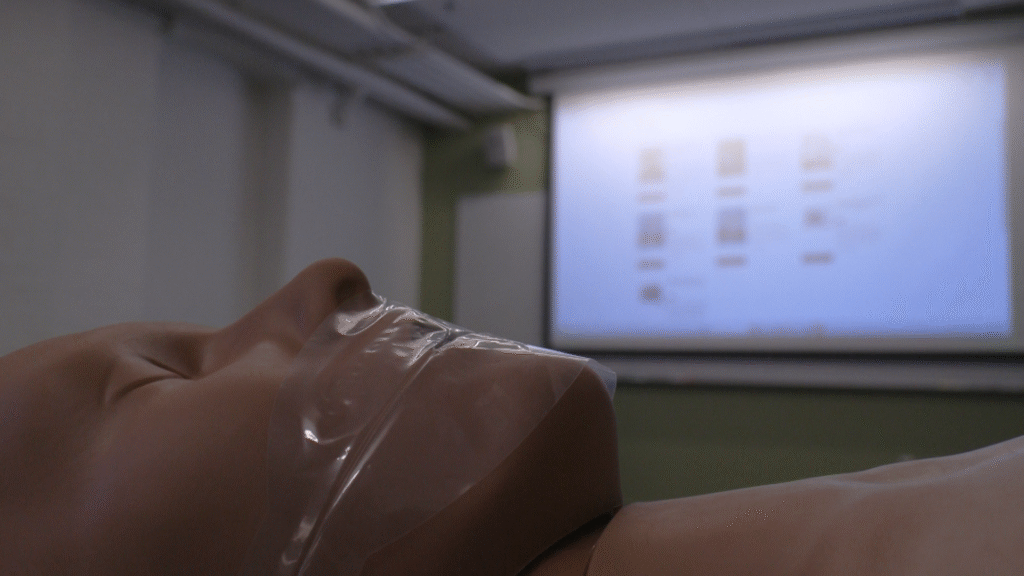
SYRACUSE, N.Y. (NCC News) — Most of you probably know “Stayin´Alive” by the Bee Gees but as the name of the song goes this song can actually help saving lives.
You can perform CPR exactly to that particular beat. Our reporter David met with medical professionals, to show you what you need to know about first aid.
Since 1964, February is “American Heart Month”. According to the American Heart Association there is a reported increase from 33% to 39% in bystander confidence to be able to perform any type of CPR but only about 18% to 28% of Americans have current, up-to-date CPR certification.
VIDEO TRANSCRIPT
David Haag:
It doesn’t matter if you are out for a walk, or if you come home from work. What happens if you witness someone having a heart attack all of a sudden? What are you going to do? Do you know how to perform CPR? Or maybe you ask yourself, am I able to use a public defibrillator?
Student:
No, I never got the change to – I would like to learn but I don´t have the time.
David Haag:
Paul Smyth was a NY Staate Paramedic for over 25 years and is now the manager of emergency medical services at Syracuse University.
He told me everything I need to know about CPR.
Paul J Smyth:
You press on the lower half of the sternum. You´re gonna put one hand over the other. Keep your elbows straight. 90 degrees over the victim. And you´re gonna give 30 chest compressions.
David Haag:
After that two breaths through nose or mouth and repeat until someone with a AED or paramedics arrive but knowing when to perform CPR or even apply an AED are also very important steps.
First check for responsiveness, if there is no response, check for pulse. 5-10 seconds. If there is no pulse, you expose the chest and start CPR.
David Haag(Stand-up):
It’s not only important to know how to perform CPR, but also how you can handle those situations mentally. They can be overwhelming pretty easily but like Paul is saying if you know how and what you should do, instinct will take over and you probably could save someone’s life.
David Haag NCC News
CPR trainings are important, because people should know exactly how to act, when they encounter a situation where they have to perform CPR.
Here are some other important things you need to know:
The AHA Chain of Survival
The chain must be followed in quick succession for the best possible outcome:
1. Recognition and Activation: Early recognition of cardiac arrest and calling 911, (if possible) ask someone to get a defibrillator (AED).
2. Early CPR: Immediate initiation of high-quality CPR, with an emphasis on chest compressions.
3. Rapid Defibrillation: Prompt use of an Automated External Defibrillator (AED) to restore a normal heart rhythm.
4. Advanced Resuscitation: Advanced life support by emergency medical services (EMS).
5. Post-Cardiac Arrest Care: Specialized care provided at a hospital to optimize neurologic recovery.
6. Recovery: Long-term treatment, rehabilitation, and psychological support for survivors.
The thing we always consider first is safety (…) We want to make sure, we enter a situation that is safe.
Paul J Smyth
What is “scene safety”?
Its pretty easy. Any scene has a potential for violence, and many have not-so-obvious indicators of danger. It can be traffic, other people or safety hazards, also everyone has the ability to become violent, cause an unsafe situation or intentionally injure someone. Personal safety should be your primary concern on every call, regardless of the call’s acuity. So be aware of your surroundings.
One last thing to consider is the age. When performing CPR on a infant its important to only use two fingers for compressions (or two thumbs) in the center of the chest.
So with all that in mind, stay safe and keep others safe.