

Video Transcript
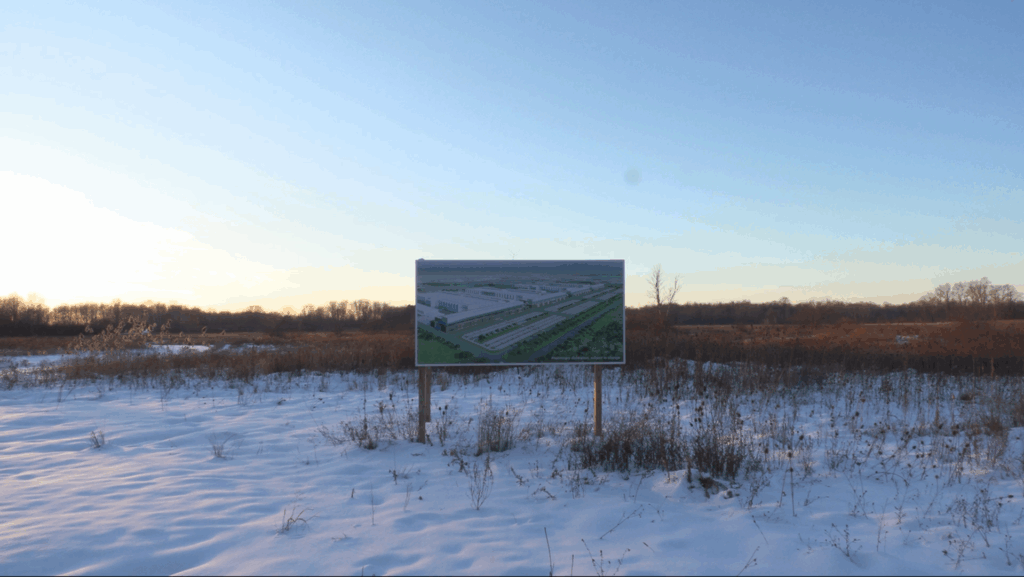
Spencer Buley: According to the U.S. Fish and Wildlife Service, 40% of all plant and animal species live or breed in wetlands. That’s led some environmentalists to be concerned with Micron’s plans regarding wetlands.
Rhea Jezer: Corporations think in quarterly reports. Environmentalists think in ten year and decade reports.
Spencer: Dr. Rhea Jezer is the chair of the Central-Northern New York Chapter of the Sierra Club, an environmental organization with chapters in every U.S. state.
Jezer: Wetlands are like the kidneys of the earth. It really purifies things, and as we had discussed before, you know, having the kidneys where they are are very important.
Spencer: The U.S. Fish and Wildlife Service also says about half of all federally listed species in the U.S. are wetland dependent. Micron’s four chip making mega fabs will destroy approximately 200 acres of wetlands, as stated in their Final Environmental Impact Statement. The company proposed to build two acres of wetlands for every one destroyed. The Sierra Club said that ratio should be increased.
Jezer: Moving them is a mitigation which is very very touchy, and I think that’s what the problem here with Micron is.
Spencer: Dr. Richard Smardon, a founding member of the New York State Wetland Forum, says the success of the new wetlands will depend on their location.
Smardon: Natural wetlands are going to be functioning a lot better, but it depends how they do the creation of new replacement wetlands to offset the impacts, and where those wetlands are in the drainage basin.
Spencer: Wetlands hold about one million gallons of water per acre, according to the U.S. Environmental Protection Agency.
Smardon: They’re going to tear out 200 acres of wetlands and then replace it with field gravel substrate and then build on top of that. So the problem is when it rains really hard and you get a lot of runoff during a storm event, where is that water going to go?
Spencer: Micron’s complex will be built about six miles from Oneida Lake, but Smardon says those wetlands impact this water.
Smardon: A lot of the wetlands are connected with two small creeks that eventually drain into Oneida Lake. If there’s not enough stormwater retention, then it’s going to go downstream and eventually to the creeks and eventually maybe into Lake Oneida.
Spencer: We reached out to Micron and the Onondaga county Industrial Development Agency to discuss their plans for wetland mitigation in more detail, but they have not returned our request for comment at this time. Micron did note in its Final Environmental Impact Statement that the three year construction delay will lessen environmental strain in the building process. They’re still planning to break ground later this month. In Clay, Spencer Buley. NCC News.
Clay, N.Y. (NCC News) — The Onondaga County Industrial Development Agency (OCIDA) unanimously approved Micron’s Final Environmental Impact Statement (FEIS) on Nov. 18, but some environmentalists are asking for more thought to be given to the region’s wetlands.
Micron’s FEIS states that it will destroy approximately 200 acres of natural wetlands in Clay to build their four semiconductor chip-making mega fabs. The company’s mitigation offer is to build double the amount of wetlands lost in Oswego County.
“One of the major issues is the cumulative impact,” said Richard Smardon, a founding member of the New York State Wetland Forum. “If you install a major commercial industrial facility, then there’s going to be other development around to support that facility. So, the question is, if you look at cumulative land use change over time, how much is it going to impact all your water quality areas, all your wetlands, all the other habitat areas that remain?”
In their 37 page document commenting on Micron’s environmental impact statement, the Sierra Club said each lost acre of wetlands should be replaced by 10 to 15 acres.
“Wetlands are like the kidneys of the earth,” said Rhea Jezer, chair of the Sierra Club’s Central-Northern New York group. “They purify things. Having the kidneys where they are is very important for climate change because they store carbon. How do you move them? Do you move your kidneys to your head?”
In addition to housing about half of all federally listed species in the United States, wetlands store about one million gallons of water per acre, according to the U.S. Environmental Protection Agency (EPA).
“[Wetlands] do a lot of water quality functions. They filter or absorb pollutants or excess nutrients over time and store floodplain flooding,” Smardon said. “Natural wetlands are going to be functioning a lot better, but it depends how they do the creation of new replacement wetlands to offset the impacts, and whether those wetlands are in the drainage basin.”
Jezer noted that although Onondaga County has a complex history with the relationship between industry and environment, ecology has recovered impressively.
“When I moved here, Onondaga Lake was not only a dead lake, but you couldn’t even drive near it because it smelled so bad,” she said. “They said it would take 100 years to clean up. I never expected there to be fish there now or for people to actually swim there. It’s not totally cleaned up, but ecology has a way of working itself out.”
Smardon said given Micron’s expected cumulative impact, extensive monitoring of the wetlands will be essential.
“Usually for a wetland permit, the Core of Engineers has to monitor it for about five years,” he said. “I think we need longer term monitoring because created wetlands do change over time. Given the original design, sometimes they don’t function as well as original wetlands, so you need to monitor them over time.”
Despite the pushing back of the completion date for its first two fabs to 2033, Micron is still expected to break ground later this month.